

The planet and planet formation community at Queen Mary University of London.
Joined November 2019
- Tweets271
- Following156
- Followers205
- Likes163





Queen Mary Planets retweeted

I am advertising two new postdoc positions. There is a great team coming together with room for two more. I'll describe core project goals below, but there will be freedom to explore other ideas (1/3)

Queen Mary Planets retweeted

Our very own Dr @TomHaworthAstro of @QMULSPCS co-authored a groundbreaking study featured on the cover of @ScienceMagazine, revealing a key factor in planetary diversity! science.org/doi/10.1126/scie…
Queen Mary Planets retweeted
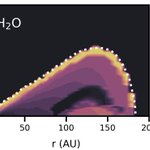
A nice paper today from Matias Gárate, Paolo Pinilla, @StefanoFacchi14 and myself on the external photoevaporation of protoplanetary discs with sub-structures. Lots of interesting effects, including on the disc radius and flux
arxiv.org/pdf/2310.20214.pdf

Queen Mary Planets retweeted
A new paper that I was involved in using the @NASAWebb MIRI instrument to study the composition of the inner region of a protoplanetary disk that is in an extremely harsh UV environment. (1/3)
arxiv.org/pdf/2310.11074.pdf

Queen Mary Planets retweeted
What will plants be like on alien worlds? Spoiler: don't count on them being green.
Dr @TomHaworthAstro and Dr Chris Duffy suggest that extraterrestrial photosynthesis could work under unusual conditions, making plants purple, red, orange, even thriving in black sulfurous oceans


Queen Mary Planets retweeted
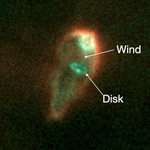
In this paper, led by myself at @QMULSPCS, we use @ESO #VLT MUSE to study two externally irradiated planet-forming discs in the Orion Nebular Cluster.
The discs are 203-504 and 203-506. In this image you can see they look very different...
arxiv.org/abs/2308.12342
(1/9)

Queen Mary Planets retweeted
Very happy to have been involved in this work led by Nick Ballering, which gives us a new view of photoevaporating planet-forming disks in Orion with @almaobs and @TheNRAO VLA. We can clearly distinguish the disk and ionisation front emission
arxiv.org/abs/2308.07369

Queen Mary Planets retweeted
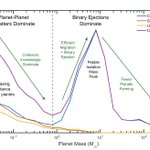
Researchers from our Astronomy Unit helped discover a new multiplanetary circumbinary system.
This is when planets orbit two stars instead of one, and it's only the second time such a system has ever been discovered.
Learn more here 🪐 qmul.ac.uk/spcs/news-and-eve…
📷Amanda Smith

ALT Black and white illustration of observatory, laptop and planet
Queen Mary Planets retweeted
Something a little different today. A collaboration between @QMULSPCS and Chris Duffy from @DERI_QMUL . We are working on the idea of photosynthesis on exoplanets and in this first paper look at their predicted absorption characteristics
arxiv.org/abs/2305.02067

Queen Mary Planets retweeted
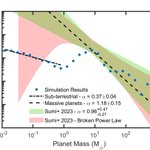
I’m so happy to see this paper out today. Back in 2019 when I was interviewing for fellowships, I was regularly asked: “planet-forming discs might be affected by the environment, but why should that actually affect the resulting planets?”. 1/8
arxiv.org/abs/2303.15177
Queen Mary Planets retweeted
Excited and extremely grateful to have been awarded an @ERC_research consolidator grant. It will provide funding for multiple postdocs to work with me, determining how planet-forming discs are affected by the harsh radiation in star forming regions. #ERCCoG (1/4)

Queen Mary Planets retweeted

Interested in the formation, evolution and dispersal of protoplanetary discs? Check out this event ras.ac.uk/events-and-meeting… run by the Royal Astronomical Society and attend either in person or online on Friday 14 October 2022. #protoplanetary
Queen Mary Planets retweeted
Remember that sensational JWST view of the cliffs of creation? I’m excited to have been involved in a new paper studying jets/outflows from young stars using this data. 1/6
arxiv.org/abs/2210.01101

Queen Mary Planets retweeted
During this #WorldSpaceWeek, Dr Heli Hietala and a team of space experts from across the world are at the International Space Science Institute in Bern, Switzerland, listening to the sounds solar wind makes when it hits the planets!

Queen Mary Planets retweeted
On 14th October we are running an RAS specialist discussion meeting in London on the Formation, evolution and dispersal of protoplanetary discs. More details on things like submitting talk abstracts here
ras.ac.uk/events-and-meeting…
Queen Mary Planets retweeted
Really pleased this review on external photoevaporation of planet-forming discs with @ajwinter93 is submitted.
This is all about how light from nearby stars affects sites of planet formation.
There's time to update, so email us with any comments.
arxiv.org/pdf/2206.11910.pdf

Queen Mary Planets retweeted

Today we’re at the @QMUL Festival of Communities, where our 8 A Level Chemistry students have been shortlisted for the @HMiC_uk @RoySocChem #MinoritiesInChemistry Poster Competition!
So proud of you Year 12!
@HarrisInvictus @HarrisFed @HFedScience @RSC_EiC


Queen Mary Planets retweeted

Come along and meet us at our Festival of Communities on Sunday 12th June! Black holes, spacetime, planets and solar observing together with @QMPlanets @QMULSPCS @QMUL @TowerHamletsNow Info: qmul.ac.uk/festival/
Queen Mary Planets retweeted
The astronomy unit at QMUL is looking to support research fellowship applicants. In particular it is a month until the deadline for @STFC_Matters Ernest Rutherford Fellowships expressions of interest.
Please feel free to contact me for further information.
@QMULSPCS
