
QMUL students working to highlight minorities in chemistry through making teaching resources. Project funded by @RoySocChem Inclusion and Diversity fund.
- Tweets88
- Following208
- Followers86
- Likes210


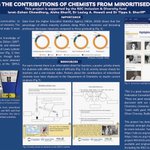


ALT A huge well done Y12 - patiently awaiting the results!"


ALT Dame Jocelyn Bell Burnell

ALT Text reads: Dame Jocelyn Bell Burnell believes her background growing up as a young woman in 1940s Northern Ireland spurred her on to achieve. After completing her UG degree at the University of Glasgow she went on to complete her PhD at the University of Cambridge. Here Bell Burnell reported feeling strong imposter syndrome as the only 'Northern girl' in a department full of 'affluent Southern men'. She felt she had to work twice as hard to prove she was worthy of being there.

ALT Test Reads: At the University of Cambridge, Bell Burnell was part of a team monitoring quasars. While reviewing printouts of the quasar experiments she noticed a regular radio pulse in the graphs. She pointed this out to her supervisor Dr Anthony Hewish. They worked tirelessly to identify what this pulse was, leading to the discovery of Pulsars, rapidly spinning neutron stars. The Discovery led to Hewish being awarded the Nobel Prize in Physics in 1974. 24 year old Bell Burnell's contributions were not recognised, but that did not stop her from going on to have a highly successful career in Astrophysics.

ALT Text Reads: In 2018 Dr Bell Burnell was finally recognised for her discovery and was awarded the Breakthough Prize in Fundamentalist Physics and £2.3 million. She used this money to create a fund designed to help more women, ethnic minorities and refugee students to become researchers. Bell Burnell felt that these underrepresented groups would provide the field with a new perspective which would only lead to more fresh and innovative ideas.