

Kirkland & Ellis Professor of Law, Harvard Law School. https://xitter.cf/t.co/HoBmvjhR1U
Cambridge, MA
Joined March 2011
- Tweets1.8K
- Following2.1K
- Followers3.8K
- Likes920




Nicholas Stephanopoulos retweeted

Stephanopoulos & Greenwood on the Death and Rebirth of Vote Dilution: legaltheoryblog.com/?p=11392…

We further propose a cause of action for non-racial vote dilution. This novel claim would work just like its racial analogue-except it would revolve entirely around a non-racial cleavage.
Nor does Callais impede race-neutral strategies that nevertheless stop much racial vote dilution. Two of these approaches are familiar: prohibitions of partisan gerrymandering and systems of proportional representation.
As a ruling constitutionally rooted in Congress's power to enforce the Fifteenth Amendment, Callais has no bearing on state voting rights acts that are more aggressive than their federal precursor.
Since some political aim is almost always incompatible with greater minority representation, this hurdle is nearly impossible to overcome.
While federal law can no longer directly curb racial vote dilution, however, the fight against this problem is far from over.
The Court achieves this result, above all, by requiring a plaintiff to prove that minority representation could increase without undermining any of a jurisdiction's political goals.
and a lawful alternative policy would likely improve the group's representation. The Supreme Court's 2026 decision in Louisiana v. Callais effectively terminates racial vote dilution as a federal legal claim.
Here's the abstract:
For more than half a century, federal law recognized the concept of racial vote dilution. Members of a racial group experience this condition when voting is racially polarized, the group is proportionally underrepresented,
New paper by @ruthgreenwood and me: "The Death and Rebirth of Vote Dilution," forthcoming in the Supreme Court Review.
We show how the Court tried to kill the concept of racial vote dilution in Callais -- and why this idea will never die.
papers.ssrn.com/sol3/papers.…
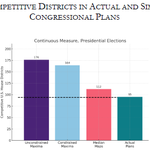
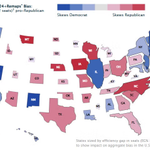
We filed our reply brief on Friday in our anti-competitive gerrymandering challenge against Wisconsin's congressional districts.
The issue (for now) is only whether our claim is cognizable under Wisconsin's constitution. Oral argument is on Sept. 16.
hlselectionlaw.org/s/2026082…
Nicholas Stephanopoulos retweeted

SDRI’s @MiriamSeifter, @RobYablon & other legal scholars filed an amicus brief in the WI Supreme Court explaining that anti-competitive gerrymandering is contrary to the WI Constitution's core democratic commitments. statedemocracy.law.wisc.edu/…

It’s feasible to identify intra-party factions, measure disparities in their treatment, and assess plans’ fairness with quantitative metrics and computer-generated maps.
Its representational harms are analogous to those inflicted by partisan gerrymandering, and it can be regulated through a similar doctrinal framework. Finally, we offer an empirical proof of concept using a recent state senate redistricting as a case study.
We then argue that intra-partisan gerrymandering should be recognized as a distinct legal theory, especially under state constitutions.
Next, we provide several examples of intra-partisan gerrymandering. These span the one-party Democratic South, major Democratic cities, and heavily Republican states.
In this Article, we first conceptualize intra-partisan gerrymandering. We define the practice, compare it to other forms of abusive redistricting, and explain how it unsettles views of parties as monolithic entities.
Intra-partisan gerrymandering matters precisely because it shapes the identity of the ruling intra-party coalition.
In jurisdictions dominated by a single party, though, intra-partisan gerrymandering is more impactful than its partisan counterpart. In these places, there’s no doubt which party will govern. What’s uncertain is which actors within this party will prevail.
From the abstract:
Partisan gerrymandering is a familiar practice. But intra-partisan gerrymandering—one faction within a party designing districts to handicap another faction within the same party—has barely been noticed by courts or scholars.
New article: @aaronrkaufman, @Chris_T_Kenny, and I just posted "Intra-Partisan Gerrymandering," forthcoming in @michlawreview.
The piece looks at one faction within a party using redistricting to disadvantage another faction within the same party.
papers.ssrn.com/sol3/papers.…