

Kirkland & Ellis Professor of Law, Harvard Law School. https://xitter.cf/t.co/HoBmvjhR1U
Cambridge, MA
Joined March 2011
- Tweets1.8K
- Following2.1K
- Followers3.8K
- Likes920




Pinned Tweet
🚨Today is publication day for my book, "Aligning Election Law"!
The book argues that promoting alignment between governmental outputs and popular preferences should be an overarching goal of election law.
You can buy the book at the link below.
global.oup.com/academic/prod…
Nicholas Stephanopoulos retweeted

Stephanopoulos & Greenwood on the Death and Rebirth of Vote Dilution: legaltheoryblog.com/?p=11392…

New paper by @ruthgreenwood and me: "The Death and Rebirth of Vote Dilution," forthcoming in the Supreme Court Review.
We show how the Court tried to kill the concept of racial vote dilution in Callais -- and why this idea will never die.
papers.ssrn.com/sol3/papers.…
Nor does Callais impede race-neutral strategies that nevertheless stop much racial vote dilution. Two of these approaches are familiar: prohibitions of partisan gerrymandering and systems of proportional representation.
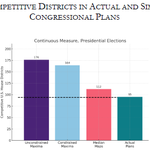
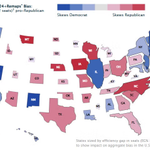
We filed our reply brief on Friday in our anti-competitive gerrymandering challenge against Wisconsin's congressional districts.
The issue (for now) is only whether our claim is cognizable under Wisconsin's constitution. Oral argument is on Sept. 16.
hlselectionlaw.org/s/2026082…
Nicholas Stephanopoulos retweeted

SDRI’s @MiriamSeifter, @RobYablon & other legal scholars filed an amicus brief in the WI Supreme Court explaining that anti-competitive gerrymandering is contrary to the WI Constitution's core democratic commitments. statedemocracy.law.wisc.edu/…

New article: @aaronrkaufman, @Chris_T_Kenny, and I just posted "Intra-Partisan Gerrymandering," forthcoming in @michlawreview.
The piece looks at one faction within a party using redistricting to disadvantage another faction within the same party.
papers.ssrn.com/sol3/papers.…
Its representational harms are analogous to those inflicted by partisan gerrymandering, and it can be regulated through a similar doctrinal framework. Finally, we offer an empirical proof of concept using a recent state senate redistricting as a case study.