
Producer, Writer, Emmy Winner, and Fantasy Football Commissioner. 20yrs in film/TV. SAAS - Storytelling as a Service provider. Not a bot, just a new account.
California, USA
Joined September 2025
- Tweets407
- Following545
- Followers98
- Likes975






Pinned Tweet
With football season underway, I thought this would be a good time to introduce myself.
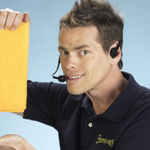
I’m Brian and this is me at the 2026 United Bowl.
What’s the United Bowl?
It’s the championship game for the United Football League.
What the UFL?
It’s a football league full of former and aspiring NFL players.
Why should you care?
Because if you love football, you’ll love the UFL.
Why am I telling you this?
Because the incomparable @RepoleStable hired me and a very talented group of people to tell the story of the 2026 season. His first as owner of the @TheUFL
For 20 years I’ve helped networks and brands tell stories on the small screen 📺 and now I want to help Creators tell stories that resonate on every screen.

Producers_Edge retweeted

Terrifying!
A Tesla slammed into the back of a CHP patrol vehicle on I-80 in Solano County. The Tesla driver said he was asleep with the car's self-driving feature turned on.
Two CHP officers were hurt in the crash.
Producers_Edge retweeted

The takeaway isn't to ditch AI. Let it help clean up pauses and mistakes, then spend your time on what makes the video better to watch
Which part of editing would you happily hand over?
youtube.com/watch?v=vv53-b-K…

Producers_Edge retweeted

This shot from ‘GODZILLA MINUS ZERO’ was created by only 2 artists with 2 billion water particles included.


Producers_Edge retweeted
When it comes to interviews, Producers have a motto:
Get what you need before going for what you want.
In TV, leaving the set without what you need can cost you thousands. Or even worse, your job.
So I learned how to reverse-engineer my questions.
First, figure out what your video needs. Think of it like a recipe. Your needs are the key ingredients. Your wants are the seasoning.
Then know your runway. How much time do you have?
With a long runway, you can chase tangents and circle back when an answer falls flat. If it's short, every question needs to earn its place. So ask in a way that gets a tight answer.
Let's say that you have a channel focused on tech, and you land an interview with a founder launching a groundbreaking new product. But they can only stay for 30 minutes.
Ingredients: what it does and who should (and shouldn't) use it.
Seasoning: the origin story and the moments of doubt.
Skip "Tell me about the product." Ask "What's one thing it does that nothing else can?"
Get your ingredients first. Then season to taste.
Because in my experience, no amount of seasoning will make a meal taste right when it's missing a key ingredient.
Producers_Edge retweeted

One of the biggest risks with AI is that it allows people to present themselves as experts in fields they actually know very little about.
I wonder how many editors, scriptwriters, researchers, and everything in between are basically just feeding prompts into AI with little to no real human input or expertise?


Producers_Edge retweeted
Creators could learn a lot from TV production.
In 20 years as a TV producer, I never saw an audience-retention graph for a show I produced.
We didn't have a printout telling us, “People got bored here.”
So we had to get good at diagnosing storytelling problems before audiences ever saw a frame.
And some of the tests were surprisingly simple.
Here's one you can use before your next upload:
Is this easy to understand?
NOT: Is it fast enough?
NOT: Are there enough graphics?
NOT: Does the music work?
Can a viewer easily understand what's happening, why it matters, and what they're supposed to be following?
Because sometimes what looks like a pacing problem is really a clarity problem.
Ask yourself: Does my audience understand my content?
Producers_Edge retweeted

Creators stress about the wrong things and blow money on the dumbest gear.
You don't need a $3,000 camera to get viewers. You don't need an $800 mic setup to be a good streamer.
Under $1,000 gets you:
Used PC: $700
Mic: $50
Webcam: $100
Light: $60
IEMs: $20
Gear won't make an inactive creator any better.
Creators could learn a lot from TV production.
In 20 years as a TV producer, I never saw an audience-retention graph for a show I produced.
We didn't have a printout telling us, “People got bored here.”
So we had to get good at diagnosing storytelling problems before audiences ever saw a frame.
And some of the tests were surprisingly simple.
Here's one you can use before your next upload:
Is this easy to understand?
NOT: Is it fast enough?
NOT: Are there enough graphics?
NOT: Does the music work?
Can a viewer easily understand what's happening, why it matters, and what they're supposed to be following?
Because sometimes what looks like a pacing problem is really a clarity problem.
Ask yourself: Does my audience understand my content?
Producers_Edge retweeted

There’s another benefit to adding chapters to videos.
Google shows them in search results, so each chapter is another chance for someone new to find you.
Name every chapter with the words someone would search for, like "Why the Fed is cutting rates."
To add them, list timestamps in your description starting at 0:00.
You need at least 3.

Producers_Edge retweeted
Business creators who only care about the click remind me of those cheesy infomercials from the 90s.
They'd advertise an amazing product.
Then the box arrived, you felt stupid for believing the ad, and never ordered from them again.
That's how viewers feel when they click on a great thumbnail where the content doesn't deliver.
The longer this goes on, the faster you'll burn through your Total Addressable Market.

Producers_Edge retweeted
Everybody keeps saying YouTube is killing TV. It's not.
People are just consuming content in places they never used to, and creators are rushing to fill the void.
Before YouTube, most of us read the back of the cereal box at breakfast, listened to music during our commute, or flipped through a magazine while we waited for the doctor to call our name.
In 2026, we're more likely to pull out our phones in those situations.
Yet when it comes to watching something before bed or on a plane, TV still wins by a mile.
It's not about preference. It's about what else they're doing when they press play.
And that's the part most creators never account for.
Business creators who only care about the click remind me of those cheesy infomercials from the 90s.
They'd advertise an amazing product.
Then the box arrived, you felt stupid for believing the ad, and never ordered from them again.
That's how viewers feel when they click on a great thumbnail where the content doesn't deliver.
The longer this goes on, the faster you'll burn through your Total Addressable Market.
Everybody keeps saying YouTube is killing TV. It's not.
People are just consuming content in places they never used to, and creators are rushing to fill the void.
Before YouTube, most of us read the back of the cereal box at breakfast, listened to music during our commute, or flipped through a magazine while we waited for the doctor to call our name.
In 2026, we're more likely to pull out our phones in those situations.
Yet when it comes to watching something before bed or on a plane, TV still wins by a mile.
It's not about preference. It's about what else they're doing when they press play.
And that's the part most creators never account for.
At home on the couch, you're locked in.
You can follow a complicated storyline, absorb a slow conversation, and catch the payoff that happens twenty minutes later.
But on the freeway, while fighting traffic?
Good luck following every step of a video breaking down marketing tactics.
That’s the difference between Active and Passive watching or listening.
Your content only works if it lands with an audience.
And whether it lands depends on how much of their brain you’re getting.
Technology made it possible to watch content just about anywhere, but it didn't give us more attention.
On TV, we always want the largest possible audience, so we design shows to keep you engaged whether you’re glued to the screen or distracted.
But too many creators make content only for the viewer who’s focused on every word.
They put all of their energy into lighting, b-roll, and slick editing. These are important, but they only engage the active viewer.
The person making dinner who's already lost their place several times?
They might spend effort rewinding, replaying, and concentrating harder. But more than likely they’ve already stopped following, and the next step is turning it off completely.
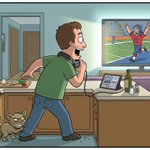
You're not just competing with other creators. Sometimes, you're competing with a touchdown.
