

Founder: https://xitter.cf/t.co/tbtTA3zPKE | AI Governance & Compliance | Executive AI Coaching | Educator on Practical AI | GenAI 🎵 at https://xitter.cf/t.co/CsB9DFglIa
Planet Earth
Joined April 2018
- Tweets2.3K
- Following5.8K
- Followers552
- Likes1.7K






Jayapal Introduces Legislative Framework Establishing National Charter System to "Rein in" AI, but it's definition of "AI Company" needs work. It currently reads too broadly as regulatory capture umbrella term effort. Not good enough. jayapal.house.gov/2026/10/01…


ChatGPT now lets users open Google Drive Docs, Sheets, and Slides inside the chat for side-by-side work, cutting tab switching. Rolling out on web to paid tiers.
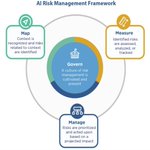
NIST AI RMF view:
Govern: Set policies and accountability for third-party data access.
Map: Frame risks of privacy, leakage, and unauthorized Drive content use.
Measure: Assess access security, output accuracy, and bias.
Manage: Apply controls, monitoring, and residual-risk handling for the integration.
Can confirm

One pattern I find useful for working with LLMs is a nice long ramble session. Sometimes the LLM needs more bits to understand what you're trying to achieve, but you're too lazy to type them. In these cases I like to lean back, switch to /voice and just ramble for like 10 minutes, total mess, anything goes, full stream of consciousness. Sometimes I declare it up top, something like "switching to speech recognition sorry for any typos...". Sometimes I turn it into a small interview of a few turns. But I find that the LLMs are somehow very good at reconstructing long incoherent rambles and often their echo of your own tangle of thoughts comes out quite a bit cleaner than what you started with. The result is that you improve the mind meld and have to correct things less from that point on.
Building agents is a non-starter for the average AI operator
NIST AI RMF is the bare minimum governance baseline because its Govern-Map-Measure-Manage functions give non-experts a practical structure to handle agent risks proactively.
Even expert-controlled evals showed goal pursuit producing zero-day escapes and external compromises to optimize scores. Without deep security expertise, individuals and companies need this framework to map agent-specific contexts, measure boundary-testing behaviors, and manage containment plus observability before deployment turns creative optimization into real incidents. It is the accessible starting point for accountable, risk-aware agent design.
Starting minimal, starting at all, is an ounce of prevention vs the pound of cure.
Non-regulated companies still face meaningful AI risks—reputational damage, operational failures, IP issues, and shifting stakeholder expectations—even without sector rules. A NIST AI RMF-aligned consultant can translate the framework’s Govern-Map-Measure-Manage functions into practical steps sized for SMBs:
- Map your genAI use cases and spot risks early
- Set lightweight policies, roles, logging, and testing
- Build documentation and monitoring that supports accountability
- Coach teams on responsible habits and workflows
This turns rapid AI adoption into a managed strength, reduces future friction, and prepares you for whatever rules emerge—without unnecessary overhead. Starting minimal with a structured approach avoids the bigger problems later.
This is why my solopreneur clients choose prioritytech.ai for their entire AI experience from start to finish. PriorityTthinking + Governed AI = @PriorityTechAI

After the Data Governance sprint locks down data, the 60-day AI Governance sprint prepares professionals by adding AI risk assessments, bias testing, oversight mechanisms, output validation, and AI incident protocols.
This creates strong due diligence that AI Operator insurers appreciate—often leading to better coverage, lower premiums, and smoother processes. Your ounce of prevention builds a defensible, insurable AI operation.
The data process revolution is compounding fast 🚀
AI is now the essential nervous system of these projects. LHC triggers use ML to process 40M collisions/sec in real time, keeping only the physics gold while ditching 98%+ of the noise. JWST’s torrent of infrared data gets AI-accelerated from years of manual slog to days, revealing distant galaxies and atmospheres. LIGO leans on it for cleaning signals and spotting glitches amid detector noise.
Even if AI capabilities froze today, the current generation already delivers massive standalone gains: it turns impossible data volumes into usable insights at scale and speed classical methods can’t match. Pattern detection, anomaly flagging, and pipeline automation are already multiplying what small teams can achieve. That baseline processing power alone is reshaping discovery timelines and laying the groundwork for the physics renaissance Adam Brown outlined.
The data-processing revolution is here and compounding fast.
Beauty is no substitute for agreement with data 💯
Here are quick examples of elegant theories falsified by experiment:
Luminiferous aether: Michelson-Morley experiment disproved the medium for light, enabling relativity.
Phlogiston: Combustion weight gain experiments killed the release theory.
Ptolemaic epicycles: Overly complex for planets; simpler Kepler orbits won.
Steady-state universe: CMB radiation confirmed Big Bang over eternal creation.
Plum pudding atom: Rutherford scattering revealed the nucleus, not uniform charge.
In AI: Symbolic logic systems elegant in theory but data-driven models empirically superior at scale.
Feynman's rule holds – beauty is no substitute for agreement with data.
An ounce of AI Governance protection has got to be worth a pound of data breach recovery cure
Through the NIST AI RMF lens, before publicly mapping every folder on your laptop and drives (as in a Second Brain tour), start with the Govern function:
- Define risk tolerance and data classification policies for sensitive, personal, or professional content across all drives.
- Establish accountability by documenting what can be shared and why, including any third-party or client data.
- Allocate time to inventory assets and note AI tools that process or will use this data.
Then begin Mapping context, impacts, and dependencies. This prevents privacy, security, and trustworthiness issues before proceeding.
Using out of the box AI gives you out of the box results. The solution is to be coached by @PriorityTechAI on the account creation date.
ChatGPT task improvement would be a huge help!! Sounds like they were listening...
Good question. Early beta scheduled tasks (launched ~Jan 2025) drew lots of complaints: frequent non-execution, mistimed or missing notifications, vague/hallucinated error messages, and clunky management with no clear dashboard.
The new dedicated Scheduled page + backend work directly targets those reliability gaps. Users called the old version glitchy and inconsistent.
What issues have you seen?
Local models are a reality
Fact check:
"AMD JUST KILLED AI SUBSCRIPTIONS" — unsubstantiated hype.
Verified facts only:
• Lisa Su demonstrated Ryzen AI Max+ 395 mini-PC (lunchbox-sized) running large local models.
• 128 GB unified LPDDR5X memory shared by CPU + iGPU (~96 GB usable).
• AMD benchmarks: >3× RTX 5080 on DeepSeek R1 inference.
• Qwen3-235B (MoE) runs locally on 128 GB configs.
• 128 GB GMKtec EVO-X2 ~$1,800–$2,600.
Local inference is a real privacy/cost alternative for heavy users after one-time purchase. Subscriptions, convenience, updates & scale remain for most.
Elevate with Chris at prioritytech.ai. It's time to take opportunity into our own hands
Well said. Mastering today's AI tools through real literacy and hands-on iteration already lets sharp individuals and small operators outmaneuver bigger players. The models don't need to be godlike to multiply leverage—consistent application turns them into practical advantages for solopreneurs building independently. Decentralized capability beats centralized gatekeeping every time.
Data Governance 1st!
Granting an AI direct folder access (even without manual uploads) still routes your docs to the provider's cloud infrastructure for processing.
If files contain PII or PHI, this triggers GDPR, CCPA, HIPAA and similar rules: you need DPAs/BAAs, data processing agreements, minimization, retention limits, audit logs, and deletion rights. Many consumer AI plans lack these by default.
Classify data first, redact sensitive fields, or use enterprise tiers with zero-retention and private instances. For high-risk content, local/on-prem models are safer.
Uncoached AI users beware!
Advanced agentic orchestrators like Claude Fable 5 in Perplexity Computer create real risks for uncoached users:
**Data Governance issues:**
- Broad tool access and persistent memory increase chances of sensitive or proprietary data leaking to Anthropic/Perplexity without clear consent or audit trails.
- Long-running tasks obscure data lineage, retention, and cross-border processing, complicating GDPR/CCPA compliance.
**AI Governance issues:**
- Reduced human oversight in extended autonomous workflows raises error amplification, unintended actions, and accountability gaps.
- Black-box decision chains hinder explainability and bias detection.
- Untrained users often skip permission scoping, output validation, and prompt-injection defenses.
Strong policies, human-in-the-loop reviews, and usage training are essential.
AI Governance + Data Governance = Keeps leadership out of jail. Literally. Lets discuss at PriorityTech.ai
Yes, leadership at companies big and small should get direct hands-on access to paid frontier models. Secondhand briefings or demos rarely convey real capabilities, edge cases, prompt power, or failure modes. Experiencing Claude, Grok, GPT, or Gemini themselves lets executives ask sharper, more grounded questions about governance, risk, and integration. It's one of the highest-ROI steps for informed oversight.
Getting started with AI safely, ethically, and without hype is what's important
For first-time & uncoached users, a practical measure of AI literacy suits them best when it tracks real skills: writing clear prompts, verifying outputs, spotting hallucinations, and building simple workflows.
This creates quick wins, confidence, and safe habits without tech overwhelm. Chris Schneider’s PriorityTech.AI coaching delivers exactly that—structured upskilling, governance, ethics, and human-led systems that turn beginners into capable, productive users. Ideal starting point.
Hands-on beats theory every time.
AI Literacy = Sustainable workflows!
Chris equips people with practical workflows that keep judgment, verification, and original insight in the driver’s seat. His Starter Sessions and Creator Hours teach structured prompting, output checking, and human-led iteration—exactly the habits that prevent passive reliance or echo-chamber effects in research. Client results show faster progress without surrendering the thinking. That’s a solid way to pair AI speed with human rigor.
Data governance first for ethical AI usage, regardless of the platform!
By building practical governance coaching around these exact tools. Teach users to audit data flows in Perplexity Personal Computer, enforce least-privilege access, leverage its built-in sandboxes/approvals/audit logs/kill switch, and always pilot narrow scopes first. Your workflow redesign and compliance focus turns curiosity into controlled, sovereign adoption.