
Bristlemoon Capital | https://xitter.cf/t.co/GvT4Tt3YPW | Views are my own and not investment advice
Australia
Joined July 2018
- Tweets802
- Following399
- Followers3.7K
- Likes259




Two things from $SPCX today.
[preface this with Elon's singular ability to secure funding - so let's assume he's good for whatever amount this will cost]
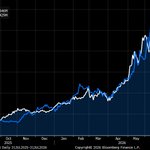
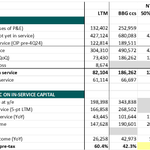
1) If SPCX can bring 10GW online in 2027 as an exclusive $NVDA customer, that's probably ~40% of ccs data centre revenue for NVDA. If Jensen allows this level of single-customer concentration, the compute market will likely remain extremely tight in 2027 because maybe 20% of incremental compute flops is going to a single hyperscaler that also doesn't have much 1P model inference to serve. (and >half of incremental TPU flops prob goes to a single customer as well)
If that's the case, compute available to rent in 2027 should also remain extremely tight, which means the $40-50B/GW scarcity pricing SPCX is getting on its short-term rentals might persist for longer than anyone expects (maybe Elon is not bullshitting with $500B ARR). This constrains competing frontier labs' access to compute (except Meta) while giving XAI multiple GW of training compute that can be paid for with ~1Y of GPU rental revenues (e.g. 4/6GW rental/training split).
This could also prove hugely beneficial to the smaller neoclouds. If the party that corners most of the rental compute market is renting out at $40-50B, this should help the neoclouds secure higher pricing for their multi-yr contracts (say >$25B/GW) and possibly better prepayment / backstop terms. Anything that makes the NVDA neoclouds less fragile is a tick in Jensen's books.
Maybe even Zuck gets in on the rental action, which should mitigate the inevitable (IMO) disappointment with Muse adoption and retention (let alone monetisation).
2) Surely a single hyperscaler (which wasn't even on the scene a year ago) confident in bringing on 10GW incremental power in 2027 and gunning for 20GW stretch target using "every other source of power we can obtain" is a big tailwind for a broad swathe of the power equipment vendors?
Daniel Wu retweeted

I've been critical in the past of AI compute indexes and the willingness to price compute based on the spot rental price, but now that the AI reset is sinking into the repricing of AI buildout debt its time to realize that the cost of capital is what determines the price of compute.
The most important number in GPU pricing right now isn't $/GPU-hour. It's the gap between what a hyperscaler pays to borrow (~90bp over Treasuries) and what a neocloud pays (~1,100bp).
The cost of compute is now set by the cost of capital, and the spot rental rate no longer tells you much.
The price of an H100 isn't one number. The same chip in the same rack costs a different amount depending on whose balance sheet it sits on. A ~1,000bp funding gap is a structural cost advantage that no amount of operating skill closes.
For example, take one GPU-hour apart. Most of it isn't power or space. It's paying back the chip, the interest on the loan that bought it, and the return the equity expects. A $40–55k all-in GPU, 75% debt-funded, at ~7,000 utilized hours a year is a financing instrument that happens to do matrix multiplication.
As the +500bp on neocloud debt (10%→15%) adds $0.20–0.30 to the break-even cost of every GPU-hour, which is then added on to the rental price.
That's 8–10% of the H100 index, from a credit spread alone, driven almost entirely by the cost of capital.
That means that the compute spot index is a derivative of the AI infra debt credit curve and the squeeze on neocloud margins.


Daniel Wu retweeted

市场被7月惊吓之后,有点不太敢炒缺货 ie MLCC一直缺货涨,Murata/Taiyo也没大涨
As you known, Im not a fan of bottleneck trade 我也炒,但明白“可炒,不可投资”
相同部件纯靠涨价—就是周期股的定义。卡脖子三年,不代表股票能涨三年。相反,股价会在短期打满涨价缺货预期
一、在缺货预期出现后继续涨,你必须证明
1. 能进一步无序涨价
2. 或确定缺货周期更长
3. 产能可以“持续”显著提高,且能保持“持续”涨价(这本身就有矛盾—如果真可以就不是周期股了,是NV了)
即使3点中你认为有可能,跟买marginal benefit也太低
因为,会存在“变数”包括
——谣言谁谁又delay了—本质你没有“拿5年删IB”的信心(挑战)
——可能竞争与类似的rumors:投入研发、产能拼一个别人占领技术、产能高点的存量市场无异自杀。但很多零部件公司的绝对垄断过去就是建立在上述存量市场上的,当AI大需求浪潮席卷过来。后起之秀的试错成本就变得很低了—-看看CXMT
二、所以缺货trade最靠谱的是“先信”
买在无人问津处,等他缺货预期起来,连X都知道缺货了就跑。这样marginal benefit才值得
我不会跑在盈利最高,因为盈利周期和股价周期lag很大。更高赔率的是跑在预期落地。我承认上述1/2/3都很可能发生,但是鱼为有肥有瘦
三、切记是“炒”
与需求无关,别“炒”缺货还说需求,你都定义是瓶颈了
与盈利无关,缺货票盈利真爬坡就该跑了
要知道瓶颈是机会也是挑战
机会是让公司忽然莫名其妙赚居多钱;让本来要死的后发者,在提价能吃残羹剩饭也能活好、能站稳脚
挑战是因为你掐脖子,所有产业中优秀的人都会研究怎么“优化”使用你、有没有替代方案
周期大浪平息之后,必然一地鸡毛(所以没人敢拿5年)
四、“投资”什么
投资产品持续迭代
1. 由良率提高、产品迭代持续提高毛利的公司
2. 因为本身产品迭代在带动行业进步,供货商/客户设计是围绕你的R&D进步迭代的。由一圈公司形成生态,门槛不是自己而是产业
现在半导体中就一句话总结:你这个公司是不是在贡献token deflation,并且还能在这个过程中提毛利、提收入
这才是正向飞轮
ps 比较下LITE COHR这种就不是炒瓶颈,AXTI是(虽然他有些政策特殊性)