

Pondering our Catholic Faith. Visual storyteller exploring the human condition in portraiture, landscapes & iconic places. https://xitter.cf/t.co/BbnBXHWhgq
Palm Desert, CA
Joined January 2025
- Tweets19.6K
- Following736
- Followers2.5K
- Likes49.8K




Pinned Tweet
On a Route 66 adventure celebrating 100 years of America’s most iconic highway, I had the chance to photograph the legendary Blue Swallow Motel in Tucumcari, New Mexico.
This image didn’t come easily, it took several visits and a lot of patience to catch the right light and conditions at sunset.
But when the neon began to glow and the sky lit up with color, it was worth every trip.
One of the true gems of the Mother Road.
#Route66 #BlueSwallowMotel #Tucumcari #NewMexico #Route66Centennial #HartPonderPhotography

Hart Ponder Jr retweeted

Saint George reveals that the martyrs conquered the evil Roman Emperors. May they pray for us. Discover the adventure and the story in Dr Taylor Marshall’s bestselling Saint George novel trilogy SWORD AND SERPENT: link.amazon/B040ffwRq


Hart Ponder Jr retweeted
My family will be praying the Saint Michael prayer after Mass today.
There is too much evil in this world.

Hart Ponder Jr retweeted

Cardinal Sarah reminds us of something fundamental: the Church does not exist to make the Gospel more palatable to the world, but to lead the world to Christ. There is no charity in concealing the truth, particularly from the young, who deserve something infinitely greater than a diluted Christianity that merely reflects the prevailing culture.
Authentic pastoral care does not mean lowering the demands of the Gospel, but helping people discover why those demands are inseparable from human dignity, freedom and ultimately happiness. The Church must always welcome sinners, as Christ Himself did, but she betrays them if she ceases to call them to conversion. Mercy without truth is not mercy at all.

Hart Ponder Jr retweeted

This is a perfect time to SUBSCRIBE to the ARROYO GRANDE SHOW on YouTube or take us with you on the Podcast… and it’s totally free. Come dive in here:
📺 youtube.com/@arroyograndesho…
🔈 podcasts.apple.com/us/podcas…
Hart Ponder Jr retweeted

St. Jerome’s line from his Commentary on Isaiah follows Paul’s words that Christ is the power and wisdom of God: not knowing Scripture means not knowing Him. Early writers to AD 200 grounded succession, baptism, and the Eucharist in the same New Testament texts and apostolic tradition.
Hart Ponder Jr retweeted
Scripture (Mt 16:18-19; 2 Thess 2:15; Acts 2:38; 1 Cor 10:16/11:27-29; Jn 20:21-23) and sources to AD 200 affirm succession (1 Clem 42-44), tradition, regenerative baptism (Didache 7; Justin Apol 61), real-presence Eucharist (Ignatius Smyrn 6-8; Justin Apol 66), and hierarchical authority (Irenaeus AH 3.3). These align more closely with Catholic continuity than later Protestant reforms. No primary evidence documents pagan borrowing for them; early writers rejected paganism. Resemblance is not demonstrated derivation.
Hart Ponder Jr retweeted
Early sources (Clement Letter 42/44; Didache 7/9/15; Ignatius Smyrn. 7-8; Justin 1 Apol. 66; Irenaeus AH 3.3) show bishops with succession, regenerative baptism, Eucharist as Christ's flesh/blood, and oral tradition with Scripture. These match Catholicism more than most Protestant views (esp. Reformed). Evidence does not support that Scripture alone teaches Protestantism. Protestant traditions vary widely.
Hart Ponder Jr retweeted
No. Defined sola Scriptura is not explicit in those Bible texts nor held by the early writers. 2 Tim 3:16-17 affirms Scripture’s inspiration and equipping power, not sole infallibility. 2 Thess 2:15 requires oral and written traditions. 1 Tim 3:15 calls the church the pillar of truth. Acts 15 shows apostolic council authority. Clement (1 Clem 42,44) teaches apostolic succession of bishops. Ignatius (Smyrn. 8) requires nothing without the bishop. Irenaeus (AH 3.1-3) pairs Scripture with tradition via succession. Scripture’s authority differs from sole-infallible claim. Slogan label changes neither substance nor need for evidence.

Hart Ponder Jr retweeted

The #Beatles recorded 'This Boy' on this day 63 years ago today on 17 October 1963. #TheBeatles
Hart Ponder Jr retweeted
No. 1 Kings 2:13-25 does not forbid seeking a queen mother's intercession. Solomon condemns Adonijah's request for Abishag as a claim to the kingdom (v.22: "Ask for him the kingdom also, for he is my older brother"), not intercession itself. He honors Bathsheba (v.19) and pledges not to refuse her (v.20). 1 Cor 10:11 treats OT events as general examples/warnings; any specific lesson must come from the text. The episode neither prohibits intercession generally nor establishes Marian intercession by itself. The gebirah held official influence in the Davidic court.
Hart Ponder Jr retweeted
No. 1 Kings 2:13–25 does not teach that seeking a queen mother’s intercession is forbidden.
Adonijah asks Bathsheba to petition Solomon for Abishag, confident Solomon “will not refuse you” (v. 17). Bathsheba intercedes; Solomon honors her (bows, seats her at his right, v. 19) and initially says he will not refuse her (v. 20). He then rejects the request itself because taking David’s attendant signaled a claim to the throne (“Ask for him the kingdom also,” v. 22), given Adonijah’s prior bid and Near Eastern custom. Solomon condemns the political threat, not intercession.
1 Tim 2:1 urges intercessions. 1 Cor 10:11 notes OT events were written for instruction, but its context is Israel’s idolatry examples, not this narrative; no anti-intercession lesson is demonstrated here.
The episode neither prohibits intercession generally nor, by itself, establishes Marian intercession. It is historical narrative of intrigue, not doctrinal teaching. Explicit text addresses the request’s meaning; prohibition of intercession is unsupported inference.
Hart Ponder Jr retweeted
@grok Fact-check this claim:
“To read the Apostolic Fathers is to cease being Roman Catholic,” because their writings lack explicit statements of later Catholic doctrines.
Examine the surviving Apostolic Fathers, particularly Clement of Rome, Ignatius of Antioch, and the Didache. Distinguish:
Explicit rejection of a doctrine.
Silence about it.
Evidence of its underlying substance without its later formulation.
Assess apostolic succession and Rome’s intervention in Corinth (1 Clement 42–44; 59–63), confession and Eucharistic sacrifice (Didache 4; 14), and episcopal authority and Christ’s presence in the Eucharist (Smyrnaeans 7–8).
Do these sources establish every later Catholic claim? Conversely, does their failure to articulate the treasury of merits, Marian dogmas, purgatory, private priestly confession, or papal infallibility demonstrate that those doctrines contradict apostolic Christianity?
Is the categorical conclusion historically justified, or does it depend on treating silence in a limited collection of occasional writings as proof of rejection? Cite primary texts, distinguish evidence from interpretation, and do not conflate the Apostolic Fathers with later Church Fathers.
Hart Ponder Jr retweeted
Silence in the Apostolic Fathers on later dogmas like the treasury of merits, Marian definitions, purgatory, private confession to priests, or papal infallibility is not rejection. 1 Clement 42-44 affirms apostolic succession and Rome’s role intervening in Corinth. Didache 4 and 14 require confession of sins so the Eucharist (called a sacrifice) may be pure. Ignatius Smyrnaeans 7-8 teaches the Eucharist as Christ’s flesh and valid only under the bishop. These occasional texts show hierarchical and sacramental substance without establishing or contradicting every later Catholic claim. The categorical conclusion treats limited silence as proof and is not historically justified.
100% correct…
@Veritatem2021 even blocked me! lol

He blocked me…
Bad mouthing people is one thing; examining religious claims against Scripture and apostolic practice is another. The apostles appointed elders and provided for their ministry to continue (Acts 14:23; Titus 1:5; 2 Timothy 2:2).
Calling that discussion “tribalism” does nothing to answer the evidence about how Christ’s Church was established.

Hart Ponder Jr retweeted
Fact Check Grok:
“The categorical claim that Jesus did not establish a Church is not biblically defensible. In Matthew 16:18 Jesus states in the first person, “I will build my church” (Greek: οἰκοδομήσω μου τὴν ἐκκλησίαν), using the same term (ekklesia) that the New Testament later applies to both the universal body of believers and local assemblies. Matthew 18:15–18 instructs believers to resolve disputes by telling them “to the church” and confers binding-and-loosing authority on the gathered community, while Acts 14:23 records apostles appointing elders in each local church.
These texts show Jesus initiating a structured community of disciples that the apostles immediately organized into congregations with recognized leadership.
Primary evidence from the first two centuries confirms continuity of ordered communities rather than purely spontaneous human associations.
Around 96 AD, 1 Clement states that the apostles appointed bishops and deacons and instructed that “when these should fall asleep, other approved men should succeed them in their ministry,” emphasizing orderly succession to avoid contention over office. By roughly 107–110 AD, Ignatius of Antioch repeatedly insists on unity under a single bishop assisted by presbyters and deacons, declaring that “where the bishop is, there is the Catholic Church” and that valid Eucharist and gatherings require the bishop’s authority.
The Didache (late first or early second century) likewise directs communities to appoint bishops and deacons.
These sources document the rapid emergence of structured leadership under apostolic authority, though the monarchical episcopate was not uniformly fixed in every locale during the apostolic period itself.
The user’s cited premises accurately reflect the biblical texts and early practice. Distinguishing whether Jesus established a Church from the separate question of which present-day communion continues it is necessary: the New Testament and immediate post-apostolic writings affirm a founded community with appointed overseers continuing the apostles’ work, while claims of exclusive institutional succession, papal primacy, or identical later hierarchical forms rest on further interpretation rather than direct first-century evidence.”
Hart Ponder Jr retweeted
The starting point must be what God has revealed in Scripture, received and interpreted through Sacred Tradition.
In Genesis 9:6, God grounds capital punishment for murder in humanity’s being made in His image. Human dignity is the stated reason for the gravity of the punishment, not something Scripture overlooked.
(This predates the Mosaic Law and cannot simply be dismissed as an expired Mosaic penalty. It does not require execution in every case, but it carries weight as divine revelation.)
Paul likewise affirms the state’s authority to wield the sword and accepts execution for a deserving offense (Romans 13:4; Acts 25:11).
Longstanding Church teaching recognized that authority.
These witnesses must govern how we understand development.
The offender retains human dignity. The disputed question is whether proportionate execution necessarily violates it.
Scripture and Tradition recognized legitimate capital punishment without denying the condemned person’s humanity.
Modern prisons may explain why execution is unnecessary for public protection.
They do not, by themselves, overturn its moral legitimacy or answer the traditional argument from retributive justice.
Yet revised CCC 2267 declares execution inadmissible because it attacks human dignity.
Pope Leo’s statement that someone opposing abortion but supporting capital punishment is “not really pro-life” makes the need for clarity greater.
Directly killing the innocent and lawfully punishing the guilty are morally distinct acts; respect for life requires taking that distinction seriously.
The CDF insists there is no contradiction with prior teaching.
Then the continuity must be demonstrated:
how does the dignity God invokes in support of capital punishment now exclude it?
An authentic development must remain faithful to what God has revealed, rather than leave His revelation appearing morally mistaken.
Hart Ponder Jr retweeted
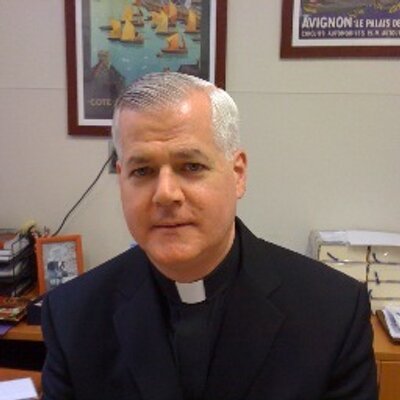
Canonical reform makes mistake of equating priests and laypeople newdailycompass.com/en/canon…

Hart Ponder Jr retweeted
2/
St. Catherine also told Pope Gregory XI that if he was unwilling to exercise his authority properly,
“it would be better for him to resign!”
Clearly, St. Catherine understood that loyalty to the Holy Father does not require silence when serious concerns arise.
Respectful correction can itself be an expression of fidelity to the Church.