

Director & founder of EIS and @PropertySharem1, an economic forecasting service. Follow @citdiv, my new focus subject Get my book from @SWpublishers
Joined June 2011
- Tweets3.1K
- Following167
- Followers11.9K
- Likes4K






Pinned Tweet
To get even better updates from Phil, don't forget to either:
Subscribe to my blog for free: bit.ly/3UHWKeJ
or
Subscribe to Boom Bust Bulletin (BBB) for just US$47 per year: bit.ly/3YVB815
Incredible value to keep you right up to date with all the latest real estate cycle information and Gann timing.

Phillip J Anderson retweeted

A new era for BHP? Or have we seen this all before?
In 2006, copper was making headlines. Twenty years later, BHP is back in focus, and the similarities are hard to ignore.
Our latest insight explores the historical parallels between the two periods and what they could mean for investors.
Read the full article: oakleighfs.com/insights/oct2…
@DarrenW006 @TimMoffOak

Phillip J Anderson retweeted
Over the past 12 months, the Oakleigh 18.6 Strategic Investment Portfolio returned +10.6% as it navigated changing market conditions and elevated downside risks.
As the 18.6-year Real Estate and Banking Cycle moves into the latter stages of Second Half Expansion, the Portfolio selectively increased growth exposure while reducing cash and cash ETFs from 52% to 27%, maintaining a focus on capital preservation and flexibility as risks increase.
Explore the Portfolio's performance, investment approach and current positioning on our website.
Learn more: oakleighfs.com/strategic-inv…
*Return is just one factor to consider when thinking about investing your money. Past performance is not a reliable indicator of future performance.
____________________
Investment Team & Partners:
@TimMoffOak, Lucas Wood, @AkhilGPatel, @Phil_J_Anderson & @PropertySharem1

What if the real driver of the cost-of-living crisis isn’t inflation, but land?
🏠 Land prices rise.
💳 Debt grows.
📈 Housing becomes less affordable.
💸 Everyday costs keep climbing.
Are we approaching a major economic turning point in 2026?
Jonathan Brown and I explore the 18.6-year real estate cycle and the Citizen’s Dividend on the Shepheard-Walwyn Podcast.

🎧 Listen now to discover what the next economic shift could mean for you:
realestate.propertysharemark…


Phillip J Anderson retweeted
The Oakleigh Flagship Equities Portfolio returned +6.2% over the past year, outperforming the All Ordinaries Index, which declined by 1.8%.
Despite rising bond yields and pressure on interest rate-sensitive sectors, the Portfolio remained focused on quality businesses while actively managing its positions and selectively deploying cash into new opportunities.
Explore the Portfolio's performance, investment approach and current positioning on our website.
Learn more: oakleighfs.com/flagship-equi…
Return is just one factor to consider when thinking about investing your money. Past performance is not a reliable indicator of future performance.
____________________
Investment Team & Partners:
@TimMoffOak, Lucas Wood & @AkhilGPatel

Phillip J Anderson retweeted

These are the books to pick up first! 📚
Two reads that change how you think about money, housing and the economy, both by Fred Harrison.
Have you read one of these before? Tell us below 👇🏼
Find them at shepheardwalwyn.com

Read more here: realestate.propertysharemark…

Emily wasn’t building wealth. She was fighting just to survive.
“I’m probably the most financially stressed I’ve ever been in my life,” she says.
The great homeowning dream…but would anyone really sign up for this?
Every obsession has its own unique cost. Emily has just experienced it.
Are you next?

Learn more about Phil’s archive and see the 2025 archive here: realestate.propertysharemark…

As economic alarms sound once again, from warnings of AI-fueled bubbles to fears of a political breakdown, one economist is urging investors to zoom out and follow the rhythms of history.
Phillip J. Anderson, an Australian economist and founder of @PropertySharem1, is best known for his prescient forecast of the 2008 U.S. financial crisis.
In his landmark book, The Secret Life of Real Estate and Banking, Anderson traced over 200 years of U.S. economic history to reveal a recurring 18.6-year cycle driven by land speculation and credit expansion.
His analysis showed how previous crashes, including the one in 2008, were not random. It was part of a predictable pattern rooted in real estate dynamics.

According to Anderson’s model, the last major land cycle bottomed in 2012. That places the next land peak around 2026. What we are witnessing now, he says, is the winner’s curse. “Economic history moves in rhythms,” Anderson explains. “Those who study the cycle do not just react to markets, but they also anticipate them.”
To understand it, go here: realestate.propertysharemark…
Phillip J Anderson retweeted

War is profitable business...until the price of land falls.
The future of air combat is moving beyond Top Gun. AI-powered drones could be flying alongside human pilots soon, however advanced military technology comes with a huge price tag.
In 'The Secret Life of Real Estate and Banking', Phil Anderson examines how war can be a lucrative business. It's all in Chapter 15: “Knowledge We Gained Along the Way”, pp. 329–330.
It's hard not to notice once you see it. Every real estate cycle now looks the same.
Read the book here: shepheardwalwyn.com/product/…

Phillip J Anderson retweeted
Imagine a yearly cheque, just for being a citizen..
What if every citizen got a yearly cheque just for being one?
@Phil_J_Anderson breaks down a New Zealand proposal to pay around $19,500 a year to every person, how Alaska already does a smaller version from its oil rents, and why the same idea could, in theory, pay every person on earth.
It’s not bad luck, it’s a predictable pattern that repeats every 18.6 years!
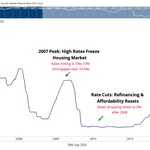
In The Secret Life of Real Estate and Banking, Phil Anderson explores how interest rates move in a rhythm that repeats every 18.6 years.
Taking on a massive mortgage at the peak of an interest rate spike is dangerous. But as Phil points out in his book, these high rates don't last forever.
When the housing market cools down, central banks will drop interest rates again. This will make mortgages cheaper, giving smart buyers a chance to step back in or refinance at much lower rates.

Did you know? When copper prices soar, you can’t afford a house.
It sounds surprising, but it’s a proven historical rule from Phil Anderson’s The Secret Life of Real Estate and Banking.
How do we know this? Just look at history.
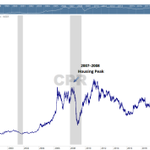
At the end of every 18.6-year real estate cycle (like 1989–1990 and 2007–2008), construction, power grid expansion, and speculative building hit a fever pitch.
As Phil explains in his book, copper prices skyrocket at the exact moment land values reach their absolute peak, driving raw material costs through the roof.
What happens when copper finally falls?
Raw material input costs drop, construction costs ease, and housing affordability gradually resets.
Watch Copper - it tells you when the land mania has hit its limit and when affordability is returning.

Free sign up if you want to get informed about copper/housing prices: realestate.propertysharemark…

