

Assessor e Head de RV - Arquê Capital 800M / Necton - BTG Acesse meu melhor conteúdo aqui 👇🏼 https://xitter.cf/t.co/nPGdCmhvbk
Joined August 2021
- Tweets6.7K
- Following401
- Followers6.3K
- Likes2.1K





Pedro Segolin retweeted

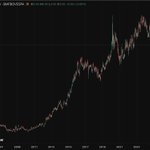
This breakout is going to be so epic.
Almost 20 years later...
The longer the consolidation, the more powerful the breakout tends to be.


This is bullish for Brazil.
What makes this setup particularly interesting is the confluence of technical and macro factors.
The chart is saying:
Brazil has broken out.
The macro picture potentially says:
Brazil may be entering a period where falling rates, strong commodity revenues, structural reforms and improving foreign capital flows can reinforce that breakout.
That's a powerful combination, and if the election brings a more "pro-market" candidate, it could be another catalyst.
I would therefore view the current EWZ breakout less as a short-term trading signal and more as a potential confirmation that a larger secular trend is beginning.
Worth watching.

Pedro Segolin retweeted

“Wealth is like sea-water; the more we drink, the thirstier we become; and the same is true of fame.”
Pedro Segolin retweeted

Existe um tipo de ativo que cresce mesmo quando ninguém está olhando, não aparece em nenhum balanço e rende juros durante décadas. Não é dinheiro. É como você trata as pessoas.
Pedro Segolin retweeted

🚨 Never forget…
Your whole idea of buying every dip through ETF and chill is a 13-year illusion.
100 years of S&P 500 real returns, split into regimes:
– 1928-1948: 0.6% a year
– 1949-1968: 12.7%
– 1969-1984: 0.5%
– 1985-1999: 15.1%
– 2000-2012: -0.8%
– 2013-2025: 11.8%
Notice the rhythm. A golden era, then a dead one.
Feast, famine, feast, famine.
Not one regime in a century simply continued.
The long-term average of 7% real that everyone plans with? Almost no generation actually experienced it. You got 12%, or you got zero.
The average is a fiction made of two extremes.
Everyone who started investing after 2009 has only known the feast. Buy the dip worked every single time. Not because it's a law. Because you happened to live inside the blue bar.
But the current run is already as long and as rich as the two golden eras before it. And every one of them ended the same way: not with a warning, with a decade.
Mean reversion doesn't announce itself. It just stops paying.
The next 0.5% decade will feel impossible right up until it starts. It always has.

Pedro Segolin retweeted

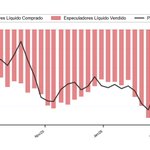
BofA enxerga nisso um trade secular: ficar comprado em emergentes contra ações americanas.
O indicador atingiu níveis semelhantes ao topo da bolha pontocom em 2000, que antecedeu uma década de domínio dos emergentes.
Será que ainda tem espaço?

Pedro Segolin retweeted

Colombia’s elections are officially over, and the shift away from the far left continues to gain momentum across South America.
South America is moving toward a region-wide pro-business agenda unlike anything in recent history.
Investors are still underestimating what could become one of the defining investment themes of the next decade.
open.substack.com/pub/tavico…

Pedro Segolin retweeted

El superciclo de commodities NO ha hecho más que empezar
El sector energético ha roto una base de 17 AÑOS!! La subinversión está chocando con la creciente demanda
El mainstream seguirá vendiendo el petróleo como una reliquia, pero recordad que la gran rentabilidad suele estar donde nadie mira..

Pedro Segolin retweeted
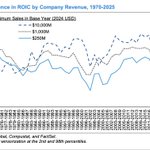
Nos últimos 75 anos, commodities e bolsas globais alternam ciclos longos de dominância.
Hoje o retorno relativo está em -4% anualizado na janela de 10 anos.
Historicamente, esse nível marca o fundo do ciclo.
O BofA está chamando 2026 como ponto de virada secular.
Os vetores: corrida geopolítica por recursos, capex de IA acima de US$ 750 bilhões, gasto global em defesa se aproximando de US$ 3 trilhões e apreciação silenciosa do yuan.
O investidor brasileiro, com acesso natural a mineração, energia e agro, está bem posicionado para o que vem.

Pedro Segolin retweeted

Super Ciclo de commodities
Estamos, ante el mayor superciclo de materias primas de nuestra generación. Y el mercado sigue a otra cosa.
El mundo está intentando hacer todo a la vez: rearmar ejércitos, construir los centros de datos que necesita la IA, electrificar la red, los coches eléctricos, las fábricas, y acelerar la transición energética.
Y todo eso necesita cobre, litio, tierras raras, metales críticos, etc, en cantidades que el mercado no puede producir. El cobre y la plata no se imprimen.
Y claro, a todo esto súmale una de las mayores épocas de devaluación monetaria de la historia de la moneda fiat y déficits fiscales.
Déficits de oferta, déficits fiscales: Hay que estar ciego para no verlo....

Pedro Segolin retweeted
Regra de outro para comodities:
- Preço alto aumenta oferta futura.
- Preço baixo mata oferta futura.
Inclusive, muitas vezes o preço dispara não porque a demanda explode, mas porque ninguém teve coragem de investir.
Pedro Segolin retweeted

How a $4M poker champion turned every decision you make into a bet — and why that changes everything
Annie Duke, Ph.D. (@AnnieDuke — WSOP bracelet winner, $4M in tournament winnings, national bestselling author of Thinking in Bets, Special Partner @ First Round Capital, PhD in Cognitive Psychology from Penn)
"A good bet is one that carries positive expectancy. What a good bet is NOT — is one that wins."
We cover:
- Why every decision you've ever made is a bet (even ordering off a menu)
- The green light vs. red light rule for separating outcomes from decisions
- How to build an EV calculation for something as messy as choosing a career
- Why loss aversion is secretly an uncertainty problem — and how great risk takers solve it
- When to trust your gut vs. when gut feel is just bias in disguise
- The pre-mortem framework — how to find your blind spots before it's too late
- Mental time travel: the parenting tool Annie uses to raise better decision-makers
- How she explained luck, hard work & probability to her 4 kids at the dinner table
Thanks for making time, Annie. Been a fan of yours for a while.
Timestamps:
00:00 Intro
01:12 Defining bets as resource allocation under uncertainty
04:52 Positive expectancy vs. outcome-based evaluation
06:11 Resulting: Why outcomes are not proxies for decision quality
15:19 Calculating expected value in high-variance career paths
18:55 Moving from implicit intuition to explicit decision modeling
24:27 Using base rates and reference classes for startups
30:26 Psychological traits of elite risk takers and traders
31:33 How prospect theory and loss aversion distort risk
45:12 Deconstructing gut feel and the role of intuition
49:36 Evaluating optionality and impact in fast-moving environments
57:13 Mental time travel: Tools for managing temporal discounting
01:01:31 Quantifying the intersection of luck and hard work
01:04:43 Internalizing a probabilistic worldview for long-term edge


Pedro Segolin retweeted

O mercado de ETF de renda fixa vem crescendo no Brasil, e isso pode ser muito vantajoso para você. Ontem mesmo o Itaú lançou quatro. Assim como Itaú, BTG, Nu Asset, Investo e outras instituições também vem lançando.
Segue...
Pedro Segolin retweeted

Warren Buffett reads Howard Marks writings, books, and market analysis.
Marks teaches about distressed assets and understanding market cycles.
Here is his investing wisdom condensed into a 65 minute video.
Pedro Segolin retweeted

O valor emocional de um bom consultor financeiro!
Segundo a Vanguard, 86% dos investidores com assessoria financeira relatam mais tranquilidade em relação às finanças do que aqueles que investem sozinhos. Além disso, a consultoria reduz em 13% a chance de altos níveis de estresse financeiro.

Pedro Segolin retweeted

“I can give you the best company in the world, growing 20% a year forever, with a wide moat. If you pay 200 times earnings for it, I guarantee you will lose money over a long enough period. Valuation is not a detail. It is the entire game." - Nassim Nicholas Taleb
Pedro Segolin retweeted
"In short, the things that everybody feels good about are likely to be the things that are high priced, and the things that everybody feels bad about are likely to be low priced, so if you could find a stock where nobody thinks this company could ever have a good day, maybe there’s a chance that it could produce some favorable surprises and make you a lot of money.
If there’s a company like the Nifty 50 back in 1968, where everybody assumed - literally nothing bad could ever happen to these stocks, then clearly, there has to be so much optimism in the price that there can never be a favorable surprise. We make money from favorable surprises, and if the positive conviction is so high, then by definition, there can never be a favorable surprise. So I think this is a number one concept." - Howard Marks


Pedro Segolin retweeted
“Margin of safety is not a Benjamin Graham footnote; it is the central law of survival in an uncertain world. If you don’t have a margin of safety you are not investing, you are merely hoping. Hope is a terrible strategy when a single black swan can erase decades of returns.” - Nassim Nicholas Taleb
Pedro Segolin retweeted

Most of life is just setting yourself up for luck to happen to you.
Life is very much a stochastic process with some non-random and random components.
It is MOSTLY random, so you have very little control over the realisations, but you can very much control the distribution of the randomness AND change the terms of the non-random part of the equation.
If this realisation doesn’t empower you to be more high agency, nothing will!