

Elections, African Politics, Democracy and a general curiosity about how the world works, or doesn't. Unresponsive to anyone who follows more than is followed.
Johannesburg
Joined November 2011
- Tweets34K
- Following365
- Followers1.8K
- Likes220







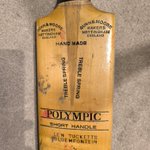
Had anyone worked out why @vCricketZA is organising test matches midweek? Do they want red ball cricket to die?
Paul Graham retweeted

I am reading work that shows that right wing parties use immigration as a ruse. They oppose 'lax' immigration on cultural/racial grounds but once in power, they tend to favour policies that make it easier to import low paid workers, keep wages down & weaken labour protections.


Paul Graham retweeted

"A trial of extraordinary public importance: the abuse of public funds and public power allegedly perpetrated by senior members of South Africa's security services allied to ex-president Zuma. Yet the public and media have been barred from the proceedings."

[MEDIA STATEMENT] CFE, together with media applicants – Media 24, @amaBhungane, and @dailymaverick – challenge secret trial of senior SSA officials.
freeexpression.org.za/media-…

A song for the price of oil and diesel - Everybody Knows share.google/fgbTiex4mJsW82m…


Another problem known about for ever - unresolved problems like this are either incompetence or malfeasance - take your pick this November 4

The SA gov needs to seriously consider taking direct control over the scrap metal business in the country.
State infrastructure is under a permanent seige and there is an industry behind it that the state clearly needs to manage.
dailymaverick.co.za/article/…

Paul Graham retweeted

Today in 1977: The editor of The World and Weekend World, Percy Qoboza and his deputy, Aggrey Klaaste, were arrested by the Special Branch police in a mission to shut down the two Black publications. Qoboza and Klaaste spent five months in solitary confinement after being led straight to their cells - in their suits and ties - from the newspapers' building. Source: SAHO, Photo: African News Agency (ANA) Archives

It's not just that he is sympathetic to Russia but that he has given up on his European allies - creating a potential economic and security schism. bbc.com/news/articles/cxr5yv…

thecricketmonthly.com/story/… The rock on which the mace gets won - and we have had to turn other golden boys into that rock again.

It's not a story about fashion, it's a story about intention - something the present crop of Kalamarades need to remember.

‘The judges in green’ — The story behind the Constitutional Court’s iconic robes dailymaverick.co.za/article/…

Paul Graham retweeted
The Delmas Treason Trial, up to that time the longest trial in the history of SA, started in Delmas on this day in 1985. Twenty-two United Democratic Front (UDF) leaders were indicted for treason. All the accused pleaded not guilty. The trial dragged from 1985 till December 1988, when Justice Kees van Dijkhorst passed judgement. Van Dijkhorst convicted eleven of the twenty-two and sentenced them to terms of imprisonment ranging from five to eleven years. The Appellate Division overturned their convictions at the end of 1989. Source: SAHO. Image Source: Learn and Teach Magazine

Paul Graham retweeted

1/4 A preliminary look at the 2026 voter registration weekends. Did the ANC do better than expected?
I am working with registration data at the moment. Thanks to a wonderfully patient and helpful person at the IEC, I have the actual changes in the voters roll before and after each registration weekend down to VD level, for 2026, 2024, 2021, 2019, 2016, 2014 and 2011. This is a fantastic data set.
It is not the definitive measure of registration activity - a change in registration details for example can hide in the data - but it is the definitive measure of the core outcome: to what degree does the voters roll grow or shrink after each registration weekend, and where does this happen.
Here are the core figure for 2026 and accompanying maps (blank = no change, green to dark green = increase; red to dark red = decline).
Let’s start with the first weekend:
First weekend: Net increase: +450,457

Mbeki's Yeatsian fear is upon us - because neither Luthuli House nor Theba Hosken House are willing to step up to their country duty, still playing games they think they can win outright.

SHOULD I STAY OR SHOULD I GO?
GNU conflict dynamics in the days ahead
With the ANC's victory, of sorts, in yesterday's ConCourt decision, I see that the existence of the current GNU composition is being debated again, with calls for the "removal" of the DA from various directions.
We have of course been here before. Like a bad marriage, we have heard these calls for imminent divorce before, often as little more than political ploys and posturing. This specific juncture is different, given its proximity to the upcoming elections, so I think we should take the scenario seriously, and analyze it as a conflict puzzle, not as political commentary. A few of my current thoughts, immediately after these developments.
Is it a ploy?
Largely yes, though a ploy can still of course become reality in a few minutes. Fikile Mbalula has issued versions of this threat before, including a dare last year that the DA could leave “tonight or tomorrow”. I think we should assess this as delivered for at least three audiences:
The ANC base and its rivals. The ANC’s biggest electoral threat is vote loss to MK and the EFF. Being seen to discipline the DA (“the white-capital partner”) is cheap, high-signal positioning against the left-nationalist flank.
Blame displacement. The ANC lost its candidates through its own administrative failure. Turning the story into “the DA tried to disenfranchise hundreds of thousands” converts a self-inflicted wound into a grievance, and the DA’s opposition gave it a gift.
The DA’s new leadership. Geordin Hill-Lewis has said the DA will defy GNU policies that block progress, with an eye on being in power in 2029. A more assertive DA leader invites the ANC to reassert hierarchy early.
The tell to keep an eye on is that Mbalula speaks for the party machine, not the president. Ramaphosa’s interests differ. He needs the DA for investor confidence and as a shield against MK and the EFF, which have both targeted him. Watch whether he says anything at all. His silence is itself information.
The power arithmetic without the DA
The ANC and DA together hold 246 of the GNU’s 286 seats. On my arithmetic, with the DA at 87, the ANC plus the remaining GNU parties would sit at about 199, just short of the 201 needed for a majority. Two immediate implications:
The ANC doesn’t need MK and the EFF wholesale. It could patch the gap with fringe crossbenchers. That is the cheap route, but it produces a fragile, minority-flavoured government that is hostage to every vote.
Bringing in MK or the EFF is the expensive route. Both have signalled willingness to join if the DA leaves, and both have made Ramaphosa’s position central to their demands. Mbalula himself has argued that putting the EFF inside the GNU would finish the ANC off faster, which suggests the leadership knows the substitute is worse than the irritant.
We could argue that this leans towards a poker bluff, a ploy.
Pros and cons of ending it now
For the ANC, the upside is narrative control before polling day and a warning shot that disciplines the DA’s public criticism. The downsides are larger: it loses the DA’s technical and fiscal anchoring, with markets, the rand and ratings all sensitive to it. It would hand the DA a martyr story and the ANC the blame for instability. It hands MK and the EFF the kingmaker role, and it would inflame the ANC’s own succession fight ahead of its 2027 elective conference. Ending it before 4 November is the worst timing, because the ANC would be the one defending market turmoil during a campaign.
For the country, a replacement coalition built on MK and/or the EFF raises real policy risk around property rights, the central bank, fiscal discipline and the Ramaphosa question. It also changes the character of the arrangement from a centrist grand coalition into a left-populist one. On the other hand, the DA’s critics argue the GNU has blurred accountability and that a cleaner government-versus-opposition structure could sharpen democratic competition. That is a legitimate argument, but it is not what’s happening here. This is tactical, not principled, even though of course we see it spun as exactly that.
The DA’s best move
In conflict terms, the DA holds more leverage than the rhetoric suggests, but only if it avoids the one move that surrenders it: walking out first.
My advice is to stay through 4 November, but not passively.
Make the ANC own any rupture. The party that breaks a coalition inherits the blame for instability. If the ANC wants the DA out, force it to say so formally, in writing, through the statement of intent’s own dispute processes. Right now the threat costs Mbalula nothing. A formal request makes it cost something.
Don’t relitigate the court case. The DA said it respects the ruling but is concerned about the precedent for IEC compliance. That is the right register. A rules-based, institutional argument is a stronger brand than a grievance, and it keeps the moral high ground with its own voters.
Separate the party from the principal. Direct the engagement at Ramaphosa, not Mbalula. A call between the two leaders defuses a secretary-general’s statement far better than a public exchange does.
Keep the exit option visible but unused. The credible threat to leave is worth more than leaving. Walking out just before an election looks opportunistic, and it throws away ministries and the influence over delivery that the DA wants to campaign on in 2029.
Reassess after 4 November on actual results and on how the ANC behaves, not on its threats. We should remember that the number of votes the DA and ANC end up with post-election plays its own role in answering these current questions.
The case for leaving earlier is the risk of being treated as a permanent junior partner while the ANC takes the credit. But that argument is stronger after the elections, when the DA can leave on its own terms, with its municipal results as a mandate.
What I’d watch in the next 19 days
Whether the ANC’s NEC or NWC formalizes anything, or whether this stays at the level of a secretary-general’s remark.
Whether Ramaphosa distances himself from Mbalula.
Whether MK or the EFF publicly price their entry, especially around Ramaphosa.
And whether the IEC compliance questions the DA raised produce further litigation, which would keep this fight alive through election day.
So, as posturing it is its own limited drama, if it tips over past that, it is obviously a complex question with many possible outcomes. Worth watching
(Originally posted on my LinkedIn page)

Paul Graham retweeted
Trucks ready to be loaded with goods and furniture during the forced removal of the people of Sophiatown, February 1955. Credit: Terence Spencer/Getty

Think about the old age grant another way. This means 73%, at least, of over 60s fall below the means test. We have to stop looking in the city malls for the 'average' South African.


Nearly three in four older South Africans receive an old age grant. Researchers say the grant has helped reduce poverty among older people, but it is being stretched by rising living costs and growing care needs. theoutlier.co.za

Some deserving local research institute - grab the gig. It will make up for all those usaid consults that disappeared. theguardian.com/us-news/2026…

Paul Graham retweeted

So if, as a family, you can afford to live a middle-upper middle class lifestyle, you're in the top 2%
Wow!
We really are a low-income country.

Paul Graham retweeted

The ConCourt majority has decided that uploading candidate details and paying deposits equals a valid submission, even if the party never clicked “Submit as Final” on a system it has used for years and which explicitly warned that lists were not final.
That is not logic. It is the elevation of one party’s administrative negligence over the need for clear, objective and uniformly applied rules. Only someone who has never used an online form would seriously claim that a document is “submitted” when the system itself still treats it as incomplete and unconfirmed. The button was not a hidden trap; it was the known, final act that converted a draft into a contestable list.
Treating it as optional now forces the IEC into ad-hoc guesses about intent and opens the door for every other party that made the same mistake. South African administrative and electoral law has long insisted on legal certainty and equal application of clear deadlines.
An order issued without reasons, days before ballots must be locked, that rescues the governing party from its own failure while leaving identically placed smaller parties excluded, does not look like the rigorous, independent application of that principle. It looks like formality was discarded because the consequences for the ANC were politically inconvenient.
We will see whether the written reasons can rehabilitate this. Until they do, the decision stands as a reminder that procedural rules exist precisely so that elections do not turn on which party can most effectively litigate its own oversights.
