
AI & machine learning, neuroscience, philosophy.
Joined August 2022
- Tweets108
- Following315
- Followers170
- Likes249



Nick Alonso retweeted

The "Pain Axis" paper has been getting a considerable amount of attention. I have reservations about several aspects of the paper and I don’t think we can take much away from it. In brief, since it was already essentially certain that some kind of “pain axis” exists, the key result from the paper is the claim that the identified pain axis “has some of the central functional properties of pain”. But I do not think the paper offers strong evidence for this.
The first claim of the paper is the existence of a “pain axis”: LLM internal activations consistently differ when next-token-predicting painful experiences, as opposed to other negative experiences (like being afraid) or other sensations (like feeling the impulse to yawn). But we already know (e.g., from Anthropic’s “Emotion Concepts” paper) that it is possible to find directions in activation space that correspond to "current speaker is afraid", "current speaker is angry", etc., and contemporary LLMs are clearly sophisticated enough to also represent “current speaker is in pain”. As v2 of the paper acknowledges, nothing in these methods shows that there is any deeper sense in which the pain axis tracks “the model” being in pain, rather than a representation that the current speaker is in pain.
The novel, stronger claim from the paper is that steering along the pain axis functions like pain in interesting ways. The first cited example is that steering along the pain axis causes expressions of worthlessness, which the paper describes as “consistent with the hypothesis that the models don’t treat pain paradigmatically as a physical state”. However, 80% of the test prompts used to generate the pain axis are cases of emotional pain (e.g., enduring repeated failure or social rejection) and only 20% are cases of physical pain. Accordingly, I think this can be viewed as a normal case of steering: If we shift model activations to be more like the activations associated with past expressions of emotional pain, this will lead to new expressions of emotional pain.
The other case cited by the paper is that steering along the pain axis causes the assistant to “press” a button that will purportedly cause harm. However, it’s not clear to me why this is taken as evidence that the pain axis “has some of the central functional properties of pain”. The assistant does not seem to press the button in order to relieve its pain: As v2 of the paper reports, it is more likely to take harmful actions that it is told will increase its pain, rather than decrease its pain. And elsewhere the paper suggests that the opposite result (i.e., inaction) would also have been evidence for pain because becoming unmotivated is a signature of pain. So it seems like either outcome of this experiment could have been interpreted as evidence that steering along the pain axis functions like pain, making this particular outcome less compelling. Moreover, it seems like many things other than pain representations could produce these effects. In my own quick experiments, steering in random directions at the same strength causes just as much harmful button-pressing for around 25-30% of randomly selected directions.
For these and other reasons, I don’t think the paper’s central findings give us much compelling new evidence about how current AI systems represent pain or whether current or future AI models experience pain.


Nick Alonso retweeted

I think interpretability is ultimately the path to solve the technical parts of the alignment problem - @eric_ho's post on this vision is really worth a read


Great work here by @gnanduru1. Open source sparse attention kernel


Nick Alonso retweeted

Computer scientists often seem incredibly confident one way or the other about computational functionalism. What they should say is that the arguments both for and against provide only inconclusive considerations and the right attitude is therefore one of great uncertainty.


Nick Alonso retweeted

@ZyphraAI releases research on a new way to build hybrid models. We introduce a new architecture leveraging the complementary strengths of Transformers and RNNs for greater flexibility and performance than existing approaches.
We call it Hybrid Associative Memory (HAM). 🧵

Nick Alonso retweeted

Zyphra is still under the radar but doing truly innovative architecture work

Today @ZyphraAI releases OVQ-attention, an advancement for efficient long-context processing!
Existing LLM layers compress input too much, leading to poor long-context understanding, or too little, leading to expensive memory+compute.
OVQ-attention is an alternative path. 🧵

Nick Alonso retweeted

OVQ shows a practical route to handling distribution shift via online codebook learning. The universal codebook result is the theoretical side: a fixed decoder can be near optimal for any activation covariance with only a tiny rate gap, if we can actually build that codebook.

Zyphra
Online Vector Quantized Attention
OVQ-attention keeps linear time and constant memory but avoids long-context collapse by learning both key and value centroids online, so memory tracks the live KV stream instead of a fixed dictionary. Sparse updates route each token to a single slot, so memory capacity scales without increasing per-token compute. Based on Gaussian Mixture Regression with online EM-style updates, it outperforms VQ and linear baselines, generalizes from ~4k training context to 64k+, and stays competitive with attention using ~10–25% of the state; still early at sub-500M scale and not kernel-optimized.


Nice summary.👇
Zyphra
Online Vector Quantized Attention
OVQ-attention keeps linear time and constant memory but avoids long-context collapse by learning both key and value centroids online, so memory tracks the live KV stream instead of a fixed dictionary. Sparse updates route each token to a single slot, so memory capacity scales without increasing per-token compute. Based on Gaussian Mixture Regression with online EM-style updates, it outperforms VQ and linear baselines, generalizes from ~4k training context to 64k+, and stays competitive with attention using ~10–25% of the state; still early at sub-500M scale and not kernel-optimized.
I enjoyed working on this one. If you're interested in self-attention alternatives, this might interest you. Thanks to all those @ZyphraAI who helped out.
Today @ZyphraAI releases OVQ-attention, an advancement for efficient long-context processing!
Existing LLM layers compress input too much, leading to poor long-context understanding, or too little, leading to expensive memory+compute.
OVQ-attention is an alternative path. 🧵
Nick Alonso retweeted
Today @ZyphraAI releases OVQ-attention, an advancement for efficient long-context processing!
Existing LLM layers compress input too much, leading to poor long-context understanding, or too little, leading to expensive memory+compute.
OVQ-attention is an alternative path. 🧵
Nick Alonso retweeted

Hi @JeffDean, what’s the plan for releasing the code for this line of work? None of these papers so far seem to have released any code


Nick Alonso retweeted

At this point in attention-free architectures, so many people have poisoned the well that it's just a well of poison. A "Transformer Killer™" drops once a month, and then the authors come back and "kill" transformers again like 5 months later.
Love the work, I'm knee-deep in a lot of it, but please for the love of god stop over-hyping. Being grounded and pointing out your own limitations gets people more excited, I promise.

Nick Alonso retweeted
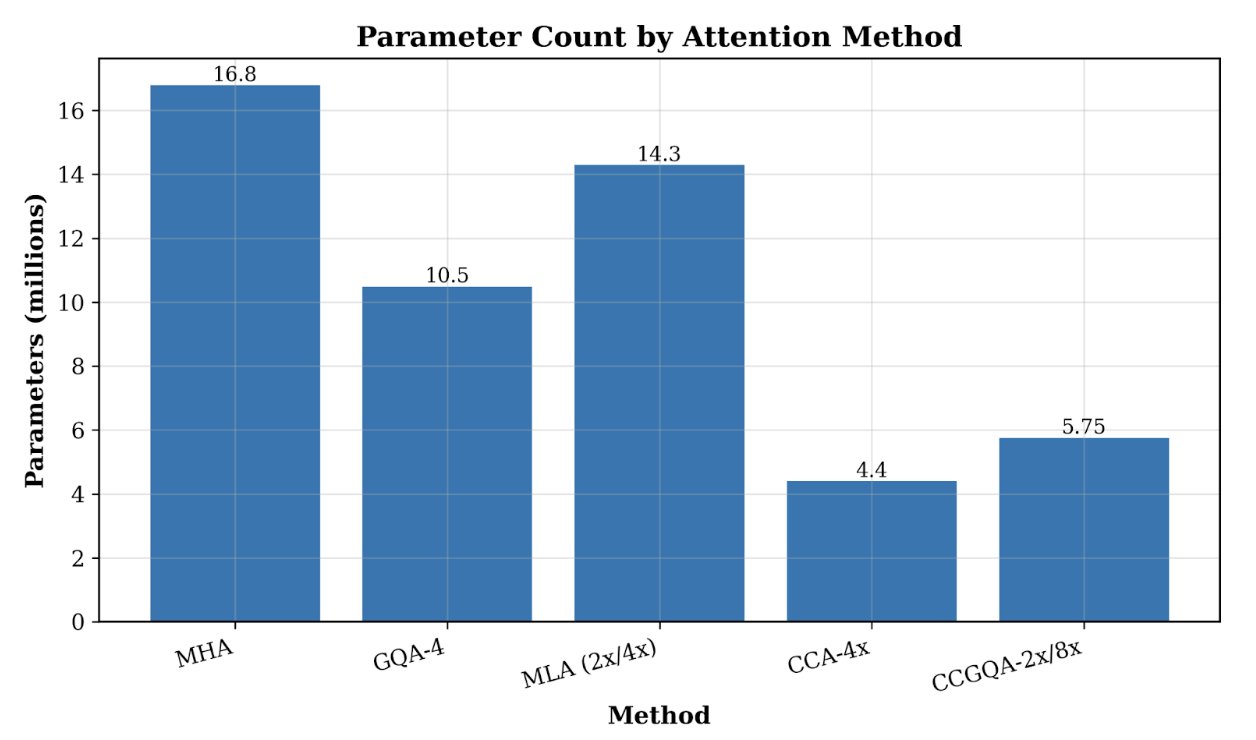
@ZyphraAI is excited to release Compressed Convolutional Attention (CCA), a novel attention mechanism that:
- Beats MHA, GQA, MLA for dense and MoE models
- Reduces training/prefill flops
- 3x fewer parameters vs MHA
- Matches GQA/MLA KV-cache sizes without quality penalty

Nick Alonso retweeted

new paper
arxiv.org/abs/2510.04476

Nick Alonso retweeted
Read more at the blog post here: newsroom.ibm.com/2025-10-01-…

Nick Alonso retweeted

It’s not just about GPUs. It’s about the ecosystem.
@QuentinAnthon15 joined @jtatarchuk on the Beyond CUDA podcast to share how moving to @AMD MI300X cut training costs at @ZyphraAI
📺 Watch the full episode on YouTube (link in comments)
Nick Alonso retweeted
reach out if you want to work with me and others on novel architectures for pretraining! dms are open
jobs.ashbyhq.com/zyphra/e509…

Learning in real time, during deployment, i.e. doing online-continual learning, effectively is important for many applications. It's also associated with theories of intelligence that emphasize learning efficiency, and is an ability where the gap between animals and AI is large.
