

Nashville Parent. Focused on outcomes for kids, not on labels. Every child / family deserves access to a great education, regardless of zip code/school type!
Nashville, TN
Joined June 2016
- Tweets5K
- Following533
- Followers1.2K
- Likes10.9K



Pinned Tweet
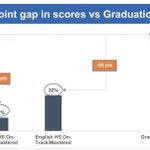
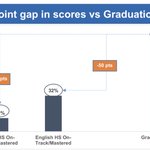
🤔 @MetroSchools grad rate 85% (rising for ~7 yrs).
HS ELA & Math achievement: 22-34% (falling pre-Covid).
% of graduating students ready for college/career: 33% (flat for ~7 yrs).
Our kids deserve better than lowering standards/ ignoring the problem, MNPS & @MetroNashville!


"Celebration of higher graduation rates doesn’t just ignore test scores. It masks growing problems for vulnerable students," the Editorial Board writes. wapo.st/3NIihnv

NashvilleEdReform retweeted

Mississippi raised the bar. When standards rise, school grades may dip at first, but rising student performance follows. Kudos to @MissDeptEd, State Sup. Lance Evans and policymakers for setting higher expectations. mdek12.org/communications/20…
NashvilleEdReform retweeted

Tennessee ranks among the lowest states for voter turnout. Together, we can change that.
My fellow Tennesseans, early voting begins today. Whoever you support, I hope you’ll make a plan to vote. Our state’s future deserves your voice.
Early voting runs October 14–29. Election Day is November 3. Before you go, review your sample ballot and check voting locations and hours: sos.tn.gov/govotetn

Many of our @MetroNashville council members / @MetroSchools board members exhibit similar 'choice for me but not for thee' behavior, including sending their kids:
1) To academic magnets (that don't provide transportation) like Hume-Fogg, MLK, or Meigs;
2) To optional schools (that don't provide transportation) like Waverly Belmont or Glendale;
3) To zoned schools Julia Green / Percy Priest / by buying a $1 Million+ house in West Nashville.
All of these are perfectly fine decisions / good options, but then WHY deny other Nashville families the same choice that you are able to exercise?!

Sending your kid to a charter school while staying silent as Dems try to restrict charter options for low-income families is wild. Spot-on from @mattyglesias.

NashvilleEdReform retweeted

Turns out the education issue with the broadest political appeal isn't school choice, funding, or culture wars.
It's whether kids can read and do math.
85% of Texas voters say they're more likely to support a candidate who prioritizes grade level proficiency.

👏👏👏More high-quality public school options coming (now sooner!) to families in @MetroSchools @MetroNashville & across TN.
cc @tncharters @Chalkbeat @TheTNFirefly @KIPP_Nashville @LEADSchools @NashClassical @Purpose_Prep @valorcollegiate @ninasrees @PropelTN @ScarlettFndt @TennesseeCAN @RepMarkWhiteTN

A new path just opened for future Nashville public charter schools. 🏫
With the state approving the appeals of Music City Academy and The Gate School, Metro Nashville Public Schools applicants can now choose to apply directly to the Tennessee Public Charter School Commission for the next five years.
That means another pathway for high-quality public-school options to reach Nashville students and families.
Learn more at the link below. 🔽


'A debacle of this scope can’t be explained away by a lack of 💰 or overwhelmed teachers—the usual excuses rolled out to defend failing schools by shifting blame to “the system.”
Najya’s school is extremely well-resourced, spending >$50k/pupil/yr, & has a low student-teacher ratio'
@MetroSchools @MetroNashville @freddieoconnell

'If Ms. Weingarten wants to “learn what went wrong,” she should start by looking in the mirror. Her union is the primary reason New York’s public schools fail to educate so many children, especially poor black children.'
wsj.com/opinion/nikole-hanna… via @WSJopinion

YES! “Not because we believe a letter grade can tell us everything there is to know about a school. It cannot.” Rather, she argues that families deserve accessible information about whether schools are delivering academically for their children and because transparency creates the conditions for accountability.
(emphasis added)
@MetroSchools @MetroNashville @freddieoconnell
the74million.org/article/mis…

"Policy, not politics, determines outcomes"
...
'Set an ambitious public goal w real accountability.
States that have improved treat student outcomes as the key measure of success & align policies/resources accordingly. TN set out to be the fastest-improving state in reading/math & then acted like it, investing in proven instructional approaches & sustaining high-dosage tutoring after fed Covid aid expired. It posted the nation’s 2nd-largest math gains & 4th-largest reading gains 2022-2025'
@MetroSchools @MetroNashville @freddieoconnell

Tennessee rose from the bottom 10 to 17th overall on NAEP. Kevin Huffman explores why in this @washingtonpost column.
Proud @SCORE_TN has been a trusted partner in this shared work. Progress is not a signal to slow down. It’s a call to go further.
washingtonpost.com/opinions/…
👏“For busy parents like me, simplicity matters. We need more clarity during enrollment, not confusion. IPS parents deserve a system that makes choices easier, not harder.”
-Parent in @IPSSchools as she urged the school board to keep @enrollindy.
cc @MetroSchools

Indianapolis Public Schools withdrew from a single enrollment system for all schools, even as the district and charters are supposed to cooperate more buff.ly/HdIfkwl

NashvilleEdReform retweeted

Opinion: Tennessee needs skilled trades as much as college degrees | Letters tennessean.com/story/opinion…


'MOST Cost Effective' 😍
1 Sci. of reading
2 School accountability
3 High-quality curriculum
4 Expand advanced class access
5 Fire low performing teachers
Many 'Ideas worth a try' ✅
1 Screen time limits
3 Ban 📲
5 *Real time* attendance data/notify parents
Interesting to see 'LEAST cost-effective' ⁉️
2 Smaller class sizes
3 Increase *ALL* teacher pay...
especially vs #5 most effective idea 💸
Increase teacher pay *for high-poverty schools*
@MetroSchools
nytimes.com/2026/09/28/upsho…


NashvilleEdReform retweeted

In a recent @Tennessean column, @ScarlettFndt CEO Tara Scarlett highlights @NashClassical East’s remarkable TCAP results and the importance of creating more great schools & educational options for families.
Thank you, Tara, for highlighting #TNCharters!
tennessean.com/story/opinion…

👏@EQFund @tncharters & 22Beacon
👀👇
cc @MetroSchools @tnstudent @ChalkbeatTN @Chalkbeat @TheTNFirefly @CharterGrowth @KIPP_Nashville @LEADSchools @valorcollegiate @NashClassical @Purpose_Prep @EdOutcomes4TN @SCORE_TN

A new resource is available to TN Public Charter Schools! We are proud to partner with @EQFund and 22Beacon on the Volunteer Facilities Fund (VFF), helping schools access capital for facility projects. ⏩Learn more + register for a webinar: docs.google.com/forms/d/e/1F…

Nice profile of @SCORE_TN from @CRPE_edu
'From Exploration to Coherence: How SCORE Is Helping TN Make Sense of AI in Schools'
Recommendations:
1. State education agencies should build strategic partnerships that extend their capacity to support learning and coherence.
2. Intermediaries should focus on both evidence generation and evidence sharing.
3. Philanthropy should invest in the intermediary capacity needed to turn local AI innovation into system learning.
@amanda_glover
crpe.org/wp-content/uploads/…
🤔'Dr Bellamy, deputy superintendent at @MetroSchools, responded that middle school students across TN generally do not perform as well academically as their elementary school counterparts.
@MCA_Nash & the Gate School both received high marks from MNPS. The board’s vote to deny these applications largely reflected the potential fiscal impact of opening new charter schools on MNPS'
nashvillebanner.com/2026/09/…

“Segregation and poverty are real obstacles. But they cannot become explanations that absolve everyone else of responsibility. We can’t wait to solve all societal issues before demanding higher performing schools”
@MetroSchools @MetroNashville @freddieoconnell

A week later, I'm still thinking about NHJ's article on NYC schools. It was courageous but a huge missed opportunity to call for real reform.
She blames school choice, inequality, segregation, the wealthy and herself. But she seems reluctant to criticize the actors and policies implicated by the failures she documents, perhaps because those conclusions would be uncomfortable for many of her ideological allies.
- She describes absentee teachers, poor instruction, unresponsive administrators, and students who graduate without mastering the material. But she never calls for greater accountability at the district, school, principal, and teacher levels.
- She documents teachers failing to fulfill basic responsibilities but doesn't explore whether tenure and other employment protections allow chronic teacher absenteeism and poor performance to persist.
- She laments the concentration of disadvantaged students but doesn't consider whether NYCPS should consolidate under-enrolled schools, thus allowing more resources towards instruction and increasing socioeconomic diversity.
- She describes her daughter earning As in honors classes despite substantial gaps in her knowledge. Yet she doesn't consider the value of standardized testing as a check on grade inflation and identifying learning gaps before they compound.
- She describes how experienced teachers choose to work in better schools but doesn't salute the districts that have had “reform superintendents” like DC, Dallas, Denver, and Houston that have used cash bonuses to incentivize the best teachers to work in the most disadvantaged schools.
- She notes that eliminating homework harmed her daughter, but doesn't examine how the movement against homework is largely driven by equity advocates who argue that it can turn unequal home circumstances into unequal academic outcomes.
- She condemns school choice yet uses it to secure a better school fit for her daughter, without noting it’s the only realistic escape valve for families who can’t move or afford private school.
- She describes the “impossible balancing act” of teaching students at vastly different levels but doesn't explore how academic tracking can help students at both ends of the academic spectrum.
- She describes disruptive students who harm the classroom environment but doesn’t ask for stronger disciplinary actions to protect other students.
- She documents a school that lowered academic expectations in pursuit of equity but doesn't acknowledge how doing so perpetuates the very achievement gaps those policies seek to eliminate.
Hannah-Jones’ story was powerful. She supplied the evidence for a broad examination of why schools are failing disadvantaged students. It could have been the strongest call in a generation for urban school district reform.
Segregation and poverty are real obstacles. But they cannot become explanations that absolve everyone else of responsibility. We can’t wait to solve all societal issues before demanding higher performing schools.