
Replying to @NITC_UTC @Portland_State @uoregon @OregonTech @uarizona @UUtah @UTArlington @TRECpdx @IEEEorg @FTA_DOT @mavengineering
This Twitter account will be inactive going forward, but you can still keep up with the folks at our headquarters, @TRECpdx, to hear about what they're working on next as a partner university in @PacTransUTC!
Give @TRECpdx a follow, and keep on doing great work!
Replying to @NITC_UTC @Portland_State @uoregon @OregonTech @uarizona @UUtah @UTArlington @TRECpdx @IEEEorg @FTA_DOT @mavengineering
As we say goodbye, we want to thank all faculty, students, and partners for your hard work over the years and for being involved with furthering NITC's mission of improving the mobility of people and goods to build strong communities!
Replying to @NITC_UTC @Portland_State @uoregon @OregonTech @uarizona @UUtah @UTArlington @TRECpdx @IEEEorg @FTA_DOT
The team at @UTArlington pioneered an interdisciplinary body of work: @mavengineering and @SocialWorkUTA joined forces to help social workers, engineers, and transportation planners address mobility gaps collaboratively for underserved populations. nitc.trec.pdx.edu/news/land-…
At @OregonTech, NITC researchers developed a way to use volcanic ash as a trail accessibility improvement and implemented it on a section of the Klamath Geo Trail, offering a locally-sourced, sustainable alternative to portland cement: nitc.trec.pdx.edu/news/trail…
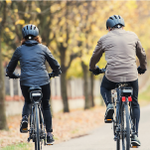
Moving on to NITC's #sustainability impacts, we've supported a wealth of #ebike research at @TRECpdx. Findings have been used in policy discussions at the local, regional, state and federal level to increase the e-bike mode share. More on that here: nitc.trec.pdx.edu/news/susta…
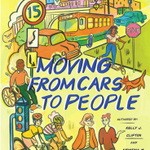
And who could forget the comic book?
"Moving From Cars To People," a comic about transportation and land use, tells how the built environment in the United States came to be designed for cars, and what we can do about it.
nitc.trec.pdx.edu/news/land-…
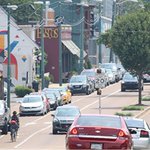
"Understanding Economic and Business Impacts of Street Improvements for Bicycle and Pedestrian Mobility," a @Portland_State @psu_cupa project, provides a solid basis for showing that active transportation infrastructure doesn't hurt local business revenue: nitc.trec.pdx.edu/research/p…
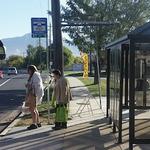
For an example of improved access and safety for people using transit, recall the @uutah project which examined the role of bus stop features in facilitating accessibility. This project found a 5.9% increase in boardings after improvements: nitc.trec.pdx.edu/news/conne…
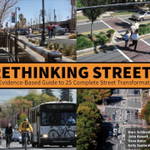
The Rethinking Streets book series, published at @uoregon, made it easier for communities to use the evidence from other communities to help make decisions about retrofitting their streets to better support multimodal options: nitc.trec.pdx.edu/news/safer…
NITC research has improved the safety and comfort of active transportation systems all over the nation. Our impacts from over the years include Lessons From The Green Lanes, the first comprehensive evaluation of protected bicycle lanes in North America: nitc.trec.pdx.edu/news/safer…
Learn how another NITC pooled fund project gave rise to a "data fusion" technique which is making it possible for agencies to combine traditional and emerging data sources to predict bicycle volumes across an entire transportation network: nitc.trec.pdx.edu/news/data-…
VisionEval is an open-source modeling framework used by transportation agencies all around the country to evaluate the long-term impacts of various transportation, land use and policy scenarios. NITC has helped to incorporate new travel modes such as car sharing, bikeshare & AVs.
NITC research from our partner universities at @portland_state, @uoregon, @oregontech, @uarizona, @uutah and @utarlington has improved data and tools to help practitioners implement research-driven solutions. Check out how NITC has enhanced #VisionEval: nitc.trec.pdx.edu/news/data-…
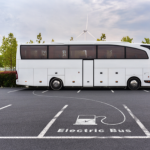
After 12 years, our National Institute for Transportation and Communities (NITC) is coming to a close, and we're taking a moment to look back at some of the impacts our center has had. One of our proudest is supporting students in multimodal education: nitc.trec.pdx.edu/news/stude…
NITC retweeted
No jokes, just facts!
Crosswalk enhancements like yield markings and high visibility paint make pedestrians more visible and help prevent crashes.
Check out the Safe Transportation for Every Pedestrian (STEP) Program to learn more! highways.dot.gov/safety/pede…
#PedestrianSafetyMonth

ALT Illustrative graphic titled "How Did the Pedestrian Cross the Road?" comparing two scenarios. On the left, a labeled crosswalk with advance markings and signs shows a pedestrian safely crossing as a car stops. On the right, a pedestrian crosses an unmarked section with vehicles in close proximity. Includes URL and logo for Step Up! Roadway Safety Advancements.
NITC retweeted
Get inspired for #NationalPedestrianSafetyMonth and explore our latest Community Pedestrian and Bicycle Safety Program final reports from communities across California: bit.ly/48ojHtm #CommunityEngagement #Walk #Bike #PublicHealth
NITC retweeted
Are you following @Research_USDOT on LinkedIn? Check out our page to get even more updates on the the @USDOT's research activities: linkedin.com/company/usdot-r…
NITC retweeted
Join the U.S. DOT Office of Public Engagement for a virtual workshop on Sept. 9, 2024, from 4-6 PM ET! Learn how you can be a part of transportation decisions in your community.
Register by Sept. 6. More info: transportation.gov/mission/o…
NITC retweeted
There's still time to register for @USDOTFHWA Equity in Roadway Safety Webinar on Sept. 4. Learn how state, regional, and local transportation professionals are improving road safety for people experiencing homelessness. Register here: usdot.zoomgov.com/webinar/re…
Did you know there are ways state and local DOTs can improve road safety for people experiencing homelessness?
Register for FHWA’s Equity in Roadway Safety Webinar: Roadway Safety for People Experiencing Homelessness on September 4 at:
usdot.zoomgov.com/webinar/re…


