

Remarkable stories about the People, Planes & Places of the United States 8th Army Air Force during WW2. Co-hosted by @JohannTasker & @MikeHistorian
Somewhere in eastern England
Joined August 2022
- Tweets1.7K
- Following464
- Followers979
- Likes3.5K


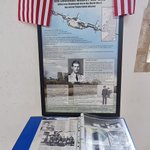
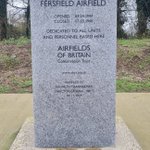
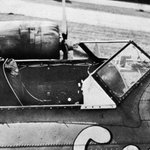


The eternal debate...was the CBO worth it? – at Arnhem, Nederland

We know the Allied bomber offensive against Nazi Germany came at a staggering cost. The US 8th AF and RAF Bomber Command lost around 21,900 aircraft and 158,000 aircrew. But the damage they inflicted went far beyond factories and cities reduced to rubble. By 1944, Germany had over 2 million people assigned to air defence, with huge chunks of its industrial output diverted to the effort. Every gun, shell and aircraft committed to defending the Reich was a resource that couldn't be sent to the land and sea fronts. 1/2

The Mighty Eighth Podcast retweeted

82 years ago today, the story of “Lovely Julie” The B-17 That Refused to Die 🇺🇸
On a mission over Germany, “Lovely Julie” of the 398th Bomb Group took a devastating flak hit. 💥
The explosion killed toggler Sgt. Abbott instantly & shredded the nose, destroying nearly all instruments, oxygen systems, & controls. 🪦
The battered Fortress was a wreck, nose blown open, gauges gone, shrapnel everywhere. Yet the pilot fought to keep her in the air. Somehow, through skill, determination, & sheer willpower, he nursed the heavily damaged bomber all the way back to England. 🏴
“Lovely Julie” was a testament to the resilience of the men who flew her & the rugged design of the Flying Fortress. ✈️

The Mighty Eighth Podcast retweeted

Been busy answering questions about Arnhem tonight. Great fun on the @hamandjampod sharing the microphone and the Market Garden questions with @airbornemedic23. Should be available next month... questions about bridges...

The Mighty Eighth Podcast retweeted

Curtis LeMay’s former unit - the 305th Bomb Group, which he'd trained and brought to England - was almost wiped out today, with 13 out of the 15 aircraft lost. Note the veterans' signatures on the left. Words fail me to describe what it feels like to be English and know what the 8th Air Force, and indeed Bomber Command, suffered day after day. My photos.


A concise summary of the birth of the Allied fighter that won the Air War for the Allies over Germany - a game changer. – at Bexley, London

October 13, 1942. At a quiet airfield in England, a modified fighter takes off for the first time with a different engine in its nose, and the sound of that engine is the sound of the air war over Germany being won. The marriage of the American P-51 Mustang airframe to the British Rolls-Royce Merlin engine, first flown on this day, created what many consider the finest fighter of the Second World War.
The Mustang had an odd origin. It was designed and built in a matter of months by North American Aviation to a British order early in the war. The airframe was brilliant, clean, fast, with a revolutionary low-drag wing and enormous internal fuel capacity, giving it tremendous range. But it had one crippling flaw: its American Allison engine performed poorly at high altitude, where the air battles over Europe were fought. Up high, where it was needed most, the early Mustang gasped and faded, and so it was relegated to low-level reconnaissance and ground attack, a thoroughbred hobbled by the wrong heart.
Then someone had the inspired idea of putting the Rolls-Royce Merlin into it, the same superb engine that powered the Spitfire, an engine that kept its power up in the thin air at high altitude. On the 13th, the prototype of this combination, the Mustang X, made its first flight in England. The transformation was staggering. With the Merlin, the Mustang became a superb high-altitude fighter, fast, agile, climbing and fighting with the best of them up where the bombers flew, while keeping its one magic quality, its enormous range.
That combination of range and high-altitude performance was exactly, precisely what the Allies desperately needed and did not have. The American daylight bombing campaign over Germany was being slaughtered. The heavy bombers flew deep into the Reich, and the short-ranged escort fighters had to turn back at the German border, leaving the bombers to go on alone into the teeth of the German fighter defenses, which butchered them. Raids were losing crews in catastrophic numbers. Without a fighter that could escort the bombers all the way to the target and back, the whole strategy of daylight bombing was failing.
The Merlin Mustang was the answer. With its range, it could accompany the bombers all the way to Berlin and beyond, and with its performance, it could beat the German fighters that came up to meet them. When it arrived over Germany in strength in 1944, it changed everything. The Mustangs did not just protect the bombers; they were turned loose to hunt the German fighter force and destroy it in the air and on its airfields, and they broke the back of the Luftwaffe in the months before D-Day, winning the air superiority that made the invasion possible.
All of that flowed from the moment on this day in 1942 when a Mustang first flew with a Merlin in its nose. It is one of the great examples of combination in the whole war, an American airframe and a British engine coming together to make something far greater than either, the long-range escort fighter that cleared the skies over Germany. The thoroughbred had finally been given the right heart.

The Mighty Eighth Podcast retweeted

In the New Forest area on 7 November? If so, why not book a ticket for my talk on the subject of Sgt Pilot ‘Paddy’ Adair, a Hurricane pilot of 213 Sqn flying from RAF Tangmere who was shot down and killed at Widley on 6 November 1940. His is the first name, alphabetically, on the Battle of Britain roll. His is also a fascinating story as he remains missing with no known grave. Tickets here: nfhwa.org/speakers/ Come along to support the New Forest & Hampshire Wartime Association. (Please share! Thank you)

Great WWII factoid... – at Warren Heath, England

The jacket that kept the pilots of the Battle of Britain alive was designed by a Hollywood stuntman, and it was a sheep turned inside out.
Leslie Irvin grew up in Los Angeles jumping out of balloons for the cameras. In 1919 he became the first man to leap from an aeroplane and open a parachute by hand in free fall. He broke his ankle on landing and started a company on the strength of it. In 1926 he opened a factory in Letchworth, in Hertfordshire.
His parachutes were silk. Anyone whose life was saved by one was sent a small gold pin in the shape of a caterpillar, after the creature that had spun the canopy.
Then he turned to the other thing that was killing airmen. Aircraft were climbing higher every year, and the cockpits had no heating. At 30,000 feet it is 45 degrees below zero. A pilot's hands stopped working. He could not think.
Irvin's answer was approved by the Air Ministry in 1932. Whole sheepskins, the fleece left on and turned inwards, the leather out to the wind. He insisted on the most supple skins, because a man in a Spitfire can barely move his shoulders as it is.
In the summer of 1940 that jacket was hanging on a hook at every fighter station in the south of England. The bell went, the pilot pulled it on and ran. Twenty minutes later he was five miles up with no heater, fighting for his country in a sheep.
By 1945 more than 34,000 airmen were wearing the caterpillar pin.
So the Few went up wrapped in a fleece and came down under a silkworm. The Spitfire gets the statues.

Not really an untold story but we will share it anyway... – at Little Stonham, England

In 1940 Britain desperately needed a new fighter aircraft to fight the Germans.
An American company nobody had heard of promised they could design and build an entirely new fighter in 120 days.
They delivered it in 117.
The aircraft they built became one of the most important fighters of the entire Second World War.
This is the story of the P-51 Mustang..🧵1/5


The Mighty Eighth Podcast retweeted
My X account was hacked recently. I lost access and control for some weeks. Eventually X reinstated me but I lost all of my followers. Most are unknowingly following the old account. I am reassembling my followers here. Could I ask for this to be RT to inform the X community pse.

The Mighty Eighth Podcast retweeted
One for your diary if you are in the Ridgewell area on 29 October. I will be talking about the ill-fated Schweinfurt raid in the church frequented by many men from the 381st Bomb Group (H). Hopefully see some of you there.

The Mighty Eighth Podcast retweeted

B-17 ball turret gunner Alan Magee, who fell 22,000 feet without a parachute, landing on the glass roof of St. Nazaire train station, breaking it through.
He suffered multiple injuries, including a broken leg and a badly cut arm, but he lived. January 3, 1943.
Harrowing stories of survival: bit.ly/4abqXf1

The Mighty Eighth Podcast retweeted

9 October 1943. Douglas-built B-17F-50-DL Flying Fortress, 42-3352, “Virgin’s Delight,” of the 410th Bomb Squadron, 94th Bombardment Group (Heavy), 8th Air Force, over the Focke-Wulf Fw 190 fighter factory, Marienburg, East Prussia.

Great footage... – at London, England

The Mighty Eighth Podcast retweeted
Surely one of the most terrifying images of WWII. So difficult to imagine trying to get out of a rapidly falling aircraft as it suddenly spirals downwards in pieces.

The Mighty Eighth Podcast retweeted

B-17 'Wee Willie' over Stendal, 8 April 1945, after an 88mm flak hit. Caught by another B-17's bomb camera.

ALT Black-and-white aerial photograph of a B-17 bomber falling above cloud and farmland, with its detached wing visible above the aircraft.
The Mighty Eighth Podcast retweeted

What was the loneliest seat in the skies of WWII? The B-17’s tail gunner, of course. Tucked into that cramped little glasshouse at the very back of the bomber, he had a front row seat as Luftwaffe fighters came bearing down on him, guns blazing. There was nowhere to hide and no room to bail out. Just twin .50 cals, a cramped turret and a very clear, daylight view of whatever was coming.


