

Living in a Microbial World. #Microbiology Professor @RMIT Australia. Focus on: #ScienceEducation #Microbes #COVID19 #ClimateEmergency Tweets personal.
Melbourne
Joined November 2010
- Tweets3K
- Following1.6K
- Followers2K
- Likes1.5K






Professor Mark Osborn retweeted

How humans adapted to digest lactose — after thousands of years of milk drinking go.nature.com/3zaUP6Y
Professor Mark Osborn retweeted

The State of Environment Report assesses the health of Australia’s environment from the tropics to the poles.
The report's three chief authors, @DrEmmaLJohnston (@Sydney_Uni), Ian Cresswell + Terri Janke (@UNSW), provide an overview of its findings. bit.ly/3yW9Cm6

Professor Mark Osborn retweeted

#NAIDOCWeek is a powerful chance to celebrate the history, culture, and inspiring achievements of Aboriginal & Torres Strait Islander people. We encourage the #STEM community to Get Up, Stand Up, & Show Up with support for First Nations’ people and organisations.

Professor Mark Osborn retweeted

Up to one in six people with #COVID19 report long COVID symptoms
1 in 6 (17%) middle-aged people who report being infected by #SARSCoV2 also report #LongCovid symptoms
This falls to 1 in 13 (7.8%) among younger adults who reported having Covid-19
go.nature.com/3yw6gXT
Professor Mark Osborn retweeted

Mutualistic interplay between bacteriophages and bacteria in the human gut
rdcu.be/cQHTz
Shkoporov, Turkington & Hill suggest that the relationship between phages and their bacterial hosts in the gut is best characterized as a mutualistic relationship between partners

Professor Mark Osborn retweeted

Registrations for AusME22 are now open!! 🤩
Deadline for early bird registrations is Sep 9. We are looking forward to seeing everyone in person at @melbconnect and learn about the latest scientific discoveries on 🦠
ausme-microbes.org.au/regist…

Professor Mark Osborn retweeted
Scientists warn deal to save biodiversity is in jeopardy go.nature.com/3R9V3Ue
Professor Mark Osborn retweeted

#Fungi enthusiasts, come join us!
We & @spununderground are looking for a #postdoc in fungal #biogeography 🌎 If you're interested in better understanding mycorrhizal #ecology & #biodiversity patterns, get all info here: crowtherlab.com/open-positio…
#academictwitter #academicjobs

Professor Mark Osborn retweeted

New Research: Tackling Multiple-Drug-Resistant Bacteria With Conventional and Complex Phytochemicals frontiersin.org/articles/10.… #cellinfect
Professor Mark Osborn retweeted

Archiving the genomic and genetic resources of glaciers dlvr.it/SSxJJL

Professor Mark Osborn retweeted

Time to rethink what could serve as a type for a bacterial species as advocated by @marike_palmer @fanus_venter, Brain Hedlund and Iain Sutcliffe. Look out for the proposed #SeqCode. @Fabiteam1 @UPnasagric @UPTuks doi.org/10.1016/j.nmni.2022.…
Professor Mark Osborn retweeted

It was fascinating and fun to put together with super friends!
This Post is from an account that no longer exists. Learn more
Professor Mark Osborn retweeted

What SynBio could do for the environment & how large-scale release of remediation agents could look like royalsocietypublishing.org/d… I have been working on this review for quite a while, finally here it is! Thanks many friends & colleagues (Twitter included) for countless discussions


Professor Mark Osborn retweeted
A postdoc’s guide to choosing the right lab go.nature.com/3NlZ0ll
Professor Mark Osborn retweeted

Nitrite-oxidising bacteria perform a key step in the global nitrogen cycle. In our latest at @ISMEJournal, we show one of the best-known nitrite oxidisers -- Nitrospira moscoviensis -- primarily relies on hydrogen not nitrite in natural environments. nature.com/articles/s41396-0…
Professor Mark Osborn retweeted
Are you an ECR based in Queensland and want to attend AusMe in Melbourne? Check out this amazing opportunity 👇

Opportunity to win free conference registration to AusME 2022 in Melbourne! @AusME_microbes🦠 Submit a short 3-min video as to why you should attend by July 22nd! More than one prize available🥇 Enter now! @AUSSOCMIC

Professor Mark Osborn retweeted

Announcing the 13th annual
Sydney Phylogenetics Workshop!
This workshop will provide an intro to phylogenetic analysis using maximum-likelihood and Bayesian methods. Aimed at early career researchers in the Asia-Pacific.
Date: 27–29 July
Location: Online
Cost: Free
Details👇

Professor Mark Osborn retweeted

NEW—#COVID19 vaccines are estimated to have prevented 20 million deaths worldwide in the first year of the vaccine programme, modelling study in @TheLancetInfDis finds. hubs.li/Q01fmQ2c0

ALT Research in context panel
Professor Mark Osborn retweeted

I fully endorse these words and Michelle Obama’s call to all of us to keep fighting for women’s rights.


Professor Mark Osborn retweeted
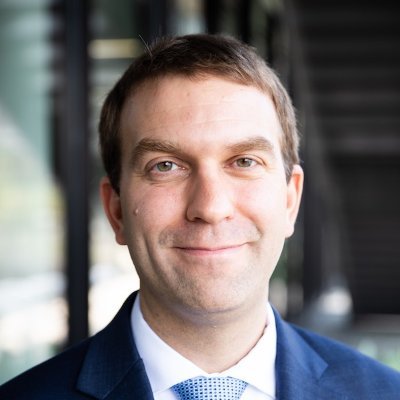
We revived the E. coli #LTEE populations on Tuesday, June 21st, to continue evolving them at UT Austin. 75,000 generations++ Photos and more info in this post. the-ltee.org/ltee-kickoff-at… @RELenski
@TexasScience @ut_mbs