

Neuroscientist at MRC Cognition an Brain Sciences Unit at the University of Cambridge, studying memory, cognitive control, and mechanisms of adaptive forgetting
Cambridge, England
Joined April 2015
- Tweets631
- Following524
- Followers1.8K
- Likes808





Pinned Tweet
Does suppressing negative thoughts harm us? According to our paper in @ScienceAdvances with Zulkayda Mamat , suppressing fearful thoughts can improve mental health, done correctly, with bigger benefits seen in those with worse intrusive thought symptoms science.org/doi/full/10.1126…
Michael Anderson retweeted

Excited to be heading to #CNS2026 in Vancouver this weekend!
Come say👋 if you’re around as I will be presenting some very promising results from the first completed study of my PhD work into affective blunting conducted @mrccbu
Poster Session B, March 8, 8-10 AM (Number: B19)


Michael Anderson retweeted

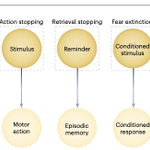
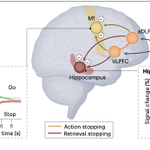
Review paper arguing that the #brain has a built-in mental brake that stops unwanted thoughts. Via a fronto-temporal pathway, it relies on GABA to calm mental loops. Weak brakes may underlie #PTSD, #OCD, anxiety, and #depression nature.com/articles/s41583-0…

To my surprise, our Nature Reviews Neuroscience review on the Brain Mechanisms Underlying the Inhibitory Control of Thought has landed on the cover! Cover art below! For an "explainer thread", see our earlier tweet. @mrccbu #memory #ptsd xitter.cf/Memory_Control/status/…


How does the brain stop thoughts? Find out in my article in @natrevneuro.nature.com with S. Subbulakshmi & Maite Crespo-Garcia integrating 25 yrs of psychology and neuroscience on this function. @mrccbu nature.com/articles/s41583-0… #memory #ptsd @PsychToday @Psychonomic_Soc @SfNtweets
How does the brain stop thoughts? Find out in my article in @natrevneuro.nature.com with S. Subbulakshmi & Maite Crespo-Garcia integrating 25 yrs of psychology and neuroscience on this function. @mrccbu nature.com/articles/s41583-0… #memory #ptsd @PsychToday @Psychonomic_Soc @SfNtweets
Fundamentally, if neuroscience is going to inform how unwanted thoughts are controlled by the brain and address central features of psychiatric disorders, a theoretically valid construct and set of tools for measuring that construct are needed.