

A program by Inuka Kenya Ni Sisi! Leveraging online & offline spaces to drive civic action. Informed + activated citizens = transformation.
Kenya
Joined April 2013
- Tweets184K
- Following5.1K
- Followers50.4K
- Likes43.1K




BILLS UPDATE...
The President has signed the Tax Laws (Amendment) Act, 2026, and the Kenya Revenue Authority (Amendment) Act, 2026, into law.
Key changes include:
1️⃣ VAT on Petroleum Products: The reduction of VAT from 16% to 8% has been extended for another 90 days, aiming to cushion Kenyans against high fuel prices and their impact on the cost of living.
2️⃣ KRA Funding: The Kenya Revenue Authority will receive funding equivalent to at least 2% of the revenue estimated to be collected by the Authority in each financial year, as provided for under the amended law.
These changes have implications for fuel prices, the cost of living, tax administration and the financing of revenue collection.
As these laws take effect, public oversight remains important in tracking their implementation, assessing their impact on households and businesses, and ensuring transparency and accountability in public revenue management.
#EyeOnParliamentKE


Why fix what’s not broken?
This government continues to raise concerns about prioritising self-serving interests over Kenyans’ welfare!
It is deeply concerning that the National Government is forcing Murang’a County to discontinue AfyaKE, its free, functioning digital healthcare system, in favour of Taifa Care.
AfyaKE already supports electronic patient records, prescriptions, laboratory results and telemedicine. Why dismantle a system that works instead of integrating it with Taifa Care, especially amid ongoing uncertainties surrounding SHA, including concerns over coverage, claims and access to healthcare?
Healthcare must serve Kenyans, not narrow interests. Protect patients, ensure continuity of care and put public welfare first. Integrate, don’t incapacitate!
#SaveAfyaKE
SAVE THE DATE!
Wellness Wednesday is back! 🧘🏽♀️🎨
Join us for a refreshing day of yoga, Zumba, nature walks, painting and more as we pause, recharge and reconnect with ourselves and nature.
📅 21st October 2026
📍 Nairobi Arboretum
Bring a friend and come as you are. Let’s make time for our wellbeing and create more good days together! ✨
Tupatane Arboretum!🏃➡️
#WellnessWednesday #MentalWellbeing


Kenya’s political economy after the Gen Z uprising: What has changed, and what remains the same?
The Gen Z uprising reshaped conversations around public accountability, political leadership, public finance, and citizen participation. It challenged the relationship between citizens and the state and raised fundamental questions about governance, power, and whose interests political decisions serve.
But beyond the protests, what has fundamentally changed? Have political alliances shifted? Has public accountability improved? Are young people gaining meaningful influence in decision-making, or does the same political system continue to reproduce itself under new arrangements?
Today, Inuka Kenya Ni Sisi, through Maskani Ya Taifa, is convening an in-house Political Economy Analysis Consultation Meeting to interrogate these questions, reflect on emerging political realities, and examine what the uprising means for the future of youth-led movements, civic engagement, and democratic accountability in Kenya.
The challenge is to move beyond the moment and understand how citizen pressure can translate into lasting institutional reforms and meaningful political change.
As Kenya looks towards 2027, what lessons must we carry forward, and what will it take to sustain the momentum for a more accountable, inclusive, and responsive state?
#Kenya2027


Maskani Ya Taifa 🇰🇪 retweeted

Grassroots orgs in Kakamega have written to the IEBC:Act now on negative election narratives & online violence against women, youth & persons with disability before 2027 elections.
Waiting until campaigns is too late.
#IEBC #Kenya2027Elections #EndOnlineViolence
@nisisikenya

🚨 PRESS STATEMENT ALERT
KENYANS MUST NOT BE FLEECED BY AN UNHOLY UNION OF PARLIAMENT, THE EXECUTIVE AND THE JUDICIARY. THE CONSTITUTION MUST BIND EVERYONE.
Religious leaders and civil society organisations of Kenya are calling on the Supreme Court and all constitutional institutions to uphold the Constitution, protect public resources, and ensure transparency, equity, and accountability in public expenditure, including the disputed judges’ car grants.
Judicial independence and public accountability are not opposing ideals. Independence must protect the Judiciary from interference, not place public expenditure beyond constitutional scrutiny.
We are calling for:
1. The Supreme Court to uphold the Constitution while determining the dispute over judges’ car grants and clarifying the relationship between judicial independence and public accountability.
2. All public institutions to ensure that public expenditure and benefits have a lawful basis and are subject to transparency and accountability.
3. Public remuneration and benefits to reflect constitutional principles of equity, fiscal sustainability, and prudent use of public resources.
4. Religious institutions, civil society organisations, professional associations, universities, workers’ organisations, and the media to sustain informed, peaceful, and principled public engagement.
5. Every constitutional institution to uphold the public trust and ensure that no institution places itself above the Constitution.
Public money is a public trust, not an entitlement to be expanded without justification. At a time when Kenyans face rising living costs, unemployment, taxes, and the high cost of essential services, every shilling must serve the public good.
The Constitution must bind everyone. Accountability must apply to all.
Read the full joint statement here:
nisisikenya.org/press-statem…
#PublicMoneyPublicTrust #Accountability


📢 X SPACE ALERT!
Save The Date!...
Is Kenya Ready for Alternative Leadership?
We will be hosting an X Space in collaboration with The Elephant for a timely conversation on Kenya’s political future ahead of the 2027 General Election.
Following the 2024 youth-led protests, growing public frustration over taxation and corruption, and shifting political alliances, one question remains: Can emerging political movements offer a credible, policy-driven alternative, or are we witnessing another cycle of recycled political promises?
Join us as we unpack the future of opposition politics, citizen representation, and accountable leadership in Kenya.
📅 Date: 16th October 2026
🎙️ Tune in and be part of the conversation!
#AlternativeLeadership #KenyaPolitics #XSpace

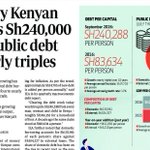
Did you know that right now, every Kenyan owes approximately KSh 240,288 in public debt? That’s nearly KSh 1 million for a family of four.
According to recent reports, Kenya’s per-capita debt has nearly TRIPLED in just 10 years, rising from KSh 83,634 in 2016.
This is the cost of unchecked borrowing. Where is the accountability? Where is the transparency? And where is the evidence that this debt is translating into better lives for Kenyans?
We cannot keep borrowing billions while citizens face a rising cost of living, heavy taxation and struggling public services.
Who is paying for this borrowing spree? Ordinary Kenyans now and for generations to come!!
Kenyans deserves better!!!
#Wantam

🚨 PUBLIC PARTICIPATION ALERT!
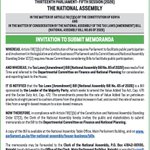
The @NAssemblyKE invites Kenyans to submit their views on the Tax Laws (Amendment) Bill, National Assembly Bill No. 65 of 2026.
Tax laws affect our daily lives, businesses, livelihoods, and the cost of living. This is your opportunity to make your voice heard and influence the laws that shape our economy.
📩 Submit your memorandum to: [email protected]
🗓️ Deadline: Tuesday, 13th October 2026, at 5:00 p.m.
Don't just complain about taxes. Participate in shaping the law!
#PublicParticipationKE #TaxLawsAmendmentBill2026

Mental health begins with listening, understanding and creating space for every voice. 💚
This #WorldMentalHealthDay2026, Inuka Kenya’s Wellness Programme joins the global conversation under the theme “Lived Experiences Heard: Real Voices, Real Change.”
We are amplifying lived experiences, challenging stigma and encouraging more open, empathetic conversations about mental health and wellbeing. Because every experience matters, every voice deserves to be heard, and listening should lead to meaningful action.
Join the conversation as we listen, learn and turn voices into change. @EAWellness
#LivedExperienceKE

As we mark #WorldMentalHealthDay 2026, we centre lived experiences under the theme: “Lived Experiences Heard: Real Voices, Real Change.” Listening is just the beginning.
Join Inuka Kenya’s Wellness Programme as we listen, learn and turn voices into action.
#LivedExperienceKE

Inuka Kenya Ni Sisi! will participate in the Youth Devolution Festival (YDF 2026), happening on 29th–30th October in Kilifi County.
Under the theme, “The Kenya We Want: Youth Participation in Electoral Processes and Peaceful Elections,” this year’s festival is a vital platform for empowering young people to shape Kenya’s democratic future.
As we approach the 2027 General Elections, meaningful youth participation, informed voting, peaceful engagement, and responsible digital citizenship are essential to building an inclusive, accountable, and democratic Kenya.
The Kenya we want must be shaped by the voices and choices of its young people. 🇰🇪
#YDF2026 #YouthParticipation


Maskani Ya Taifa 🇰🇪 retweeted

Bundibugyo Ebola spreads the same way as other Ebola: through direct contact with body fluids, not the air.
What's different is that there's no approved vaccine for it yet?
Watch and stay informed. Toll-free: 719 or 1199. #EbolaKE
🧵 A thread on the education Bills currently before Parliament.
These Bills touch on key areas of Kenya’s education system, from tertiary funding and placement to basic education, assessments, teacher training, qualifications and curriculum development.
Follow the thread as we break down each Bill and what it covers.
#PublicParticipationKE

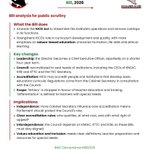
9/20 The Kenya Institute of Curriculum Development (Amendment) Bill, 2026 (National Assembly Bill No. 54 of 2026) would amend the KICD Act to streamline the Institute's operations, remove overlaps in its functions and strengthen values-based education.
What it does:
1. Strengthens KICD's role in curriculum development and quality.
2. Gives more emphasis to character formation, life skills and ethical learning.
Key changes:
1. The Director becomes a Chief Executive Officer, reportedly on a shorter four-year term.
2. The Council is reconstituted to seat heads of institutions, including the CEOs of KNEAC, KISE and KTTC and the TSC Secretary.
3. KICD may accredit people and institutions that develop basic education curricula. Regulations would come from the Cabinet Secretary in consultation with the Council.
4. "Tertiary" is dropped in favour of teacher education and training, and "differentiation" is defined for learners with special needs.
Why it matters:
1. More Cabinet Secretary influence over accreditation means Parliament should protect the Council's role.
2. Accreditation rules must say who qualifies, at what cost, and with what right of appeal.
3. The Council depends on KNEAC, KTTC and KISE, so these Bills must stay aligned.
4. Values education and inclusion need clear definitions, teacher preparation and resources for special needs.
#KICDAmendmentBill2026

8/20 The Kenya National Qualifications Framework (Amendment) Bill, 2026 (National Assembly Bill No. 53 of 2026) would amend the 2014 Act to strengthen how qualifications are regulated, recognised and tracked, and give KNQA a clearer legal basis for a national qualifications database.
What it does:
1. Makes the National Qualifications Framework binding on all qualification-awarding institutions.
2. Requires registration of qualification-awarding institutions.
3. Establishes a national database of qualifications.
Key changes:
1. An institution cannot award a national qualification unless it is registered to award it.
2. KNQA would maintain and publicise a database of national qualifications, including recognised foreign ones.
3. Every awarding institution must submit details of the qualifications it awards within 90 days.
Why it matters:
1. Fake certificates would be easier to catch. KNQA reports that only 22% of universities and 34% of graduate records are on the database so far.
2. A database of graduate records needs clear rules on access, sharing and correction.
3. Smaller colleges and TVETs need support to register and report on time.
4. Learners and graduates of institutions that fail registration need a route to recognition.
#KNQFAmendmentBill2026

The Pre-Service Education and In-Service Training Bill, 2026 (National Assembly Bill No. 52 of 2026) would create a legal framework for training people before they become teachers and for continuous training of serving teachers and education managers.
What it does:
1.Ties teacher registration to training: anyone seeking registration must complete pre-service education under the TSC Act.
2.Regulates teacher training institutions and programmes.
Key changes:
1. The Kenya Teachers Training College (KTTC) would offer pre-service education, do research and advise the Cabinet Secretary.
2. Reports say existing colleges would become its campuses.
3.The Kenya School of Education (KSE) would coordinate, evaluate and conduct in-service training for teachers and education managers.
4. KICD would develop the programmes, curricula and support materials for pre-service education.
5. Training institutions would be registered, and statutory bodies consulted before new programmes are mounted.
Why it matters:
1. Existing colleges would lose their separate legal identity, which raises questions about staff, assets and transition.
2. New academic requirements for trainees could widen or narrow access, so Parliament should test the effect on teacher supply.
3.A bigger KICD role can standardise training but may limit institutional flexibility.
Who funds in-service training, and how will teachers train without disrupting learning?
#PreServiceTrainingBill2026

6/20 . The Kenya National Educational Assessments Council Bill, 2026 (National Assembly Bill No. 51 of 2026) would repeal the KNEC Act and replace KNEC with a new Council.
What it does:
1. Replaces KNEC with the Kenya National Educational Assessments Council (KNEAC)
2.Runs assessments in basic and teacher education and training.
3. Sets assessment standards.
4. Issues and authenticates certificates and diplomas.
5.Undertakes research on educational assessment.
Key changes:
1. Assessments through registered centres, with powers to withhold or cancel results where irregularities occur.
2. E-assessment, with online candidate registration and digital marking.
3. Leaking or possessing papers: up to 10 years, a fine of up to KSh 2m, or both.
4. Counterfeiting certificates: up to 10 years, a fine of up to KSh 10m, or both.
5. Impersonation: up to 2 years, a fine of up to KSh 2m, plus a 3-year ban.
6. Candidates who collude can be barred from Council assessments for up to 3 years.
Why it matters:
1. Heads and officers face personal criminal liability.
2. Learners need safeguards and a fair hearing.
3. E-assessment depends on connectivity and devices, especially in remote counties.
4. The Basic Education Bill still cites the KNEC Act, so names and references must match before passage.
#KNEACBill2026

7/20. The Tertiary Education, Placement and Funding Bill, 2026 would replace HELB, the Universities Fund and the TVET Funding Board with one Tertiary Education Funding Authority (TEFA).
This means TEFA would lend to students, administer scholarships and recover loans. KUCCPS stays for placement, and placement is linked to funding.
Key changes: repayment starts within one year of finishing studies.
1. Clause 49(4) caps deductions at 25% of a loanee's emoluments.
2. Formal employees must disclose their loan, and employers must deduct and remit within 9 days or pay a 5% monthly penalty.
3. Informal workers agree a repayment plan with TEFA.
4. Interest is set by TEFA with the Cabinet Secretary, not fixed in the Bill, and a savings scheme for a named child is proposed.
Why it matters:
1. A 25% ceiling is a cap, not a target, but it could take a large share of a graduate's pay.
2. The 4% mentioned at a public hearing is not in the Bill, so Parliament should write the rate or a ceiling into law.
3. Loans would be the larger share of funding, so eligibility rules and a way to challenge decisions are needed.
4. And merging three institutions needs a clear transition plan so no student is left unfunded.
#TertiaryEducationBill2026
