

Assistant Professor of Practice, Geosciences, University of Arizona
Tucson, AZ
Joined April 2021
- Tweets267
- Following146
- Followers106
- Likes398




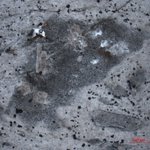
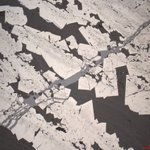

I am delighted to share that our article on apatite metasomatism at Neves Corvo has been published! We show how we can use apatite and secondary phosphate to track hydrothermal alteration within the Tin Corridor. link.springer.com/10.1007/s0…

Marta Codeço retweeted

*Geology PhD alert!* I'm looking for a curious, enthusiastic student to work on critical metals in remobilized sulphides, at the University of British Columbia - Okanagan campus in Canada. Please apply by 1 Dec. More info here: tk.cawood.za.net/prospective…

Marta Codeço retweeted
🔍 Exciting News! Join us at the Geological Society of America Connects 2024 in Anaheim, CA, September 22-25! 🌊
🌟 We are inviting paper submissions for our session: "T4. Seafloor Hydrothermal Systems and their Ancient Analogs" 🌟

🔍 Exciting News! Join us at the Geological Society of America Connects 2024 in Anaheim, CA, September 22-25! 🌊
🌟 We are inviting paper submissions for our session: "T4. Seafloor Hydrothermal Systems and their Ancient Analogs" 🌟
🌊 Whether you're a researcher, student, or industry professional, this session invites contributions on ore-forming processes across all geodynamic settings. Don't miss your chance to be part of this cutting-edge discussion!
📝 Abstract Submission Deadline: June 18, 2024
ℹ️ For more details and to submit your abstract, visit community.geosociety.org/gsa….
#SeafloorHydrothermalSystems #GreenEnergy #GSA2024 #Anaheim #Geology #EconomicGeology #CriticalMetals
Marta Codeço retweeted

The @LIMR_LPEG and @AZGeology are pleased to announce that are opening registration for the 3rd offering of our Short Course on Structural Geology for Exploration and Mne Geologists, which will take place March 17-26, 2024.
We’re hiring a lab manager / curator at @uazgeos and @LIMR_LPEG. More info here: arizona.csod.com/ux/ats/care….
Marta Codeço retweeted

#ProfessionalDevelopment: The "Integrated Planning" series is back. "Mine Engineering Inputs to Integrated Planning will start on October 13 in a mixed online/in-person format. Find all the details here: lpeg.geo.arizona.edu/profess… #ContinuingEducation #MineralResources #Mining
Marta Codeço retweeted

We are excited to announce a new @uazgeos B.A. degree program entitled Geosciences and Society! – at Tucson, AZ

Marta Codeço retweeted

To clarify things, this is an up to five year position on standard US university 9 month employment terms. In other words you get paid for 9 months work over 12 months; extra summer salary can be obtained from grants etc. Salary for 9 months is likely to be around $70-75k.

Marta Codeço retweeted

We're looking for a PhD student to be based at Queen's University to work on developing isotope techniques for dust source apportionment in a mining context. It's an exciting opportunity to work with university, government, and industry. DM me if you know someone who is looking!
Marta Codeço retweeted

‼️🤯 tenure track scientist position in Earth and planetary science research open for applications @unibt... from mineral physics, petrology, high-temperature geochemistry, volcanology, ore deposits... Details about the application and #BGI ⬇️. 👏
bgi.uni-bayreuth.de/?page=6&…
Excellent opportunity at the @UNLVGeoscience!
New Economic Geology and Mineral Resource Management teaching-focused position @UNLVGeoscience supported by @NevadaGoldMines; for more details and to apply, see: nshe.wd1.myworkdayjobs.com/e…
Great opportunity with @BurischMathias at @coschoolofmines

🚨Exciting PhD Opportunity in Economic Geology, @coschoolofmines!🚨
Please contact me via e-mail for further information.
@UNLV_SEG @SEGImperial @UofA_SEG

Marta Codeço retweeted

February 24, 2014, a 4.4 billion-year-old Zircon crystal from Western Australia’s Jack Hills region is announced to be the oldest known mineral on #Earth (with Earth being ~4.51 billion years old) 🇦🇺💎
xitter.cf/History_Earth_/status/…


4.1 billion years: Average age of the Zircon crystals found in the Jack Hills, Australia 💎🇦🇺
tinyurl.com/yazsteyu

Very interesting statistics!

👩🔬👩💻How many #WomeninScience are in your country?
🇸🇪 13%
🇩🇰 11%
🇮🇪 11%
🇵🇹 10%
🇸🇮 10%
🇧🇪 10%
🇳🇱 9%
🇱🇹 9%
🇲🇹 9%
🇦🇹 9%
🇱🇺 9%
🇪🇪 8%
🇵🇱 8%
🇷🇴 8%
🇧🇬 7%
🇪🇸 7%
🇫🇮 7%
🇪🇺 7%
🇨🇾 7%
🇨🇿 7%
🇫🇷 7%
🇱🇻 7%
🇩🇪 6%
🇭🇷 6%
🇬🇷 6%
🇭🇺 5%
🇸🇰 4%
🇮🇹 4%
Stats on #WomeninScienceDay via @EU_Eurostat