

I wake up every day passionate about realising entrepreneurial ideas towards better experiences
Sydney, New South Wales
Joined January 2009
- Tweets7.7K
- Following295
- Followers222
- Likes4.7K


The resilience of this man is inspiring

Steve Harvey reveals he woke up owing the IRS $22,000,000 because his accountants spent SEVEN YEARS pocketing his tax checks and never filing a single return.
The government told him he had to pay $650,000 a month, every month, for 4 years. Miss ONE payment, and you go to JAIL.
He never would've known if his accountant hadn’t died. A woman cleaning out the office called his lawyer with a serious problem.
STEVE HARVEY: “She had found on the floor all my tax forms for seven years signed and with the checks stapled to it.”
“Well, they were cashing the checks, keeping the money and not turning in the tax forms.”
Seven years of bank statements that looked like a man paying his taxes.
“My lawyer called me, said, ‘Hey, man, we got a problem. You haven’t paid taxes in seven years.’”
“He said, ‘Man, that’s tax evasion. You can go to prison.’”
“I ended up owing 22 million. 22 million with the penalties.”
When he told his wife, Marjorie, she cried for two straight days.
“She says, ‘What you going to do?’ I said, ‘I’m going to go to work.’”
And he did.
“I took every comedy gig in this country, signed every contract. I went to work, man. I worked every single Friday, Saturday and Sunday.”
“I never missed a payment.”
He did that for four years. $650,000 a month, every month.
In 2012, he sold 49% of his radio company and used the check to pay the government off to zero.
“And that was the first time, man, I could breathe.”
The thieves were his accountants.
The $22,000,000 bill went to Steve Harvey.
And the only one who got threatened with prison was the man who got robbed.


Marc Cote retweeted

Michael Burry made his investors more than $700 million on a trade against American mortgages. Goldman Sachs took the other side. Two years later, he says, Goldman wanted a bigger piece of the same trade.
The Big Short made $133 million at the box office telling that story. Burry told it himself in 2011, free, in 31 minutes at Vanderbilt, where he earned his medical degree.
Christian Bale got an Oscar nomination for playing him. The real talk has about 300,000 views in 15 years.
Burry is a medical doctor. He told the room he was "definitely 50th percentile here at Vanderbilt." He learned the mortgage market from the filings Wall Street was required to publish:
"At times I felt I was the only one reading these things."
Strip out the history and five rules are left.
Read the filings. Subprime loans sold to investors came with mandatory public filings. By summer 2005 they showed interest-only loans at over 40% of the subprime loans passing through Wall Street, up from 10% a year earlier.
Watch the payment, not the rate. With rates at 40-year lows, lenders started selling the monthly payment instead: interest-only loans, then loans where the borrower could "pay next to nothing each month." He timed the crash to 2007, when most of those teaser periods would reset.
Easy credit marks the top. "The point at which the provision of credit was most lax, in my mind, would mark the point of maximal price in the asset."
Growth with falling quality is a warning. In 2004 Countrywide's subprime lending rose 158% while its total lending fell 24%.
The top job sees it last. At nearly every failed bank and every agency, he says, someone saw it as clearly as he did. "None, zero, zero were in the top job."
Hank Paulson came to Treasury from the top job at Goldman Sachs and ran the rescues of AIG, Fannie Mae and Freddie Mac. AIG alone got up to $182 billion of public money.
Burry closed the talk with one piece of advice:
"I might recommend opening a bank account in Canada."
The talk is free on Vanderbilt's YouTube channel. The filings he read were public the whole time.
His edge was reading the pages everyone skipped. Before you sign your next loan, read the page that says what the payment becomes, not what it starts at.


Marc Cote retweeted

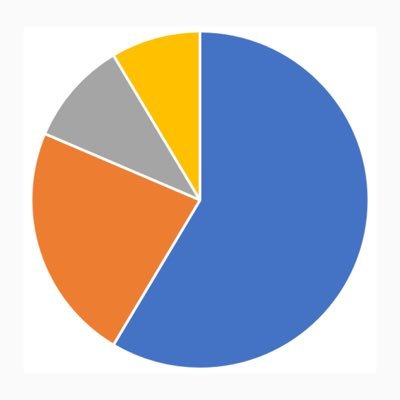
A month by month chart of outstanding Australian federal government gross debt since 2003, broken down by government in power.
Make of it what you will.



Marc Cote retweeted

ChatGPT has now a big problem.
Researchers at Oxford and Cambridge exposed a massive threat to large language models.”
They call it “model collapse."
Internet ecosystem is rapidly changing, and generative AI will soon contribute much of the text found online. This forces us to consider what happens to future iterations like gpt-n when they are trained on data scraped from the web that was already generated by an llm.
According to the research, indiscriminately using model-generated content in training causes "irreversible defects" in the resulting ai. the model loses the "tails of the original content distribution." in other words, it begins to forget the creative, fringe, and unique nuances of actual human writing, collapsing into a repetitive echo chamber.
This isn't just a chatgpt issue.. the researchers built theoretical intuition showing this collapse is ubiquitous across learned generative models, occurring in large language models as well as in variational autoencoders and gaussian mixture models.
Tech companies rely on scraping the internet for large-scale data to build smarter models. However, the paper warns that if we want to sustain the benefits of training on web data, model collapse must be taken seriously.
Ultimate takeaway? data collected from genuine human interactions is going to become increasingly valuable in a web filled with ai content.

That’s crazy, no facial recognition unless an emergency by police instagram.com/reel/DdIE8sQjq…




Canada to have lowest net debt to GDP ratio in the G7: PM Carney youtube.com/shorts/b6eRss_p8… via @YouTube


Give politicians high salaries like Singapore but zero grey corruption, lobbying or consultant roles afterwards
Highest Paid Political Office Holders in the World (USD)
🇸🇬 Singapore (Lawrence Wong): $2,850,000
🇭🇰 Hong Kong (John Lee Ka-chiu): $718,000
🇨🇭 Switzerland (Guy Parmelin): $591,000
🇦🇺 Australia (Anthony Albanese): $424,000
🇺🇸 U.S.A (Donald Trump): $400,000
🇩🇪 Germany (Friedrich Merz): $366,000
Sources: People’s Action Party, Hong Kong ATI, Swiss Federal Authorities, Wikipedia, Falling Walls, various reports
Governments have taken on too much debt and bond markets are rattled | A... youtu.be/UH3t9d9Zg7U?si=wgmm… via @YouTube

