New preprint with @mgfellow @DomDunstan1 @f_tamagnini available online!
Longitudinal assessment of the conversion of mild cognitive impairment into Alzheimer's dementia: Observations and mechanisms from neuropsychological testing and electrophysiology
doi.org/10.1101/2024.12.16.6…
Apparently the doi isn't working yet! The preprint can be found here:
biorxiv.org/content/10.1101/…
Luke Tait retweeted
Who says festival season is over? 🎸📷🥁
Presenting the hottest lineup in town!
We're so excited to welcome these speakers to @unibirmingham on October 28th-31st for QMAG, QMEG and MEG-UKI 2024.
Stay tuned: We may be adding some Special Guests to this lineup soon😉

ALT A poster in the style of a music festival lineup listing the speakers of QMEG, QMAG, and MEG-UKI 2024: Caroline Witton Anna Kowalczyk Barbara Pomiechowska Alex Wade Caroline Preston Niall Holmes Tim Tierney Yulia Bezsudnova Redmond O'Connell Ryan Hill Kasia Rudzka Meaghan Spedden Oliver Vikbladh Ashley Goneso Lijuan Wang Min Wu Denis Schwartz Harry Cook Maria Wimber Michael Trubshaw Rebecca Williams Sukhvir Wright Eelke Spaak Danying Wang Eleonora Marcantoni Oiwi Parker Jones Krish Singh Lukas Rier Dan Bush Enrico Amico Jose Sanchez Bornot Rukuang Huang Luke Tait Elena Stylianopoulou Ben Sanders Girijesh Prasad Kirandeep Kaur Holly Schofield Nic Alexander Runhao Lu
Luke Tait retweeted
We have a new fully-funded PhD opportunity just advertised for UK candidates! Come work with us at @CUBRICcardiff @neurosciencecu on MEG measures in psychosis. Supervisory team is @drcarolynmcnabb, @LukeWTait and me!
Apply at:
findaphd.com/phds/project/no…
Luke Tait retweeted
Our paper on changes in periodic & aperiodic neural activity in Alzheimer's dementia is now published!
We find in AD a specifically periodic change, different from aperiodic changes in healthy aging!
Work w @MKopcanova, @LukeWTait, @ChrisSYBenwell & co!
sciencedirect.com/science/ar…
Luke Tait retweeted
🎓📜New paper with @ChrisSYBenwell & co on spectral changes in Alzheimer's disease!
We found that spectral parameterization shows the key changes in AD are periodic, differentiating AD from the aperiodic changes of healthy aging.
First authors: @MKopcanova & @LukeWTait
In our new pre-print, we find evidence that EEG changes in Alzheimer's disease are primarily oscillatory in nature, and not aperiodic. A multi-centre collaboration with @MKopcanova @LukeWTait @Tomdonoghue @MouhsinShafi @alvaropleone et al: biorxiv.org/content/10.1101/…
Luke Tait retweeted
In our new pre-print, we find evidence that EEG changes in Alzheimer's disease are primarily oscillatory in nature, and not aperiodic. A multi-centre collaboration with @MKopcanova @LukeWTait @Tomdonoghue @MouhsinShafi @alvaropleone et al: biorxiv.org/content/10.1101/…
Luke Tait retweeted
Join the second BPML of the year on Wednesday 30th November at 7pm by Dr Paul Roberts titled 'Patterns: dangerous and beautiful’ Watch live in Watson Building or on Zoom using this link: bham-ac-uk.zoom.us/webinar/r…. Visit birmingham.ac.uk/bpml for more info
Luke Tait retweeted
WEBINAR: Register now for 'Advanced brain stimulation approaches for treating depression and anxiety'. 6th Dec 0915-1145 hosted by Alexander Zhigalov @zhigalov_ax. Speakers: Luca Cocchi, Richard Morriss, Jonathan Roiser & Marcus Kaiser. birmingham.ac.uk/research/me… via @unibirmingham
Luke Tait retweeted
Great opportunity for ECR to use your skills in #Math #datascience #Physics to work in interdisciplinary projects and develop your own research programme with these #fellowships in Birmingham jobs.ac.uk/job/CST521/smqb-c…
Luke Tait retweeted
Our new work @CommsBio The individual difference of brain connectivity relates to grey and white matter microstructure. 3T/7T/MRI+MEG. Super Group effort @esinkarahans @LukeWTait @MaciekSzul @profkimgraham+others @CUBRICcardiff @SMQB_UoB @CompFoundry nature.com/articles/s42003-0… 1/n
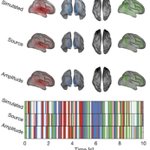
New paper with @ccbrainlab in @NeuroImage_EiC!
+microstate: A MATLAB toolbox for brain microstate analysis in sensor and cortical EEG/MEG, doi.org/10.1016/j.neuroimage…
Highlights: Source-space microstates, microstate-connectivity, novel statistics, resting/evoked data, simulations
The toolbox comes with tutorial scripts which make use of freely-available open-access data, so you can exactly reproduce all figures/analyses from the paper. Tutorials include resting-state sensor EEG, group-level source MEG & microstate connectivity, simulations, ERFs.
You can download +microstate now from:
plus-microstate.github.io
Luke Tait retweeted
Funded Computational Neuroscience PhD opportunity! 🧠
Interested in dynamical systems, whole-brain models, parameter estimation, clinical cohort and pharmacological data + lots more...
Supervised by @mgfellow and I.
Ask Qs!
findaphd.com/phds/project/ma…
Luke Tait retweeted
Delighted to see our #review article on #neuralfield models published today. Check out: mna.episciences.org/9228 - @wessel_woldman @SMQB_UoB @UniMelb
Luke Tait retweeted
You think you already know everything about p-hacking? Let's see!
A preprint and a 🧵 (with @nicebread303 )
psyarxiv.com/xy2dk/
New paper out now in Neuroimage with @ccbrainlab! MEG cortical microstates: Spatiotemporal characteristics, dynamic functional connectivity and stimulus-evoked responses. doi.org/10.1016/j.neuroimage… @NeuroImage_EiC 1/7
Our results suggest that cortical microstates are a powerful tool for studying anatomically interpretable brain states and dynamic functional connectivity. More work is in progress to further develop and validate the pipeline, so watch this space! 6/7
Finally, if you want to perform cortical microstate analysis (or use a wide range of novel statistical tools for sensor-space microstate analysis!), the pipeline is available in the +microstate toolbox:
plus-microstate.github.io
doi.org/10.1101/2021.07.13.4… (under review)
7/7