

Writer and video maker. Mostly about London. Author of 'The History of the Port of London'. Publishing London history videos at https://xitter.cf/t.co/NuEeCZNL82
London
Joined August 2011
- Tweets12K
- Following346
- Followers6.4K
- Likes3.2K





David Garrick, the most famous actor of his time, made his London stage debut today in 1741 at Goodman’s Field Theatre playing his celebrated role of Richard III. Read here about the life of David Garrick thehistoryoflondon.co.uk/dav…

Bedford Square, east of Tottenham Court Road, was laid out in the 1770s on land owned by the Duke of Bedford to provide residences for London's upper middle class. The last house was completed in 1784. It remains as one of the capital's best-preserved and scenic garden squares.

By serendipity, came across the statue of MP, journalist and activist John Wilkes in Fetter Lane today on his 299th birthday.

Serious anti-German riots took place in Deptford today in 1914 following the outbreak of the First World War. Read here about London's thriving German community before the war thehistoryoflondon.co.uk/the…

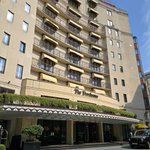
The Dorchester on Park Lane opened as a luxury hotel on the site of the former 19thC Dorchester House. It was built by Sir Robert McAlpine using the new steel and reinforced concrete method. It was opened in April 1931 by Lord Astor.


Holborn Viaduct, and the street that passes across it, were constructed in the 1860s as part of a major road improvement scheme. It created a bridge over the River Fleet (which had already been covered over), to avoid the difficult descent or ascent of the sides of the valley.

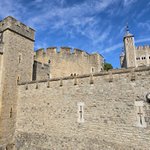
The oldest part of the Tower of London was initiated by William the Conqueror to guard against the hostile Saxon people of London. It was enlarged by various kings in later centuries. It has been a defence, menagerie, mint, prison, and secure storage of royal jewels and costumes.

The earliest references to St. George the Martyr church at Borough date from the 12th century, long before George became patron saint of England. It was where London's aldermen welcomed Henry V following the Battle of Agincourt. The present building was completed in 1736.

The first stone of the original Waterloo Bridge was laid today in 1811. The Italian sculptor Antonio Canova declared it worth visiting London just to witness the completed bridge. Read here about the original Waterloo Bridge thehistoryoflondon.co.uk/the…

Today in 1874 a major explosion destroyed Macclesfield Bridge on the Regent's Canal. Read here about the creation of the Regent's Canal thehistoryoflondon.co.uk/the…

In the 16thC a wide wall was created along the side of the Thames to protect the low-lying marshy area at Wapping from flooding. Wapping High Street developed on top of the wall, eventually lined with tall wharves and warehouses. Many have now been converted into apartments.

The original Hammersmith Bridge was opened today in 1827. It was the first suspension bridge in the London area, something quite new at that time. Read here about the original Hammersmith Bridge. thehistoryoflondon.co.uk/the…

During WW2 a bunker was constructed below Goodge Street tube station, completed in 1942, for use by the Allied forces, with this separate entrance in Chenies Street. Prior to D-Day it was used by the US Army Signal Corps (but not by General Eisenhower as is often stated).

Milner Square at Islington was laid out between 1841 and 1850 to attract middle class residents who wished to live away from the dirty, noisy City. By the early 20thC the middle class families had moved away. In the 1970s Islington Council acquired the houses for regeneration.

King Harold and his Saxon army rested in London today in 1066 before marching south for defeat at the Battle of Hastings. Read here about the Norman Conquest thehistoryoflondon.co.uk/the…

The Coroners Act was passed in 1887, ending the practice of carrying out post-mortems in public places such as pubs. The Westminster Coroners Court was constructed in 1893, with the foundation stone laid by the Duke of Westminster, serving a wide area of west London.

In the 16thC London's Hyde Park was part of a network of Henry VIII's hunting grounds. It gradually became a private royal park where the aristocracy and affluent could parade and be seen. Read here about the playground of Tudor and Stuart monarchs thehistoryoflondon.co.uk/hyd…

