

Your literature review assistant. Visualize research, find papers, and stay ahead. 🚀
New Zealand
Joined February 2021
- Tweets1.4K
- Following285
- Followers11.5K
- Likes1.1K



Ilya Shabanov (@Artifexx) walks us through his literature review workflow using Litmaps, Zotero, and Obsidian
Check out the workflow
youtube.com/watch?v=9enNb6Vi…

Litmaps retweeted

The Lit Review shortcut that allowed me to complete my PhD in 2.5 years (with 4 papers written):
Three tools: Obsidian + Litmaps + Zotero
...and the right strategy.
Join the free webinar to learn how:
luma.com/litmaps-amjz

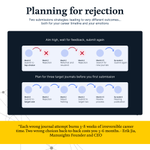
How to protect your sanity during journal submission? Choosing a journal shouldn’t start after you finish the paper.
Shortlist 3 potential homes before you submit:
🎯 Ambitious best fit
🎯🎯 Strong alternative
🎯🎯🎯 Specialist journal
We looked at how citation mapping can help ↓
litmaps.com/articles/a-new-s…
@manusights takes the workflow a step further ↓
manusights.com/blog/literatu…

Litmaps retweeted
Learn how to build a smarter, faster literature review workflow using three of the most powerful tools available to researchers right now.
Ilya Shabanov @Artifexx will show you how to use Litmaps, Zotero, and Obsidian together to discover literature, organize your notes, and build a research knowledge base that actually makes writing easier.
📅 30th September
🕔 9:00 PM London / 1:00 PM Los Angeles / 9:00 AM Wellington
💻 Google Meet. Free to join
🎥 Can't make it live? Register for the recording.
Sign-up for free ⬇️
luma.com/litmaps-amjz
Welcome new students! Research quickly goes from "I'm exploring this exciting new topic!" to "I'm drowning in a sea of papers."
💡 The key to staying on track is strategy.
Here's a simple strategy to go from an idea to a finished literature review (using Litmaps):

Learn how to build a smarter, faster literature review workflow using three of the most powerful tools available to researchers right now.
Ilya Shabanov @Artifexx will show you how to use Litmaps, Zotero, and Obsidian together to discover literature, organize your notes, and build a research knowledge base that actually makes writing easier.
📅 30th September
🕔 9:00 PM London / 1:00 PM Los Angeles / 9:00 AM Wellington
💻 Google Meet. Free to join
🎥 Can't make it live? Register for the recording.
Sign-up for free ⬇️
luma.com/litmaps-amjz


Litmaps retweeted

Brilliant research requires a rested mind.
Taking breaks isn't procrastination - it's part of the process.
#WednesdayWisdom #AcademicTwitter
How many papers make up a literature review? 50? 100?
@Faheem_uh asked researchers in our latest webinar. The most common answer wasn't a number at all: "it depends."
Faheem breaks down what it actually depends on (and how to know when you've searched enough) 👇
youtu.be/I8_xGdMM988

🔎 Struggling with your literature review?
Most researchers face these 5 problems at some point.
But few of us have clear strategies on how to get past them.
Here's how to tackle each of these with literature maps (aka Litmaps):
1️⃣ Overwhelming process → Use a simple search strategy
Start with a seed paper (a key paper in your field) and use Litmaps’ citation network to expand your search strategically instead of aimlessly browsing databases.
2️⃣ Too many papers to read → Prioritize the most relevant
Instead of skimming hundreds of papers, Litmaps highlights key connections between works, helping you identify which papers matter most for your research.
3️⃣ How does it all connect? → Visualize the literature
Litmaps builds an interactive citation map, making it easy to see relationships between studies, spot influential works, and understand how the research field has evolved over time.
4️⃣ Did you miss something important? → Find missing links
Use Litmaps to search on the papers you already have - to find key studies you may have overlooked, ensuring you don’t miss critical references in your field.
5️⃣ Falling out-of-date? → Monitor your Litmaps
Track your Litmap & easily integrate new relevant papers as they’re published, keeping your literature review fresh and up-to-date.
#AcademicTwitter #PhDLife #LiteratureReview #Litmaps #Research #PhD

Litmaps retweeted

In late 90s to early 2000s, advanced chess or Centeur chess was done, human+chess engines duked it out. By mid 2010s this died out cos engines did not benefit from human help. At least for now, we are not at that level. A good researcher makes ai output better often much better

Thought-provoking article that argues how AI in research doesn't remove the scholar's responsibilities (identifying good questions, interpreting results, being accountable for them) but changes the speed of execution.
In the AI era, the human struggle can no longer be the point of research - @timeshighered
timeshighereducation.com/dep…
Litmaps retweeted
Don't know where to start your literature review? Spending hours finding papers that lead nowhere?
@Faheem_uh is hosting a live session on Thursday 23 July to show you how to do it properly with Litmaps.
📅 Thursday 23 July
🕔 5pm BST / 12pm ET / 9am PT
Sign up: luma.com/7zdamcm0

Litmaps retweeted

Absolute masterclass in literature reviews… and it’s completely free 🎓
@Faheem_uh is hosting a live webinar on how to conduct an advanced lit review faster & more effectively using Litmaps.
Jul 23 | 5PM London | 12PM NY | 9AM LA | 9:30PM Mumbai
Register now 👇
luma.com/7zdamcm0
New research suggests that universities need to rethink how they prepare students for a world where AI is central to work.
Does this match what you’re actually seeing on the ground? What’s the real gap between what researchers say needs to happen and what institutions are actually doing?
manchester.ac.uk/about/news/…

Grad students! If your research feels fuzzy or unfocused, start here.
📌 A clear, specific, and researchable question is the single most important step in any thesis, dissertation, or research project.
But too often, students jump into “doing research” before defining what exactly they’re trying to find out. The result? Confusion, wasted time, and papers that go in circles.
So, how do you craft a powerful research question that sets your study up for success?
Here’s what you need to know 👇
What makes a good research question?
A strong question is:
✔️ Clear
✔️ Focused
✔️ Specific
✔️ Researchable
✔️ Relevant to your field
✔️ Original
It guides your entire study: methods, data collection, and conclusions. Without it, even the best ideas can become unstructured or unpublishable.
🛠️ How to write a research question
Start broad: What topic excites or interests you?
Narrow it down: Zoom in on a specific angle, group, or variable
Define your objective: What exactly do you want to find out?
Turn it into a question: Phrase it clearly and directly
Check it’s researchable: Can it be answered with data or academic sources?
Refine for clarity & precision
📍Example progression:
Broad: Social media and mental health
Focused: Instagram and teenage self-esteem
Strong question: How does daily Instagram use influence teenage self-esteem?
📊 Know your research type
Your question should match the kind of research you're doing:
🧠 Qualitative → How do remote workers perceive work-life balance?
→ Exploratory, open-ended, focused on experiences
📈 Quantitative → What’s the relationship between screen time and sleep quality in teens?
→ Measurable, uses numeric data
📊 Statistical → Is there a significant difference in test scores between students using AI tutors vs. traditional methods?
→ Involves hypothesis testing, comparisons, and large samples
💡 Common Pitfalls to Avoid
🚫 Too broad → “What are the effects of climate change?”
🚫 Too narrow → “How does Instagram affect self-esteem in 15-year-olds at XYZ High School?”
✅ Balanced → “How does Instagram use impact teenage self-esteem?”
🔍 Pro tip: Use Litmaps to explore key papers, map the field, and spot gaps—it can help you refine your question with real research in mind.

Litmaps retweeted
Want to really see a researcher's impact?
It’s hard to grasp a researcher’s full impact just by reading a few papers.
A visual literature map helps you see their entire body of work and its influence on the field.
🗺️ Create a Litmap of a researcher’s work:
1️⃣ Find their papers (e.g., via Scopus)
2️⃣ Download as a BibTeX
3️⃣ Import into Litmaps
4️⃣ Visualize their contributions over time in the Litmap
5️⃣ Click "Explore Related Articles" to see work based on theirs
6️⃣ Filter based on the date of publication to see only recent papers - this is the impact their research has today!
Check out this example Litmap on Dane deQuilettes' solar energy research and the future research based on it! ⚡
_________________
We're on a mission to help accelerate impactful science.
Join us.
▶ Follow us for research tips at @LitmapsApp

Litmaps retweeted
Allowing fresh PhDs to participate meaningfully in academic governance is an opportunity to align them more closely with the realities of contemporary research
Universities need recent PhDs at the decision-making table
universityworldnews.com/post…

Allowing fresh PhDs to participate meaningfully in academic governance is an opportunity to align them more closely with the realities of contemporary research
Universities need recent PhDs at the decision-making table
universityworldnews.com/post…