

Currently postdoc @KriegeskorteLab | PhD @ykamit Lab | Math, Fudan U 🧐 🧠 💻 #Computational_neuroscience #AI #BMI
New York, NY
Joined October 2017
- Tweets172
- Following198
- Followers149
- Likes233


Pinned Tweet
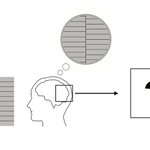
Can we reconstruct our subjective experiences from brain signals? Check our latest paper in @ScienceAdvances w/ my PhD advisor @ykamit and colleagues. We explore how reconstruction methods can advance understanding of neural representations behind illusion.science.org/doi/full/10.1126…


Visual illusions suggest that what we see is not always a direct reflection of the world, but rather a constructed representation. Is it possible to generate images mirroring illusory experiences directly from brain activity?
Check our preprint! biorxiv.org/content/10.1101/…

Fan L. Cheng retweeted

To learn how brains compute, we need to experimentally adjudicate among competing computational hypotheses. How do we do this in the age of complex neural network models? New review paper: “Making models disagree to learn how brains compute” with @TalGolanNeuro, @SchuettHeiko
Fan L. Cheng retweeted
Talk videos of the amazing workshop "Toward AI with Human Level Efficiency" organized by Ilker Yildirim et al. at Yale... cnclgithub.github.io/yale-ai… with @T_BrookeWilson, @KanwisherLab, Josh Tenenbaum, Leyla Isik, @todd_gureckis, @tommccoy, Alex Lew, and Leslie Kaelbling.
Fan L. Cheng retweeted
In this podcast interview with speed cuber Sanjay Adireddi, he and I discuss an imaginary research program on how humans solve Rubik's cube...
youtube.com/watch?v=m1uJOX8B…

Fan L. Cheng retweeted

An instructive paradox to resolve:
1. The left skinny bar appears equally bright as the fat bar.
2. The right skinny bar appears equally bright as the fat bar.
3. The left skinny bar looks brighter than the right.
(I think some precision resolves the logical contradiction)

Fan L. Cheng retweeted
amazing dynamic version of Cafe Wall illusion from @eivinasbutkus. The rows remain perfectly horizontal the entire time
Fan L. Cheng retweeted

Excited to announce CCN @CogCompNeuro Satellite Event:
Modeling and Understanding Human Brain Computation at Scale
We explore how we can best leverage the many recent advances with neural network modeling and brain foundation models toward theoretical insight and benefit for humanity.
Sunday, August 2, 2026
@ZuckermanBrain
Organized with @Pinyuan3, @LibraCheng, Andrew Luo, and @KriegeskorteLab

Fan L. Cheng retweeted

@CogCompNeuro Satellite Event:
COMPUTATIONAL CONSCIOUSNESS SCIENCE
Saturday, 1 August 2026
New York University
Bringing computational modelling, neuroscience, and philosophy together to understand consciousness
NYU Center for Mind, Brain and Consciousness
#CCN2026

You see rotation when you move your eyes, even though the image is 100% static.
Our #CVPR Findings paper uses motion illusions to (1) reveal gaps between human and AI motion processing and (2) identify architectures key for aligning vision models with human perception.
openaccess.thecvf.com/conten…
Check out our paper on AI-human comparisons in subjective motion perception!
openaccess.thecvf.com/conten…

Can AI "see" motion from static images like humans?
We tested 10 state-of-the-art vision models (multi-scale, recurrent, and bio-inspired) on the Rotating Snakes illusion, one of the most extensively characterized motion illusions in human and primate vision. Almost all failed — only one bio-inspired model, Dual, predicted motion most closely aligned with human perception, particularly under simulated eye movements.
Accepted to @CVPR Findings!
Paper: openaccess.thecvf.com/conten…
w/
@LibraCheng @zitangsun @KriegeskorteLab
A 🧵:
#ComputerVision #Vision
Fan L. Cheng retweeted

1/
When diffusion generates images from text, before an image has objects, how does each noisy token know what it should become?
In our new work, we found that Diffusion Transformers solve spatial-relation prompts using a circuit motif reminiscent of developmental biology: morphogen-like spatial gradients.
At the start of sampling, image tokens are mostly uninformed noise — like an undifferentiated sheet in an embryo. Relation heads then write smooth spatial gradients onto the image canvas, guiding where objects should emerge.
Accepted as a @CVPR 2026 Highlight🌟: animadversio.github.io/DiT-R…
Beautiful collaboration with my friends and colleagues @fjxdaisy & Xu Pan!
A 🧵
Look. The snakes rotate.
Hold still. They stop.
Glance away. They spin again.
We asked 10 visual-motion models to play this game with us. Only one could. 🐍
I'll present "Neural networks reveal candidate computational mechanisms underlying anomalous motion illusion" at #VSS2026
🗓️ May 19th, Tuesday 8:30–12:30
📍 Pavilion, Board 53.435
Welcome to drop by! 👋
w/ @IsabellaRosario @ZitangSun @KriegeskorteLab

Fan L. Cheng retweeted

1/ New preprint + VSS poster! Attention has long been thought to enable efficient vision. But does it? First demonstration that attention—consuming just 4-5% of the energy budget—can cut the energetic costs of vision in half. #VSS2026

Fan L. Cheng retweeted
🧵Excited to announce—
"Reimagining the binding problem(s) for the 21st century": A VSS Symposium
St. Pete Beach @VSSMtg
May 15th, 10:30am
Presenters: Peter Tse, JohnMark Taylor, Seda Karakose-Akbiyik, Ana Chica, Anne Sereno, & Jake Quilty-Dunn
visionsciences.org/symposia/…

Fan L. Cheng retweeted

Our paper "Readout Representation: Redefining Neural Codes by Input Recovery" has been accepted at ICLR 2026🎉🥳

Fan L. Cheng retweeted

🧠What do neurons “want”?✨
Kempner researchers @WangBinxu and @HombreCerebro have developed a way for neurons to train AI image models to match their “preferences.”
Read more about the research, out now in @NatureNeuro, here: bit.ly/4bz47hw
#neuroscience #NeuroAI

Fan L. Cheng retweeted
Absolutely wonderful talk by Roland Fleming on “Grasping: measuring and modeling how we use our hands to pick things up” at @ZuckermanBrain

Fan L. Cheng retweeted

I am searching for postdocs interested in developing a deeper scientific understanding of any aspect of AI and using this understanding to improve AI systems. If interested please email me materials by Jan 10th 2026: a CV, 3 letters of reference, and a statement of research interests (can be short, just indicating what you would like to work on).
The positions are generously funded by grants from @schmidtsciences and @SimonsFdn. You will have the opportunity to collaborate with many labs across @StanfordHAI and also the Simons Collaboration on the Physics of Learning and Neural Computation (physicsoflearning.org/).
Fan L. Cheng retweeted

Bringing our Tactile UMI and additional two tactile fingers to NeurIPS! All three authors @YunzhuLiYZ @XinyueYolandaZ and I will be at our poster for demo on Thu 12:00–15:00 in Exhibit Hall C/D/E, #2400.
Otherwise feel free to catch me around the venue Wed–Fri 🙂

Tactile interaction in the wild can unlock fine-grained manipulation! 🌿🤖✋
We built a portable handheld tactile gripper that enables large-scale visuo-tactile data collection in real-world settings.
By pretraining on this data, we bridge vision and touch—allowing robots to:
✅ Perform robust in-hand reorientation
✅ Control contact and force with precision
🔗 Project page: binghao-huang.github.io/touc…
(1/6)
Fan L. Cheng retweeted

I’ll be at #NeurIPS2025 in San Diego (Dec 2–6)!
Presenting our "Interpretable Brain Decoding" paper (@KriegeskorteLab,@adeli_hossein,@wenxuan_guo_,@ethanhwang_,@LibraCheng) at the Foundation Models for the Brain and Body Workshop on Dec 6, 3:45–5:00 pm.
Happy to chat!