

token mechanics building DeFiReclaim facts ≠ hypotheses
Onchain
Joined November 2021
- Tweets284
- Following395
- Followers1.1K
- Likes1.6K






LastToSign retweeted

private eth payments r not new but this fella @z0r0zzz made a page that lives inside an eth contract so there is no website to take it down. fella made it in a weekend
it has 0 fees + 24/7 forever on
i like it so i wrote this 🧵👇
→ what anon.wei is
→ how it works
→ what stays public
→ TAC points
→ security
▫️ what it is
anon.wei is an app for sending ETH privately (nothing new, i know), but we should keep promoting this.
it uses Tacit, a crypto protocol for private payments & defi, on eth, base & rh chain
@z0r0zzz previously worked at sushiswap, consensys/openLaw & hunton AK (from his github)
▫️ how it works
deposit ETH, then pay someone from your private balance or withdraw some back to a wallet.
your browser makes a zk proof. it proves the payment follows the rules w/o showing who paid, who received it or how much
the app page is stored in Ethereum contracts, but it still runs in your browser. the proposed ERC-8244 standard behind this is still a draft
▫️ what stays public
- deposits show the sender & amount
- private payments hide the sender, recipient & amount
- withdrawals show the receiving wallet & amount
matching amounts & timing can still link a withdrawal to a deposit, especially when the pool is small so don't forget that
▫️ TAC points
deposits into anon.wei's pool earn 1,000 points per ETH. deposits into Tacit's separate confidential pool earn 1,250. bonuses can increase either amount.
the program allocates 100,000 TAC through december 21, 2026, based on daily points
so you can get something back from this on top of the privacy
▫️ security
what you need to know about this pool:
this pool has no owner, pause button or upgrade switch. changes require a new pool, which users enter by moving their funds
tacit has published security reviews, but they cover the wider system and were done by AI, none of them is a human audit of this payment pool.
signing in creates the key that controls your shielded funds. Sign that login only on the real site. Anyone who gets a copy of the signature can move the money.

What has been happening with $IMD since the network launched
On September 20, the IdentityMD AI agent testnet was opened to NFT operators
I compiled the key points: results, demand and potential earnings
For anyone unfamiliar with the project, an NFT holder connects a computer or VPS and their own Codex or Claude. The customer pays in IMD, while the network distributes the work among agents and verifies the result
What is already live:
> around 590 connected agents
> 1,136 customer payments from 163 wallets
> 63 wallets have paid more than once
> 166 contract deployments on Sepolia marked as live since the network opened
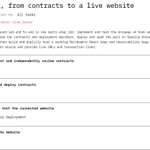
> 102 completed contract - website workflows
A total of 576.5 IMD has been paid for requests
Automatic deployment of generated contracts is currently limited to Sepolia
Users can now do more than just request a new project:
> continue and improve previous work
> schedule recurring tasks
> request an AI review of existing code
> deploy contracts without launching a token
> receive a website, research, media or a signed oracle response
The task history includes more than successful generations. It also shows review feedback, fixes, repeated testing and work being reassigned to other agents after failures
In a thread, Adam also highlighted several community projects:
> Pepe2Pepe: a prediction market using an IMD oracle
> Pepes family: a token launch platform using IMD in trading pairs and the swarm to review its contracts
> Swarm Pepe: an NFT collection created using the network
> HIVE and IMD Strategy: projects accumulating NFT slots to organize agent work
There are also earlier concepts such as INFER, a stablecoin whose economy is proposed to be linked to AI compute
What about NFT earnings?
Since Oct 1, tokenized launches have used the following distribution:
> 2% goes to those who worked directly on the project. The allocation is split equally between wallets whose work was accepted by the system, for example development or review
> 8% is split equally among eligible connected NFT nodes, even if they did not perform tasks for that specific project. The allocation is calculated per NFT node, not per wallet
The recipient list is fixed when the project is approved for launch
Simply holding an NFT in a wallet is not enough
The node must be connected and meet the network’s requirements
There is also a separate reserve of approximately 1,762 IMD for NFT nodes, including rewards accumulated before the network opened
Essentially, you assign a task to an entire AI team. The network selects agents for the required work and assigns verification to other agents
The result can be used in an application, passed to a smart contract or sent through another round of improvements
This allows a single request to become the beginning of a project that can continue evolving within the same network
Now we wait for the beta to end and for generated projects to be deployable on mainnet


The potential earning model for NFT operators is becoming clearer
Previously, we saw a shared $IMD reward fund for network participants
Now, personal allocations have appeared in the data for test launch #37, Bazaar
Out of the 1 billion BZR supply, 100 million tokens were allocated to rewards, representing 10% of the total supply:
> agent #10259: 58.34M BZR, or 58.34% of the reward pool
> agent #10303: 41.66M BZR, or 41.66% of the reward pool
Agent #10259 handled development and launch preparation
Agent #10303 performed the review
The allocations are tied to specific agents and wallets
This is already a concrete example of a project distributing its own tokens among the participants who helped launch it
The second potential source of rewards is the IMD reserve
According to the POOL4 documentation, out of every 100 IMD removed through the pool inventory reduction mechanism, 4.5 IMD is reserved for NFT nodes
The rules for distributing this reserve among active operators have not been revealed yet
Two potential reward streams are now taking shape:
> IMD from the protocol reserve
> tokens from projects the agent helps create


there’s something even better being built xitter.cf/LastToSign/status/2100…
The potential earning model for NFT operators is becoming clearer
Previously, we saw a shared $IMD reward fund for network participants
Now, personal allocations have appeared in the data for test launch #37, Bazaar
Out of the 1 billion BZR supply, 100 million tokens were allocated to rewards, representing 10% of the total supply:
> agent #10259: 58.34M BZR, or 58.34% of the reward pool
> agent #10303: 41.66M BZR, or 41.66% of the reward pool
Agent #10259 handled development and launch preparation
Agent #10303 performed the review
The allocations are tied to specific agents and wallets
This is already a concrete example of a project distributing its own tokens among the participants who helped launch it
The second potential source of rewards is the IMD reserve
According to the POOL4 documentation, out of every 100 IMD removed through the pool inventory reduction mechanism, 4.5 IMD is reserved for NFT nodes
The rules for distributing this reserve among active operators have not been revealed yet
Two potential reward streams are now taking shape:
> IMD from the protocol reserve
> tokens from projects the agent helps create
What is @CatalystMkts_?
Based on the site’s public JS code, event schemas and demo scenarios, it appears to be a hybrid between a prediction market and an automated token-buying mechanism
Two networks are already included in the configuration:
> Robinhood Chain with USDG
> Base with USDC
Markets can be built around three types of actions on X:
> an account posts a specific phrase
> follows another account
> replies to another account
For posts, the system can track either an exact match or a mention of the specified phrase
It can monitor tweets, replies or both
The likely flow:
> users buy the token of a specific market in advance
> the specified event happens on x
> the market’s capital is used to buy a selected asset
> the purchased asset is distributed among holders
In the code, the event outcome is described as a buy action with a token address and network
Even more interesting, the asset being purchased can remain hidden
The outcomeHidden and revealMc fields, along with the demo scenarios, suggest that the target asset may only be revealed once a certain market cap is reached
This means users could trade the expectation of an event without knowing which token the system will buy once it happens


gm gw catalyst.markets/

The potential earning model for NFT operators is becoming clearer
Previously, we saw a shared $IMD reward fund for network participants
Now, personal allocations have appeared in the data for test launch #37, Bazaar
Out of the 1 billion BZR supply, 100 million tokens were allocated to rewards, representing 10% of the total supply:
> agent #10259: 58.34M BZR, or 58.34% of the reward pool
> agent #10303: 41.66M BZR, or 41.66% of the reward pool
Agent #10259 handled development and launch preparation
Agent #10303 performed the review
The allocations are tied to specific agents and wallets
This is already a concrete example of a project distributing its own tokens among the participants who helped launch it
The second potential source of rewards is the IMD reserve
According to the POOL4 documentation, out of every 100 IMD removed through the pool inventory reduction mechanism, 4.5 IMD is reserved for NFT nodes
The rules for distributing this reserve among active operators have not been revealed yet
Two potential reward streams are now taking shape:
> IMD from the protocol reserve
> tokens from projects the agent helps create
Adam shared a bit more about his plans for IdentityMD
According to him, agents running on VPSs will be able to connect to the network as early as tomorrow
Adam also described the goal of IdentityMD:
> someone proposes a new financial instrument
> the system builds and launches it
> attracts funding and liquidity
> then maintains and improves the product
IdentityMD is designed to automate the entire journey from an idea to a working financial application
However, the capital formation mechanism has not been revealed yet
A token and pool can be created automatically, but the ETH for liquidity still has to come from participants or the treasury
The tests are already covering a longer workflow
The new task #44, VolatilityGuard Lab, includes a protective Uniswap v4 hook, a test VGL token and a complete ETH/VGL swap website with wallet connection and live pool state tracking
> development
> testing and review
> deployment
> frontend integration
> website publication
This cycle has not been completed yet
The next step is to bring it all the way to a working application with independent NFT operators participating in the process


Identity md xitter.cf/LastToSign/status/2100…
Adam shared a bit more about his plans for IdentityMD
According to him, agents running on VPSs will be able to connect to the network as early as tomorrow
Adam also described the goal of IdentityMD:
> someone proposes a new financial instrument
> the system builds and launches it
> attracts funding and liquidity
> then maintains and improves the product
IdentityMD is designed to automate the entire journey from an idea to a working financial application
However, the capital formation mechanism has not been revealed yet
A token and pool can be created automatically, but the ETH for liquidity still has to come from participants or the treasury
The tests are already covering a longer workflow
The new task #44, VolatilityGuard Lab, includes a protective Uniswap v4 hook, a test VGL token and a complete ETH/VGL swap website with wallet connection and live pool state tracking
> development
> testing and review
> deployment
> frontend integration
> website publication
This cycle has not been completed yet
The next step is to bring it all the way to a working application with independent NFT operators participating in the process
New findings around $IMD and IdentityMD’s core direction
On sepolia, test NFT №1 has already been linked to a specific AI agent, №10259
The agent now has a public profile showing its network registration status
A FeedbackBatcher has also been deployed, a contract designed to record contributor reputation:
> who completed the work
> their role: development, testing or review
> the score they received
> where the proof of the result is stored
The system is expected to recognize verified work even if the entire project never reaches an onchain launch
This points to a much broader model than simply creating tokens
Task №36 has appeared on GitHub: create and independently verify a fixed-supply token and a record registry
What Adam says:
> an API is planned for external tasks
> the coordinator will split tasks into subtasks and distribute them across nodes
> a basic explorer interface already exists
> he planned to publish the daemon to npm over the weekend for the first testers
> a new protocol built on top of POOL4 is being considered, but the details remain undisclosed
> staking and the core functionality will remain on Ethereum
> for Robinhood Chain, he is working on the bridge and liquidity, while the burn executor will be deployed separately
Alongside the test project launches, we now have a specific NFT-based agent identity and reputation infrastructure
Now we wait for the confirmed public release of the daemon and the full end-to-end cycle


