

Entrepreneur: https://xitter.cf/t.co/Ii45eqhaee and some other projects - check: https://xitter.cf/t.co/WGALkfWAYZ
Prague, Czech Republic
Joined May 2011
- Tweets20.4K
- Following1.5K
- Followers1.5K
- Likes63.6K
Michal Krcmar retweeted

📢 THIS IS INSANE
Someone released a FREE open-source replacement for Opus Clip, VidyoAI, Klap and SubMagic.
It's called AI YouTube Shorts Generator.
4,742 stars and 868 forks on GitHub.
Those tools charge $20 to $300 a month, cap your minutes and watermark the free tier.
Here's how it works:
1. You paste a YouTube link
2. Whisper transcribes it, then an LLM ranks the moments on hooks, emotional peaks, conflict and quotable lines
3. It crops each winner to vertical and hands you the mp4s, with a viral score and the hook line for every clip
Videos over 30 minutes get chunked automatically, and overlapping clips are deduped by score.
Runs fully offline in local mode. Batch a whole URL list with xargs.
Save this tool.
I'm sure you can get a ton of value out of it.
Link below👇

Michal Krcmar retweeted

Ukraine destroyed the Admiral Makarov - the russian Kalibr cruise-missile carrier.
Russia moved its Black Sea Fleet away from Crimea to keep it safe in Novorossiysk.
It didn’t help.
Readers added context they thought people might want to know
Video appears AI-generated: hull #499 visible though BSF painted over numbers since 2022. Navy Lookout called it fake.
Satellites confirm damage, not destruction, near Kalibr launchers on Admiral Makarov in Aug 12 Novorossiysk strike.
x.com/NavyLookout/st…
navalnews.com/naval-news/202…
Michal Krcmar retweeted

Viktor Oddy proves you don’t need a $10K agency to build a $10K looking website
He breaks down the entire workflow inside Google AI Studio: Pinterest for visual inspiration, AI-generated assets, then a single prompt that adds smooth reveal animations and polished interactions that once took an entire design team.
He already has 100+ sites live in his Motion Sites library. The animations feel sharp, the UI looks expensive, and you don’t need to build everything from scratch with code.
The barrier to premium web design just disappeared.
If you want a website that looks expensive and sells like one, this is the workflow to copy.


Michal Krcmar retweeted

Andrej Karpathy revealed what survives after prompting
"Prompting is fading away
Delete everything else and keep the graph"
In a 1-hour lecture, he explains how to build graphs and why they are the layer everything ends up becoming
LLMs → Prompts → Agents → Graphs
Most people are still trying to perfect prompts
The graph is the part that survives
Everything before it is just a step in the process
This free lecture is worth more than most $500 graph engineering courses
Watch it today
Then read the full guide on graphs below


Michal Krcmar retweeted

A personal Jarvis isn't just Claude Code plus a single massive prompt
It’s a five-layer system: voice, interface, actions, research, and change control
I found the repositories needed to build each component:
1. Open Interpreter ★68,058
Gives the agent access to files, the terminal, and local tasks. A solid foundation for a "human-in-the-loop" setup: keep confirmation enabled for risky actions
2. LibreChat ★42,199
A dedicated assistant interface featuring MCP support, agents, custom instructions, and document handling. Can be deployed locally or on a VPS
3. Aider ★48,313
Essential to prevent the AI from "breaking the project and claiming it's finished."
It operates via Git, allowing you to review and revert changes so you don't lose your working version after a failed experiment
4. GPT Researcher ★29,032
Delegate research tasks to it—gathering sources, structuring findings, and preparing reports—instead of manually opening 30 browser tabs
5. LiveKit Agents ★13,065
The foundation for a voice-enabled Jarvis: microphone → speech recognition → model → low-latency voice response
However, no single repository makes an agent safe on its own
You need access restrictions, Git backups, and manual confirmation steps before sending emails, making payments, or modifying critical data
In the article, I break down the entire Jarvis system built on Claude Code: memory, MCP, voice capabilities, and business safeguards
I’ve left the links in the first reply ↓


Michal Krcmar retweeted

OMG... this is 10/10 for creating beautiful software architecture diagrams. 🤯👌
FossFLOW is a free, open-source tool for creating clean 3D isometric diagrams with hundreds of built-in icons and symbols.
You can use it to visualize software architecture, networks, infrastructure, and complex systems without starting from scratch.
Perfect for engineers, designers, developers, and vibe coders to create stunning architecture diagrams with ease :)
Follow me for more amazing AI, Coding & Web Dev insights 💎
Michal Krcmar retweeted
STOP WRITING AGENT PROMPTS FROM SCRATCH
someone already shipped 161 of them. free
yesterday. botdirectoryai. 21 stars. MIT.
-> github.com/elie222/botdirect…
every bot is one markdown file. copy it, paste it into your agent, and it walks you through connecting the services and puts itself on a schedule.
- inbox triage every morning, you never open the mailbox
- an SEO bot finds pages sliding to page two and opens a PR for you to review
- bookkeeping audit against your statements and receipts
- a check on your own bots for hallucinations, before the error moves down the chain
- 161 of them across six categories: Marketing, Productivity, Personal, Ops, Sales, Success
works with Grok Bot, Rakazo, or whatever agent you already run.
you were writing these prompts by hand. 161 are already written for you.
save this before you sit down to write the next prompt from scratch ↓

Michal Krcmar retweeted

INSTEAD OF WATCHING NETFLIX TONIGHT.
Spend 2 hours with this.
Claude AI FULL COURSE that teaches you how to BUILD and AUTOMATE anything.
The people who watch this tonight will wake up tomorrow with a new skill.
Watch it and bookmark it now. 🔖
This message is worth two minutes of your time.
🎥 Watch the clip when you get a chance.
🔖 Save it for the days when you need a little perspective.
💬 What's one piece of advice that's stayed with you over the years?
Follow @VipulKewatTech for AI insights, career lessons, and practical tech resources.
Michal Krcmar retweeted

Anthropic engineer:
"You're not supposed to prompt Claude. You're supposed to build a system that prompts itself."
In 45 minutes she shows exactly how Anthropic builds agents that remember, fix their own mistakes and get smarter with every run.
This beats any paid course on agents I've seen.
Watch it, then read the guide on building loops below.


Michal Krcmar retweeted

RAG WAS NEVER THE END GOAL. AI MEMORY IS WHERE AGENT ARCHITECTURE IS HEADING.
most developers build agents backwards. they start with vector databases, add five tools, and wonder why the agent loses track after three turns.
the issue is conflating simple document retrieval with persistent agent execution.
i spent months trying to solve context loss with larger vector databases. turns out embedding search was never designed for agent state.
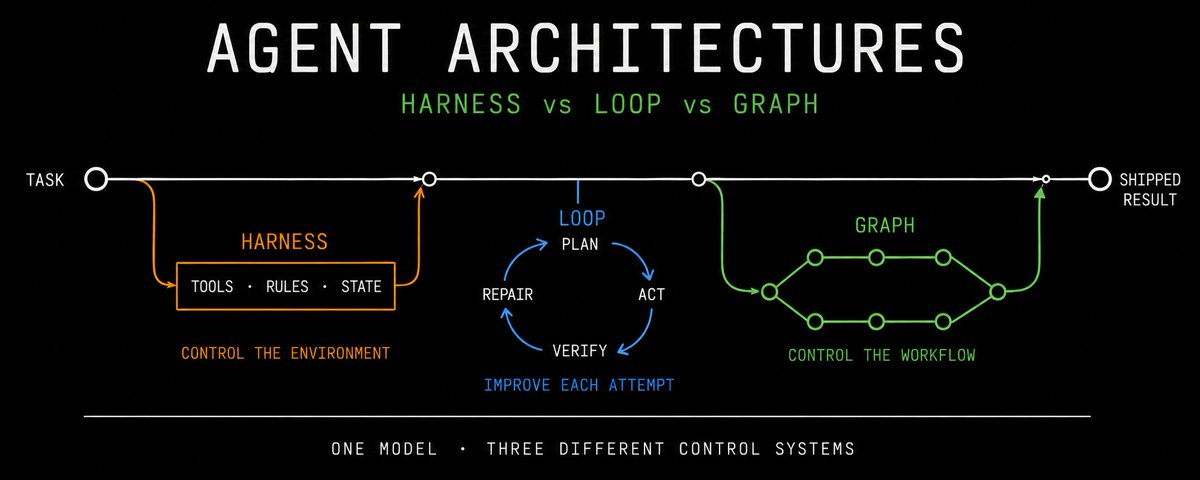
here is the three-stage evolution that defines modern agent architectures:
1. traditional RAG (static retrieval)
› queries embed text, search a vector store, and dump top chunks into the context window. › works for static document search, but fails completely when tasks require iterative reasoning or state updates.
2. Agentic RAG (dynamic tool loops)
› the agent uses tools to search web endpoints, query SQL databases, and call APIs dynamically. › replaces passive search with an active agent loop where the model decides what context to fetch at runtime.
3. AI Memory (stateful agent harness)
› bi-directional memory architecture that actively searches, updates, and writes persistent state back to disk. › governed by an agent harness and graph so multi-agent workflows survive restarts without losing task context.
the shift is clear:
RAG retrieves data, Agentic RAG routes tools, and AI Memory governs persistent state.

Michal Krcmar retweeted

🚨ESTO ES UNA LOCURA
Un desarrollador chino acaba de lanzar una herramienta GRATUITA capaz de crear vídeos automáticamente para TikTok, Reels y YouTube Shorts.
Se llama MoneyPrinterTurbo.
Y ya ha superado las 100.000 estrellas en GitHub.
Así funciona:
1. Introduces un tema o una palabra clave
2. La IA genera el guion, la narración y los subtítulos
3. Busca el material visual, edita el vídeo y te entrega el resultado final
Todo ocurre en un único flujo de trabajo.
Guárdate esta herramienta.
Estoy seguro de que puedes sacarle muchísimo partido.
Enlace abajo👇
Michal Krcmar retweeted

Te comparto 6 repos de AI Agents que estan explotando en github
1. Agency agents — github.com/msitarzewski/agen…
Agencia de IA completa con 232 sub agentes especializados en 16 areas
2. Codebase memory mcp — github.com/DeusData/codebase…
Convierte todo tu codebase en un knowledge graph ultra rapido. Soporta 158 lenguajes, reduce tokens mas del 99% y responde en milisegundos
3. OpenMontage — github.com/calesthio/OpenMon…
Convierte tu agente de coding en un estudio completo de produccion de videos. Planificacion, guion, assets, edicion y renderizado con solo prompts
4. Agent-Reach — github.com/Panniantong/Agent…
Dale ojos a tu agente para navegar internet. Lee y busca en X, Reddit, YouTube, GitHub y mas. Todo gratis sin pagar APIs
5. Orca — github.com/stablyai/orca
Gestiona y ejecuta multiples agentes de coding en paralelo
6. OmniRoute — github.com/diegosouzapw/Omni…
Gateway gratuito que une 237 proveedores de IA (+90 gratis) en un solo endpoint. Reduce el consumo de tokens hasta un 95%
Con estos dejas de usar un solo agente y pasas a manejar una flota completa
Guardalos todos 🔖


Michal Krcmar retweeted

F*ck it
I'm giving away the internal doc we use at Boom on every $25-$60K operating system build.
Steal the system:
- Map every workflow before touching a tool, and time the manual hours (if you follow me, you already know this)
- Sort your stack into 3 buckets: absorb, keep, kill
every entity gets exactly one write path, in writing, before anything gets built
- Consolidate one department at a time. Automate nothing yet
- 4 agents go on top in a specific order (intake always first)
- Route simple tasks to cheap models, save frontier models for reasoning. Cuts token spend 80%+
The full system paper is below. The deep dive on every step is in the article 👇


Michal Krcmar retweeted

vibeprompts.dev - UI prompt library for vibe coders with 251 elements
openmotion.design - Free motion design for Mac
gooey.jakubantalik.com - Open-source Liquid effects for React UI
kitbitz.art - 2000+ hand-free illustrations
github.com/yosaiy/renotch - Mac's notch as a native developer command center.
Michal Krcmar retweeted

I open-sourced the Sylva three.js site and the skills behind it.
I started with one reference and asked Opus 5 to recreate it in Three.js as a single HTML file (looped for 2 hours). The moss root is procedural geometry with around 130,000 instanced blades, and all the code is under 1 MB.
Live site: mengto.github.io/sylva/
Repo: github.com/MengTo/sylva
I turned the main interactions into three reusable skills:
- threejs-wireframe-scan-reveal
- threejs-pointer-orbit
- threejs-gpu-particle-spray
Skills repo: github.com/MengTo/Skills

I’m blown away by the quality of the landing pages that Opus 5 can create in Three.js.
Prompting it with "orbit using mouse" is enough to create a 3D parallax effect. The same goes for "add particles to pointer." It’s like creating a living, breathing world.
More prompts I used:
- Add a butterfly that flies to the branch and flies away when I mouse over it.
- During the intro, first load a wireframe of the branches, similar to the field-scanning effect in Death Stranding.
- Add a scan effect to the card images while they load.
Then I asked it to use the shader buttons and nav bar I made in previous projects.
As explained in my last video, I started with an inspiration and the prompt, “Recreate this in Three.js in a single HTML file. Self-verify until perfect.” Opus 5 ran for two hours. All the code is less than 1 MB.
Inspiration:
instagram.com/p/DYVXOx6kdmq
Let me know if I should open-source this.
Michal Krcmar retweeted

ONE OPEN-SOURCE SUPERVISOR JUST TURNED CLAUDE CODE, CODEX, CURSOR AND KIMI INTO A SINGLE CODING FLEET
Agent Orchestrator is a meta-harness. You give it an issue, it spawns the agents and handles the aftermath.
The loop it closes:
Issue -> Spawn agent -> Isolated worktree -> Code -> PR opens -> CI fails -> Logs route back -> Agent fixes it -> Ready for review.
• What runs inside it
> Claude Code, Codex, Cursor, Kimi Code and opencode behind one system: github.com/Untrivial-ai/agen…
> Each session gets its own branch, terminal and worktree.
• What the daemon watches
> Pull requests, CI results and review comments.
> Merge conflicts route back to the worker that caused them.
No hard cap on how many run at once -> the ceiling is your machine and your API rate limits.
The model writes the code, the harness decides which agent gets told it broke something ↓

41,200 PEOPLE HAVE STARRED A REPO THAT MAKES CLAUDE CODE RUN ON MODELS THAT COST NOTHING
It is a local proxy -> Claude Code keeps sending normal Anthropic requests, and free-claude-code forwards them to whichever provider you configured.
Two minutes to wire it up:
> uv tool install git+github.com/Alishahryar1/free…
> fcc-init, then put your keys in the env file
> ANTHROPIC_BASE_URL = http://localhost:8082
> ANTHROPIC_AUTH_TOKEN = freecc
Nothing about the CLI, the VS Code extension or JetBrains has to change.
Where it can send the traffic:
> NVIDIA NIM at 40 requests a minute free, OpenRouter, DeepSeek, Kimi.
> LM Studio, llama.cpp or Ollama for fully local and offline.
Opus, Sonnet and Haiku each map to a different model and provider -> the expensive one only turns up where you decide it should.
Save this one so you don't lose it ↓
Michal Krcmar retweeted

this is f*cking gold
Andrej Karpathy joined Anthropic five weeks ago.
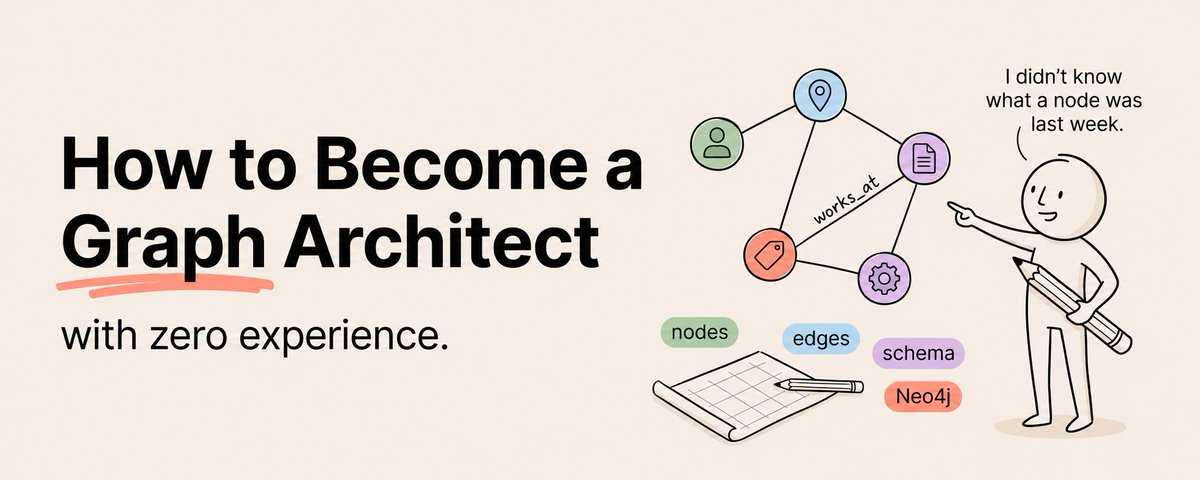
Two Anthropic seniors just made Karpathy's loop 1000x better with "Graph Engineering"
the agentic systems got 1000x better the moment you wired agents into a graph
I dropped it into my setup. The very first response was different.
Not slightly different. Completely different.
Claude stopped giving generic answers and started working exactly the way I think.
Bookmark it before it gets lost in your feed.
Read it now, then check the article below.


Michal Krcmar retweeted

Stanford researchers did it again.
They just built the agent-native version of Git.
When an agent works on a longer task, the run builds up a lot of state.
This includes files edited/created, a dev server, a database, installed packages, KV cache, etc.
Say the agent is at step 10 and makes a mistake, maybe it misreads a traceback and rewrites a file that was actually fine.
The tests start failing, and the run goes off track, although everything through step eight was correct.
By default, the agent just tries to fix it, which creates more edits and tool calls. This burns more tokens and grows the context.
The other options are a person stepping in to redirect it or restarting the whole run from step one.
That's wasteful, because it pays for every model/tool call again and re-prefills the context. Moreover, since an agent's run is non-deterministic, it doesn't reproduce the same early steps anyway.
The reason it's hard to just jump back exactly to a previous correct step and resume from there is that the trajectory is only a message log.
It records what the agent said and which tools it called, but not the live state underneath.
That state includes things like memory, open file handles, child processes, installed packages, /tmp, and KV cache. None of that is in the log.
Git can version the files, but it doesn't snapshot the running process or the KV cache. Checking out step eight moves the files back, but the process is still sitting in step-ten memory with a cold cache.
Shepherd is a runtime layer by Stanford that records the run as a trace of typed events rather than a flat log.
Each agent-environment interaction becomes a commit, similar to Git, but it tracks the live run.
Its commit includes the agent process and the filesystem together, copy-on-write, so a branch carries the actual state and not just the files.
Going back to a previous step is then a single call that forks from that commit and continues from the exact state.
The copy-on-write fork is roughly five times faster than docker commit, and because the prompt prefix through step eight is unchanged, the KV cache is reused over 95% on replay, so early steps aren't reprocessed again.
Once the run can be forked, a meta-agent can sit on top and operate it. It watches the trace and reverts as soon as it looks wrong, before the bad write is committed.
In practice, it's just Python calling fork, replay, and revert on the trace, rather than a separate control plane wired into the harness.
Not everything is reversible though.
Files and sandbox changes undo themselves, but a database write has no automatic undo, so it needs a matching undo step set up in advance.
Something external, like a sent email or a real charge, can't be undone, so the supervisor's job there is to catch it before it fires.
They tested this on a few public benchmarks. On CooperBench, where two agents work on the same codebase, adding a live supervisor took the pair-coding pass rate from 28.8% to 54.7%.
It's still early and labeled alpha. The benefit mostly shows up when a run gets branched a lot over a heavy sandbox state, which is exactly where restarting wastes the most tokens and time.
If Git was made to make file changes reversible, Shepherd is trying to do the same thing for a live agent run.
Shepherd Repo: github.com/shepherd-agents/s…
(don't forget to star it ⭐ )
That said, Shepherd reverts a bad step inside a run. The harness around it, the prompts, tools, and checks the supervisor relies on, still drifts across runs as models and dependencies change.
I wrote about making that harness repair itself, where a failing trace gets diagnosed, the fix is verified against the exact input that failed, and the failure is locked as a regression test so it can't recur.
The article is quoted below.


Michal Krcmar retweeted

We transformed Ukraine into a global tech leader and a defense powerhouse.
Beyond digital IDs, Diia.Cіty, and 5G, we revolutionized warfare. Through the Army of Drones and the @BRAVE1ua cluster, we achieved a logistical lockdown for the occupiers, reached a 91% Shahed interception rate, and launched the unique e-Points system to incentivize our troops on the frontlines.
7 years of service. From GovTech to Defense Tech. Thank you for your trust!
Michal Krcmar retweeted

🤯 Tried making a Vox-style history explainer with ChatGPT + Seedance!
45 seconds on Qin unifying China.
9 scenes: the Seven Warring States, rival powers, conquest, standardized script, currency, measurements, roads, and one imperial system.
🌟Mostly AI-built:
ChatGPT for structure, Image2 for collage keyframes, Seedance for animation, plus AI voice and captions.
Only the BGM choice and final timing were adjusted manually.
The fun part was adding stop-motion collage touches: paper jitter, sticker bounce, moving arrows, route lines, coins, and maps.
Like a history page coming to life.
Made with @Flovaai #Flovaai #Flovacpp
Workflow + Prompt below👇