




Klaith retweeted

Measles can be fatal.
Do you know its symptoms?
- Rash that starts on the face and spreads over the body
- Fever
- Cough
- Red and watery eyes
- Small white spots inside the cheeks
Seek health care if you suspect you or your child has measles.

Klaith retweeted

As the era of pre-symptomatic clinical trials in prion disease begins, it is more important than ever to have unbiased quantitative estimates of lifetime risk, age of onset, and penetrance. In a new publication we examine 26 years of longitudinal follow-up data on individuals with predictive genetic testing. We update our estimates - E200K median age of onset, 75 instead of 62, D178N very limited data but possibly as 57 instead of 52.
Blog: cureffi.org/2026/10/21/revis…
Full text: vallabhminikel.org/publicati…

概率论和统计学是生活中非常有用的学科。
举个例子,假设尊界一共卖出 100 万台车,我们随机不放回抽样三台,刹车在类似的制动情况下都被踩断。那尊界车(该测试条件下)总体的故障率点估计值是 100%,双侧 95% 置信区间为 29.24%–100%。
严格一点的统计学解释是:我们使用了一种在重复抽样中至少有 95% 覆盖率的方法,得到总体故障率的估计区间为 29.24%–100%。
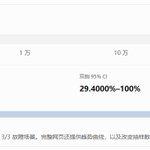
其实这个问题的核心,远不是尊界卖出多少车。用 ChatGPT 做了个工具(见附图),比较尊界销量 1 千到 1 百万之间的故障率双侧 95% 置信区间变化情况。我们可以发现尊界即使仅售出 1 千台车,随机不放回抽样三台车刹车都断裂,统计学推断的总体故障率双侧 95% 置信区间下限也有 29.40%,接近 1 百万台车销量时的结果。
尊界的问题关键在于,三台车刹车都在类似的制动情况下断裂。即使真实总体故障率仅 1%(很高了),随机抽样三台车都故障的概率才大概 0.0001%。
当然,这里简化了一些问题,比如抽样方法是否真随机,比如后续生产的车工艺是否变化,比如测试方法是否可靠……现在有了 AI,我们自己就可以测试不同的条件。
所以,上述置信区间不能直接当作尊界实际总体故障率的估计。但至少我们清楚:如果一种故障非常罕见,那么随机抽取三辆车全部出现同类故障,是概率极低的事件。
如果尊界车的故障率真的在可接受水平,我们现在看到的现象,用上海话来说就是“眼眼叫碰着眼眼叫”。


有朋友最近在折腾跨境医疗的事情,介绍境外患者到国内接受 CAR-T 治疗。帮她和曜影搭上了线,我觉得这是个很好的事情,可以帮助很多患者。
现在有许多肿瘤患者从世界各地来中国接受肿瘤 CAR-T 治疗,我有不少朋友已经开始从中寻求商机了。WSJ 的这篇文章可以说是个完整的阶段性总结,报道重心在上海和曜影医疗,我毫不意外,因为大家一直都很努力。 wsj.com/health/healthcare/pa…

在小红书招人,大量的应届生。其中有人告诉我自己背景是“9 本 9 博”,我不理解含义。问了一下,答:“985 本科,985 博士,临床八年一贯制”——最关键后面加了一句:“没有硕士”,我的 judgmental 之心又觉醒了。


Klaith retweeted
NN112/PRiSM, our clinical trial of divalent siRNA in prion disease, is now open to pre-symptomatic participants at genetic risk of prion disease.
cureffi.org/2026/10/14/prism…
Klaith retweeted

Original Article: Continuous Glucose Monitoring in Non–Insulin-Treated Type 2 Diabetes (CONNECT trial) nej.md/3TGQNlg
#Endocrinology

ALT This image shows a forest plot comparing continuous glucose monitoring (CGM) and routine care. Subgroups include glycated hemoglobin level at baseline, time in glucose-level range of 70 to 180 mg/dl at baseline, and age. Treatment effects with 95% confidence intervals are displayed, indicating whether CGM or routine care is better.

ALT A graph shows the mean time in glucose-level target range at baseline and at 4, 13, and 26 weeks.


