

@BYU professor & former Dept. Chair @BYU_PhysAstro. Karl G. Maeser award '24. Tweets about acoustics, physics, faith, running, baseball, & misc. Opinions mine.
Joined February 2015
- Tweets8K
- Following691
- Followers1.1K
- Likes35.8K




Pinned Tweet
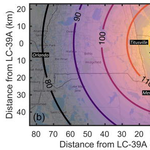
Have you seen the video about @BYU_PASCAL's experience making acoustical measurements at the @NASAArtemis I launch of @NASA_SLS? I'm so grateful @BYU students get to have these kinds of experiences.
youtube.com/watch?v=Ytl3IimW…

Make it happen, @MLB.


Kent Gee retweeted

Opening prayer offered at the BYU-Notre Dame game welcomed “our brothers in Christ from Notre Dame” to Provo and requested a special blessing upon Pope Leo. 🥺🙏🏻🤙🏻
And that my friends is jet crackle. The rasping popping noise. Studied it a bunch with military jets but it's so much more extreme with rockets.

Part of my career has been studying noise from @thef35. The four that flew over @BYU stadium just set off a car alarm at the park by my house. (These are #3 and #4.)
Go Cougs!! @BYUfootball
Kent Gee retweeted

Some incredible depth from BYU, who had seven runners across the line before any other team had four.


Kent Gee retweeted

BYU! BYU! BYU!
No. 2 BYU defeats No. 1 NC State by FOUR points, 84-88, to win the Under Armour Pre-Nats women’s team title!
📸: @kgray5555

Kent Gee retweeted

An award-winning ESPN producer resigned after 24 years over the network's embrace of sports betting: “I’m not going to work for a gambling company and have blood on my hands.” cjr.org/the-interview/nicole…


Kent Gee retweeted

This was one of my favorite moments of the season... Not just because of Daniel's homerun. But, because of his interaction with Jose after hitting it. It came at a time when Josey wasn't hitting like his "Josey Self". And yet... he never seemed panicked or stressed and no matter what, he always took time to build up his teammates. He's such a great leader!
It got me thinking... One day, maybe 10 - 15 yrs from now, the Schneemann family will take a trip to Cooperstown. It'll probably be for some baseball or softball tournament that one of our grandkids will be playing in. Daniel might even be one of the coaches by then. We'll all visit the Hall of Fame and when we pass by the bust of Jose Ramirez, our grandkids will get to hear a few clubhouse stories from their dad/uncle about what it was like to play with this 5 foot 8 inch GIANT of baseball player... What he was like as a teammate & a leader.
I'm sure Daniel will still be really humble, so before leaving the Hall, I'll make sure we also pass by the busts of Verlander & Scherzer & I'll let the grandkids know thier Dad/Uncle homered off both those dudes. Yeah, that will be a great day...
But, that's in the future. Tomorrow its on to the ALCS. And Josey is back to his "Josey Self". Its a bad day to be a Ray!
Go Guards!


TIL...

I knew a guy who worked for Texas Instruments back in the day. He told me that after they created the first electronic hand calculator, they got a call from Bell Telephone.
The folks from Bell were really worried. You see, when they created the first push-button phone, they did extensive tests and analyses to determine the EXACT BEST PATTERN for the number buttons. They wanted the pattern that would be the easiest for people to tap in the dark or via muscle memory.
But when they saw that Texas Instruments' calculator had the exact opposite layout, Bell realized they must have blundered.
"So," they asked. "What did your tests show?"
The guys at Texas Instruments just gaped stupidly and said, "Tests?"


Unreal


Wow. @CleGuardians down 0-2 and come back for the ALDS series win. 20Ks of the White Sox tonight. Pitching was unreal and clutch. This HR the difference maker. Just an unbelievable team win.


Kent Gee retweeted

Margaret Hamilton, who led the 100-person team that wrote the onboard software for the Apollo missions, has died. nyti.ms/3U9IrTj

Kent Gee retweeted

Super Heavy's Sonic Boom!
What's going on here?
As shot by @spacecoastwest, the @SpaceX Starship Super Heavy booster is descending toward the ocean at supersonic speeds for a test landing. The early morning sunlight and the intermittent clouds make the shock waves directly visible.
Why are there shock waves?
Shock waves form around any supersonic object. Since information in a fluid travels at the speed of sound, the surrounding air doesn't "know" it's supposed to make way for the supersonic object until it's almost too late. The shock waves are a neat physics phenomenon that fixes this problem and helps the air get out of the way.
How does this relate to the sonic boom?
The shock waves don't just stay near the vehicle. They travel away and can reach distances many miles from the vehicle. When the shock waves pass over you, we call it a sonic boom. The shocks aren't static either, they will merge and coalesce as they propagate.
What is special about rocket booster sonic booms?
As a general rule, sonic boom shocks merge into a single front shock and a single rear shock. When measured, the final sonic boom looks like a capital "N" and is called an "N-wave". This is true for almost everything that makes a sonic boom. But not for rockets.
So far, all reusable rocket boosters with published data (i.e., Falcon 9, Starship Super Heavy) produce sonic booms with three distinct shocks, which I call the "triple sonic boom". The reason for this was a mystery until early last year, when we (myself and @KentLGee) published a paper in the @ASA_JASAEL scientific journal. We determined that the three shocks come from:
1. The bow shock, produced by the engine section. This wasn't a surprise because the front part of any supersonic geometry will make the first shock.
2. A combination of a shock from the grid fins and a "rarefaction wave" produced by the airflow as it rounds the corner of the booster's engine section. This was the exciting "extra" shock.
3. The tail shock, produced near the top of the booster as the airflow recovers. This one was also not a surprise.
How does this video help improve the science?
The video by @spacecoastwest confirms part of the theory. You can clearly see the shock by the engine section, a series of shocks near the grid fins, and the final shock near the top of the booster. While our original paper used awesome photographic evidence from @LaunchPhoto, the lighting in this Starship launch made it possible to see things much more clearly.
Why does this matter?
In the emerging world of spaceflight, rockets are going to be producing more and more sonic booms. While the powerful sounds of spaceflight can be really fun, it's not too hard to imagine a future where they also become a problem. Instead of waiting for that future to arrive, it's important to start working on these problems now. One of the first steps is to make sure that we understand the physics behind these sonic booms, especially when they differ from traditional aircraft.
Want to know more?
Feel free to check out our (free!) papers on rocket sonic booms and a @nytimes article by @kchangnyt that talks about our rocket sonic boom research:
Triple Boom Initial Explanation Paper - doi.org/10.1121/10.0035649
Falcon 9 Sonic Boom Measurements - doi.org/10.1121/2.0001916
Starship Sonic Boom Measurements - doi.org/10.1121/10.0034453
New York Times Article - nytimes.com/2025/05/26/scien…
Hope you found that useful and interesting! Thank you to @spacecoastwest for taking this great video and thank you to @NASASpaceflight as well. Keep up the great work!
(Video footage re-used and colorized with permission of @spacecoastwest. I, @AerospaceMark, have no affiliation with @NASASpaceflight.)
And we measured ALL of it.


