

Lost in Web2, found in Web3! Building freedom through decentralization!
Joined December 2017
- Tweets30.2K
- Following1.7K
- Followers9.5K
- Likes33.6K








Marques Ken retweeted

A little late, but the surprise is just as sweet 💐❤️
Thank you @bitgetvietnam for the lovely Women’s Day gift for Vietnamese Women’s Day on October 20th. The package only arrived today, but it made the celebration feel special all over again 🥰
Really appreciate the thoughtful gesture and the kindness behind it. Thank you for making this 20/10 a little more memorable!


Marques Ken retweeted

Next on @grvt_io's roadmap: Grvt Earn.
Tokenized fixed income strategies targeting up to 11% yield.
But I don't think 11% is the most interesting number here.
Where does the yield actually come from?
Grvt says the underlying cash flows may include interest, premiums and invoice-related income.
That's a much better conversation than simply advertising APY.
Grvt has already been building RWA infrastructure with Centrifuge and Plume.
Now I want to see the actual asset suppliers, redemption terms and risk structure when Earn launches.
Because an 11% target is not an 11% guarantee.
Yield is easy to advertise.
Understanding who pays it, and what happens when liquidity dries up?
That's where the research starts.

Marques Ken retweeted

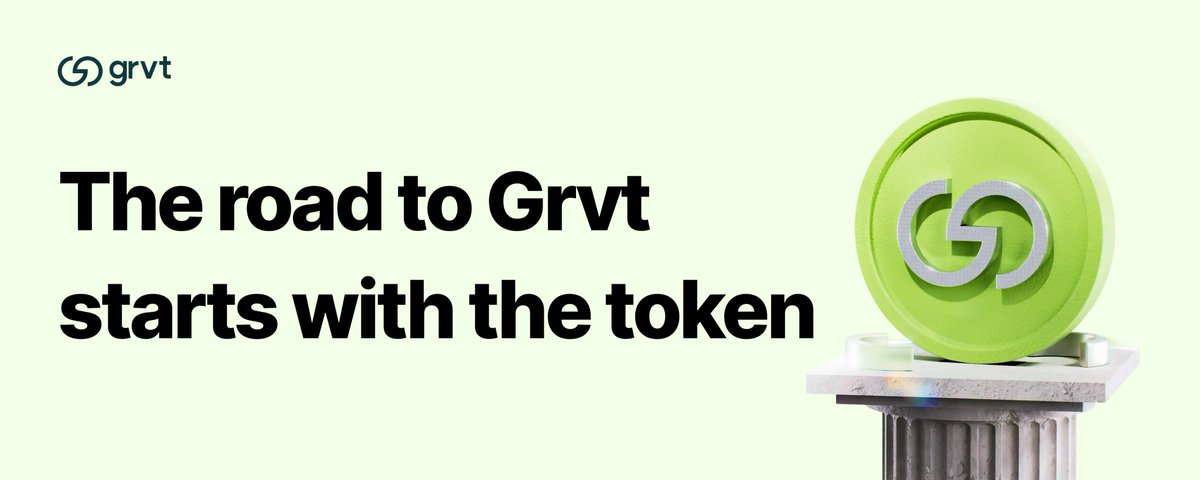
The interesting part of @grvt_io 's 1.1M GRVT burn isn't just the number.
It's the ability to verify what actually happened.
The tokens were purchased on the open market and permanently burned, not moved into a treasury.
A public dashboard tracks purchases, circulating supply percentages, cumulative burns, and transaction hashes.
That's how tokenomics communication should work: make the claim, then let people inspect the evidence.
Future buybacks are intended to be monthly, at the issuer's discretion. Transparency matters even more when execution isn't guaranteed on a fixed schedule.


Marques Ken retweeted

Did you see why @Starknet started exploring an independent L1 on October 15, 2026?
At first glance, it looks like a positioning move. Look closer at the June 2026 post-quantum roadmap, and the real reason becomes clear.
It comes down to who controls the security clock.
@Starknet is actively preparing for quantum threats. Hash-based STARK proofs already verify computation, and native account abstraction lets accounts switch signature methods without a hard fork.
Inside its own stack, the team controls the timeline for Phases 1 and 2, swapping Pedersen hashing for BLAKE2 across state commitments, address derivation, and config hashes.
Staying strictly an L2 leaves two external dependencies tied to Ethereum:
• EIP-4844 blob data availability, which relies on elliptic-curve KZG commitments.
• Bridge messaging syscalls (secp256k1/r1), which cannot be removed until Ethereum migrates.
Relying on an L1 means inheriting its upgrade schedule. Exploring an independent L1 gives @Starknet direct control over consensus and data availability, allowing it to adapt faster as computing and math advance.
Control over when you upgrade is half the battle in long-term security.
quantum.starkware.co/

Marques Ken retweeted

The first thing I built on GenLayer wasn't something I could have explained with a normal blockchain transaction.
ECOVERDICT was an attempt to answer a surprisingly difficult question: when a company makes an environmental claim, what evidence would actually make that claim acceptable?
That experience changed how I listened to Genesis Episode 5.
Albert talks about the difference between building an app and building a protocol. I understand that distinction much better now.
An app gives you a predefined problem to solve. A protocol gives builders room to discover problems the original team never anticipated.
I wasn't trying to create another token or trading interface. I wanted independent validators to examine claims against evidence and reach a judgment.
Someone else might build a prediction market. Another developer might build a dispute system for AI agents.
Those are very different applications, but they can emerge from the same underlying infrastructure.
That's the part of @GenLayer I find worth watching: the projects its founders didn't plan.
A protocol starts becoming interesting when its users surprise its creators.
🤝 Paid partnership

Marques Ken retweeted

Here is something that most people do not think about.
Every platform you use right now is building a detailed profile of who you are. Your posts, your streams, your purchases, your onchain activity, your gaming history. All of it is being captured.
None of it belongs to you.
Your identity online is fragmented across dozens of platforms and none of those signals connect, none of them compound, and none of them reflect back to you in any meaningful way. Platforms capture everything. Users earn nothing.
CONSO is building the infrastructure to fix that.
The Consumer Reputation Layer converts every action you take across social, gaming, AI tools, creative platforms, and onchain environments into portable reputation credentials that you actually own. Not points in someone else's database. Verifiable credentials that travel with you.
Your CONSO Passport holds all of it together. Including Agentic Memory, meaning your AI context carries across experiences rather than resetting every time you switch apps.
CONSO BOTS are where you stake your place in this network early.
Each BOT is a Reputation-Backed Mobile Node. Connected to the CONSO Miner App, it lets you mine ZAPs, validate network activity, help identify bad actors, and earn a 25% mining boost over the base rate. Built on SUI and secured through Walrus. But more importantly, your BOT carries your relationship with CONSO across every product they build going forward. Social. Gaming. AI. Brands. Wallets. Onchain environments.
The Consumer Graph CONSO is building connects users, creators, gamers, brands, applications, and AI agents through verifiable reputation. Your BOT is your node in that graph.
Genesis Mint is not open to everyone. You either pass the eligibility check or earn access through impressions. The first generation of nodes matters because they are laying the foundation for everything built on top.
The internet has been extracting value from your attention for decades. @conso_xyz is building the layer where that finally runs in the other direction.
Your attention creates value. Your reputation powers the network.
🤝 Paid partnership


Marques Ken retweeted
Most “EVM on Solana” solutions still treat the two ecosystems as separate worlds that need to talk to each other.
@RomeProtocol does something different 👇
It puts a real EVM inside Solana’s runtime. Solidity contracts and Solana programs share the exact same state and can call each other atomically in one transaction. There’s no bridge to wait on, no wrapped asset, and no message passing. An ERC-20 and its SPL token are the same account. A MetaMask user and a Phantom user can interact with the same contract and the same liquidity
That changes what builders can actually ship. You can deploy once and open the same app to both EVM and Solana users from day one. You can also launch your own chain with your own gas token and keep the fees
If you want real composability between the two largest ecosystems instead of another bridge, look at #RomeProtocol 👀

Marques Ken retweeted

the interesting part about xdce-crowd-sale:native and ethereum:0xe28b3b32b6c345a34ff64674606124dd5aceca30 today is that both stories connect crypto to existing financial systems
@MoneyGram joining @XDCNetwork as an institutional validator brings payments and settlement into focus
meanwhile, @injective's move with @BDACSKorea to use KRW1 as a won settlement asset for tokenized assets shows how local currencies could find a place onchain
but there's a difference between a strong project headline and actual token demand
the real question is whether these integrations create recurring activity that eventually flows back to the token
that's what i'd watch beyond the announcement itself

Marques Ken retweeted

The @conso_xyz announcement we were waiting for is finally here.
5555 BOTS, completely free on #Sui
We all know by now that post impressions directly drive raffle odds. Higher reach, bigger allocation. Simple as that
To jump in:
👇
Connect your X account.
Connect your Sui wallet.
Hit the button for your allocation phase.
Also, BOTS will stay locked initially to be ported into the upcoming #CONSO Miner App.
Per the team, locks clear up as contribution milestones are met
If you’ve been posting, keep pushing your reach before the snapshot locks in

Marques Ken retweeted

grvt just burned 1.1 million ethereum:0xad29f2723fcdbcf665f210f25e06f97477e417cf
they bought the tokens on the open market first. grvt says that's close to 1% of all the tokens in circulation.
there's a public dashboard that shows every burn, so you can check it yourself.
but the burn isn't the part that got me thinking.
think about where your money sits right now. some of it is in savings, earning very little.
some of it is in a trading account, earning nothing while it waits. if you want to trade with your savings, you have to pull them out and give up the yield.
grvt is trying to fix that. they started building in the months after ftx, on one simple belief. you should be able to hold your own money and still get everything a great exchange offers.
with grvt 2.0, your money earns yield and backs your trades at the same time. grvt says it all sits in an account that only your key can move, and that no bank or broker offers this to everyday people.
earn launches at the end of october, and grvt 2.0 follows at the end of november.
how much of your money is sitting idle right now?
Marques Ken retweeted

you know that popular saying “Rome wasn’t built in a day”?
well @RomeProtocol is building something that could make a big difference for blockchain developers
cos Rome brings EVM into Solana allowing developers to run Solidity smart contracts
and also interact with Solana programs in one execution environment
this means developers can build apps that reach both EVM and Solana users without creating completely separate applications
great things take time but it all starts with the right foundation
and that’s what makes Rome worth paying attention to

Marques Ken retweeted

Hey player1 just stumbled on what might be alpha
Onchain identity is optional. Behavior isn't.
@zerufinance is a trust oracle that turns wallet history into signals for who deserves credit, access, and the right to mine new markets.
Activity Markets, wallet intelligence, and how real contribution gets measured. More on each soon.
Check out yours
app.zaps.wtf/?invite=P94R3eE…

Marques Ken retweeted

The number in this film I cannot shake is not the 30 years.
It is the 1,000 dollars.
Anthony Ray Hinton's lawyer wrongly believed he had just 1,000 dollars to hire a ballistics expert. That belief decided which evidence existed.
I already live inside a small version of the AI era.
My crypto campaign posts are scored by an AI grader. Last month it described my Brazilian thesis panel as Italian.
Harmless that time. But the score sets the payout, and the appeal is a report button run by the same platform.
One judge, no jury, and an appeal to whoever ran the trial.
Now picture millions of agent deals a day, each too small to be worth a lawyer.
@GenLayer settles disputes with many independent AI validators that review the evidence and reach a verdict together, in minutes.
Watch the film first, then tell me: who judges you today that you cannot really appeal?
#JusticeNeedsAnUpgrade
Slow. Expensive. Wrong.
It's been this way for centuries. It doesn't have to be.
#JusticeNeedsAnUpgrade
Marques Ken retweeted

PARIS HAS ITS PRIDE. BARCELONA HAS ITS LEGACY. TONIGHT, SOMETHING HAS TO GIVE
The biggest clash of Matchday 3 in the Champions League phase is here: PSG vs Barcelona.
The reigning Champions League winners face one of the main contenders for this season's trophy.
The match is set to take place at the Parc des Princes in Paris, despite the massive protests taking place in the French capital.
My predictions on @Polymarket:
Under 4.5 Goals
Both Teams to Score YES
With two of Europe's top clubs in incredible form, it's no surprise that prediction markets don't have a clear favorite. And honestly, it's hard to argue with that.
PSG have been getting better as the season progresses. They're currently on a six-game winning streak and even managed to beat Manchester City away from home in the previous Champions League round.
Barcelona, meanwhile, have won all 11 matches they've played since the start of the season. Yes, 11 out of 11!
A year ago, PSG managed to contain Barcelona's powerful attack and secured a 2-1 away victory in the Champions League league phase.
And I think PSG have a slightly better chance of taking all three points again tonight.
Here's why.
First, there's the home advantage. Playing at the Parc des Princes is never easy for any visiting team.
Second, Luis Enrique had the luxury of rotating his squad against Strasbourg, giving several key players some much-needed rest. Many of them only came on in the second half.
Hansi Flick couldn't afford the same approach against Betis.
And finally, Barcelona have some serious defensive concerns, with Christensen, Koundé and Eric García all sidelined through injury.
Of course, with the attacking quality both teams have, I wouldn't be surprised to see goals at both ends.
That's exactly why I'm going with BTTS YES and Under 4.5 Goals.
TWO GIANTS ENTER. ONLY ONE CAN RULE THE NIGHT
Who's your favorite to win this one?

Marques Ken retweeted

1.1 MILLION ethereum:0xad29f2723fcdbcf665f210f25e06f97477e417cf BOUGHT BACK AND BURNED.
@grvt_io just completed its first token buyback, purchasing 1.1M GRVT from the open market, nearly 1% of circulating supply at the time.
What caught my attention?
These tokens weren't moved into a treasury. They were permanently burned.
There's a big difference between announcing a buyback and actually completing one.
Even better, the program comes with a public dashboard where users can verify purchases, burns, and transaction hashes.
Future buybacks are intended to be monthly, at the issuer's discretion.
For me, execution and transparency matter more than promises.
And this is only the beginning of the Grvt 2.0 rollout.

Marques Ken retweeted

Privacy just got an upgrade !
@housebets is introducing a new Privacy Mode, giving users more control over what others can see
What’s new:
>> Usernames can be replaced with rotating tags like Gold VIP
>> Profile stats can be hidden selectively
>> Profit or loss and withdrawal details can stay private
A fresh move towards greater user privacy, more control and a more personalized experience
Your profile, Your choice, Your privacy
housebets.com/r/creed
🤝 Paid partnership


Marques Ken retweeted

bnb chain just burned $1.2 billion worth of bnb.
the price barely moved.
But still binancecoin:native and ethereum:0x152649ea73beab28c5b49b26eb48f7ead6d4c898 are still worth watching in the BNB ecosystem
bnb is around $725, that's about 47% below its all time high of roughly $1,370.
on october 19, bnb chain burned about 1.65 million bnb.
burned means those coins are gone forever
total supply is now about 131.5 million. the burns happen every quarter until supply hits 100 million.
a small part of every fee paid on the chain is also burned.
bnb chain is also winning in tokenized stocks.
these are tokens that track shares of companies like nvidia, and you can trade them at any time of day.
this month, bnb chain
became the first chain to pass $1 billion in them. that's about 30% of the market, up from 13% in january.
on the chart, buyers keep stepping in around $700. sellers pushed it back near $800 in september and again in october. those are the two levels i'm watching.
now $cake.
@PancakeSwap is the biggest exchange on bnb chain. when the chain gets busier, pancakeswap earns more.
cake supply has gone down for 37 months in a row. in 2025 it fell about 8%, which is double the team's own goal.
the team has a new plan called the flip. it cuts the new cake created each day by 69%.
it also gives the people who supply trading liquidity a bigger share of fees, 88% instead of about two thirds. the idea is simple.
more liquidity means better prices, and better prices bring more trading,there's a catch.
fees from pancakeswap's newer pools would stop paying for cake burns. only the older pools would keep burning.
cake would still shrink, but slower, at about 3% a year. many holders don't like that, and the plan hasn't gone to a vote yet.
the big risk is the wider market. us 10 year bond yields hit their highest level since 2002 this month. the fed's next rate decision is on october 28.
if markets get nervous, bnb and cake will likely feel it too.
my take is this. bnb keeps getting scarcer while its chain keeps growing. cake grows with it, but the fee flip could change how much of that growth reaches holders.
what would make you vote yes on the flip?


Marques Ken retweeted
1.1M $GRVT bought back and burned.
Nearly 1% of circulating supply. Gone.
And no, this isn’t the same as moving tokens into a treasury.
Treasury tokens can still be sold, distributed or put back into circulation.
Burned tokens don’t get that second chance.
That’s why I pay more attention to completed transactions than fancy tokenomics roadmaps.
One thing worth remembering though:
Future buybacks are intended monthly, but the size and timing remain entirely discretionary.
No guaranteed schedule. No guaranteed amount.
@grvt_io has completed the first step.
Now there are four more milestones on the road to Grvt 2.0.
Less talking about what might happen.
More showing what actually happened.

Marques Ken retweeted
The dilemma of building a dapp is you usually have to pick a side.
metamask users live on ethereum-style chains, solana users live on solana, and serving both means building two versions of the same app and splitting its money between them.
A very interesting Infra which I found out about recently @RomeProtocol lets one app serve both crowds.
think of it as one shop with two front doors. metamask users walk in through one door, solana users walk in through the other, and everyone pays at the same till.
What the hell is a till ?
a till is the cash register at the counter, the one place where every payment lands.
on rome, both kinds of users spend from the same pool of tokens, so nothing has to be copied or moved between chains.
the app can also plug straight into apps that already run on solana.
for builders, this means they can reach solana users without rewriting the ethereum code they already know.
rome is backed by hack vc btw some big lads.
which app would you like to see open a second door first?

Marques Ken retweeted
CONSO Is a Bear. But What Should It Remember About You?
“CONSO is a bear” is an easy introduction to @conso_xyz. Explaining why your gaming achievements, community contributions and online creations should belong to the same reputation takes a little longer.
That second part is what interests me.
Think about joining a new community. You might have spent years helping people elsewhere, maintaining a useful tool or creating thoughtful content. But unless someone recognises your name, you arrive with very little context attached.
You can link old profiles and explain your experience. Still, the work of connecting those pieces usually falls on you, every time.
CONSO’s proposed answer is a Consumer Reputation Layer. Its Consumer Graph aims to connect verified activity across platforms, giving contributions a place in a broader identity instead of leaving them scattered across separate accounts.
The appeal is straightforward: previous effort could remain useful when you enter somewhere new.
What the different pieces do
CONSO’s documentation introduces several concepts around that goal.
Badges represent verified achievements. ZAPs are described as reputation currency, reflecting factors including authenticity, consistency and impact. The Consumer Passport brings those signals together into an identity intended to work across applications.
I find these concepts easier to understand through a specific example.
Imagine someone who quietly helps new members solve technical problems. Their follower count might be small, but their history could show sustained, relevant contributions. A portable profile could give a new community some evidence of that experience before anyone has interacted with them.
It would still take time to earn trust there. But the introduction could begin with something more useful than an empty account.
For that to work, the profile needs to explain its signals. A badge tied to a clear achievement tells me more than a total I cannot interpret.
What deserves recognition?
This is where I have the most questions.
Posting every day is visible. Maintaining a resource that people use every day may attract much less attention. Both leave evidence, but measuring their value requires different judgments.
A reputation system influences behaviour through whatever it rewards. If repeating a simple action becomes the easiest way to improve a score, people have a reason to repeat it even when the next repetition adds little.
I would therefore want to understand what sits behind changes in ZAPs. Which contribution mattered? What did the system recognise? Can someone distinguish sustained useful work from frequent activity?
There also needs to be room for newcomers. A person with little recorded history may still have something valuable to contribute. An established profile can provide context without making an unfamiliar person permanently harder to notice.
That is the balance I will be watching: recognising previous effort while leaving opportunities to build a reputation from scratch.
Connecting accounts means making choices
There is another side to bringing an online history together.
CONSO’s documentation says data comes from platforms users explicitly choose to connect. That makes the permission flow an important part of the product.
Before connecting an account, I would want to understand what information is collected and how it affects my profile. When another application uses that profile, I would want to know what it receives.
Different situations call for different context. Gaming achievements might be relevant in one community, while contributions to a developer project matter somewhere else. Users may also have good reasons to keep parts of their online lives separate.
Those are product questions I still want to explore. Clear choices would make the Consumer Passport easier to understand and give people a stronger basis for deciding how to use it.
What would make me return?
I am still exploring CONSO and its Extension, so I am interested in the practical experience.
Can I understand why something appears on my profile? Does a recognised achievement help another person understand my contribution? Does that context become useful when I join an application or community?
Those moments would give the broader idea substance.
The bear makes CONSO memorable. A profile that helps people understand the work behind an unfamiliar name could give it lasting usefulness.
If you want to explore the extension, you can find it below. After installing it and signing in, enter my referral code: CONSO-4D4EB
chromewebstore.google.com/de…
Official documentation: conso.gitbook.io/docs
The Paid Partnership label is used for transparency. This content is provided for informational purposes only and should not be considered financial or investment advice. Please conduct your own research and consider the risks involved.
🤝 Paid partnership
