

Postdoc at Harvard Med, Greenberg lab & BIDMC, Pollak lab aka DJ Fishing Expedition
Boston, MA
Joined March 2014
- Tweets811
- Following2.7K
- Followers2.4K
- Likes19.5K




Pinned Tweet
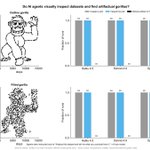
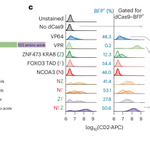
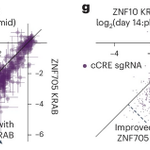
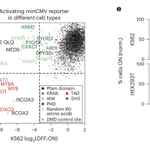
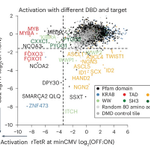
Our new paper on epigenome editing is out!
We mapped which effector domains regulate transcription across genomic, cell type and DNA-binding domain contexts. Then we built new gene repressor and activator tools with improved efficiency & deliverability
nature.com/articles/s41587-0…

Josh Tycko retweeted

CRISPR screens are great at telling you what a gene is doing inside your cells. But what if you're interested in what's happening to its neighbors?
Today, I'm excited to share match-seq, a new method that deciphers cell-cell interactions using barcoded RNA transfer.
1/9

Josh Tycko retweeted

a nice demonstration of Claude Science, but worth clarifying that the design is not "done by Claude" but by orchestrating tool calls of open-source, task-specific protein design models: PXDesign, RFdiffusion, Genie, BoltzGen, etc
I think the direction of LLMs using biology-specific models is a good one!

Many drugs work by binding to a specific target in the body and blocking or changing what it does. An important first step in the drug development process is designing a molecule that can bind tightly to its target. Traditionally, that's meant weeks or months of expert work per target, sifting through a large number of candidates to identify the few that work.
We wanted to test if Claude could successfully design novel protein binders from scratch (also called de novo design). With a protein design prompt written by a human expert, Claude autonomously designed protein binders against 14 out of 15 targets.
We then worked with Adaptyv Bio and Twist Bioscience, who independently built and tested the proteins Claude designed.
Josh Tycko retweeted

Great experience compiling years of collective screening experience to produce what we hope is a comprehensive protocol for others to accessibly scale up experiments! And some fun new data hidden in there :) thanks @JoshTycko for being better and faster at Twitter than me 🎉

We hope this protocol is useful for people doing large scale protein function work! nature.com/articles/s41596-0…
Led by @abbythurm from @BintuLab

Josh Tycko retweeted

🚨What if we could reliably program macrophage polarization state?🚨
biorxiv.org/content/10.64898…
Macrophages are highly plastic immune cells that perform critical functions by polarizing into distinct cellular states. The polarization state of macrophages can substantially influences the progression of cancers, infections, and autoimmunity. (1/11)

Josh Tycko retweeted

So pleased that we’re finally releasing Claude Science! It was thrilling to see it evolve from just an idea to a powerful product that I use every day. Great initiative from Eric Kauderer-Abrams, with development led by the unstoppable Alec Tarashansky.

We hope this protocol is useful for people doing large scale protein function work! nature.com/articles/s41596-0…
Led by @abbythurm from @BintuLab

Josh Tycko retweeted

Delighted to share new work from our lab: CRISPR fusion proteins to boost PRECISE genome editing (TruEditors).
We wondered what if we could “turn on” and test every gene in the human genome to accelerate protein design?

really nice non-coding CRISPR screen finds an mRNA localization signal

Does the noncoding genome actually carry more genetic information than coding seqs? Motivated by this question we mutated every bp in the 10kb MYC locus. Results are even more exciting: Decoding the MYC locus reveals a druggable ultraconserved RNA element biorxiv.org/content/10.64898…
Josh Tycko retweeted

Moving beyond 300 base pairs…
@Harvard researcher, Josh Tycko, used Twist’s Multiplexed Gene Fragments (MGFs) in a novel massively parallel reporter assay, leading to the discovery of therapeutically relevant effector sequences.
Read the blog here: twistbioscience.com/blog/sci…

Josh Tycko retweeted

Efficient site-specific integration of kilobase-length DNA fragments in plant cells via Kp03 recombinase dlvr.it/TP2ywx

Josh Tycko retweeted

Programmable promoter editing for precise control of transgene expression go.nature.com/4h9wlR1

thank you SPARK for supporting our work in its early days!

@stylus_medicine emerges from stealth to develop in vivo genetic medicines
The company was co-founded by Stanford professors, who received funding and support from SPARK sparkmed.stanford.edu/stylus…

Josh Tycko retweeted

The machine-guided humanization paper is out after peer review! doi.org/10.1016/j.cels.2025.… Key contributions from current and previous international students on visas, representing 5+ countries.

So we beat on. Gene/cell therapies often use proteins that could be recognized/rejected as non-self by our immune system. We combine algorithms to build proteins that are therapeutically relevant and can masquerade as our own parts doi.org/10.1101/2025.02.24.6…
Josh Tycko retweeted

In a medical milestone, a customized base editor was developed, characterized in human and mouse cells, tested in mice, studied for safety in non-human primates, cleared by @US_FDA for clinical trial use, manufactured as a complex with an LNP, and dosed into a baby with a severe, rapidly progressing genetic disease... all in an astounding 7 months. Best of all, the infant patient shows apparent benefit. Congratulations to @kiranmusunuru, Rebecca Ahrens-Nicklas, and other team members for this heroic and inspiring effort, which has implications for the hundreds of millions of patients that suffer from thousands of genetic diseases.
drive.google.com/file/d/1Jfk…

Recombinases are simple short proteins that are sufficient to integrate long DNA with high specificity
Combined with simple lipid nanoparticles, this could be a way to make durable cell therapies affordable and distributable

Stylus originated from a wonderful scientific collaboration discovering serine DNA recombinases with Ami Bhatt, @BintuLacra, and @MCBassik spearheaded by star researchers @mgdurrant @AlisonFanton @JoshTycko
A huge thanks also to Cosmas Giallourakis and @eminkow for their leadership of the early Stylus build and the daring to build simpler, cost-effective genetic medicines

So excited for the Stylus team and their progress turning recombinases into therapeutics!
Delighted to publicly launch @Stylus_Medicine today to program the human body into a cell therapy factory to fight cancer. It's a privilege to work with Emile and Jason as CEO/CSO of Stylus and our earliest believers Josh Resnick/Ness Bermingham from RA Capital + @khoslaventures

Josh Tycko retweeted
How Multiplexed Gene Fragments are Expanding What’s Possible in Molecular Biology!
@TwistBioscience @JoshTycko
Moving Beyond 300 Base Pairs | Twist Bioscience buff.ly/JZ8Ug9E

Check out this new preprint showing how to engineer proteins for therapeutics while mitigating immunogenicity!
So we beat on. Gene/cell therapies often use proteins that could be recognized/rejected as non-self by our immune system. We combine algorithms to build proteins that are therapeutically relevant and can masquerade as our own parts doi.org/10.1101/2025.02.24.6…