

Outdoor enthusiasts / Owner AgIntel Agronomy / AG365 Dir Agronomic Solutions @BWFusion
North Dakota, USA
Joined November 2012
- Tweets6.8K
- Following769
- Followers3.8K
- Likes5.4K




Partial win. Two more counties to the north should also be closed. But they should all be closed completely to whitetail harvest. Voluntary buck tag return is just way for them to keep the money that’s already spent. Get wildlife reg out of legislative hands!

North Dakota’s deer herds have been hit hard by weather and disease over the last five years, and the latest outbreak of EHD is another serious setback.
Today, we’re taking action to protect our whitetail population by prohibiting antlerless whitetail harvest in four hunting units and offering license refunds and restored bonus points to eligible hunters in 13 additional units.
We want to minimize disruption to hunters while doing what’s necessary to protect our herds. If you hunt in an affected area, talk with your landowners, understand the conditions on the ground and consider returning your tag.
Our goal is to protect the herd today so future generations can enjoy the same hunting opportunities we’ve been fortunate to have in North Dakota.
Full press release: gf.nd.gov/news/9667


Josh Messer retweeted

#agsale
2025 John Deere DB66 Exact-Emerge Planter for sale (36-row 22-inch) LOADED with every option available.
-Exact-shot liquid fertilizer (with 36-regular and 36-yellow exact-shot nozzles)
-850 gallon liquid tank
-Yetter twist pneumatic row closing wheels
-Spoked gauge wheels
-Pneumatic adjustable row cleaners
-IRHD 2 hydraulic downforce
-Heavy-duty wing wheels
-CCS scale
-Planter electric power generator (EPG)
-Frame weight distribution system (integrated on-screen adjustment)
-Corn seed bowls
-Soybean seed bowls (NEVER USED!)
-NEW seed brushes installed with less than 300 acres on them
-Premium lighting
-NEW tru-vee openers (Not installed - will be provided)
-Starfire globe in picture is NOT included
-SN: 1JLDB66XASG810128
Unit has 9,500 acres on it. Reason for selling is changing to 30" row spacing. New seed brushes are due to heavy pinto-bean seeding use and accelerated the wear on the old units.
Planter has been flawless with minimal downtime. Meticulously cared for and always put in a shed when not in use. Located in East Grand Forks, MN.
Call Matt at 7o1-74o-1752.
RT resulting in a sale will receive a $2,500 commission. Buyer must indicate to me the referral.
#AgX #JohnDeere #plant27


Josh Messer retweeted

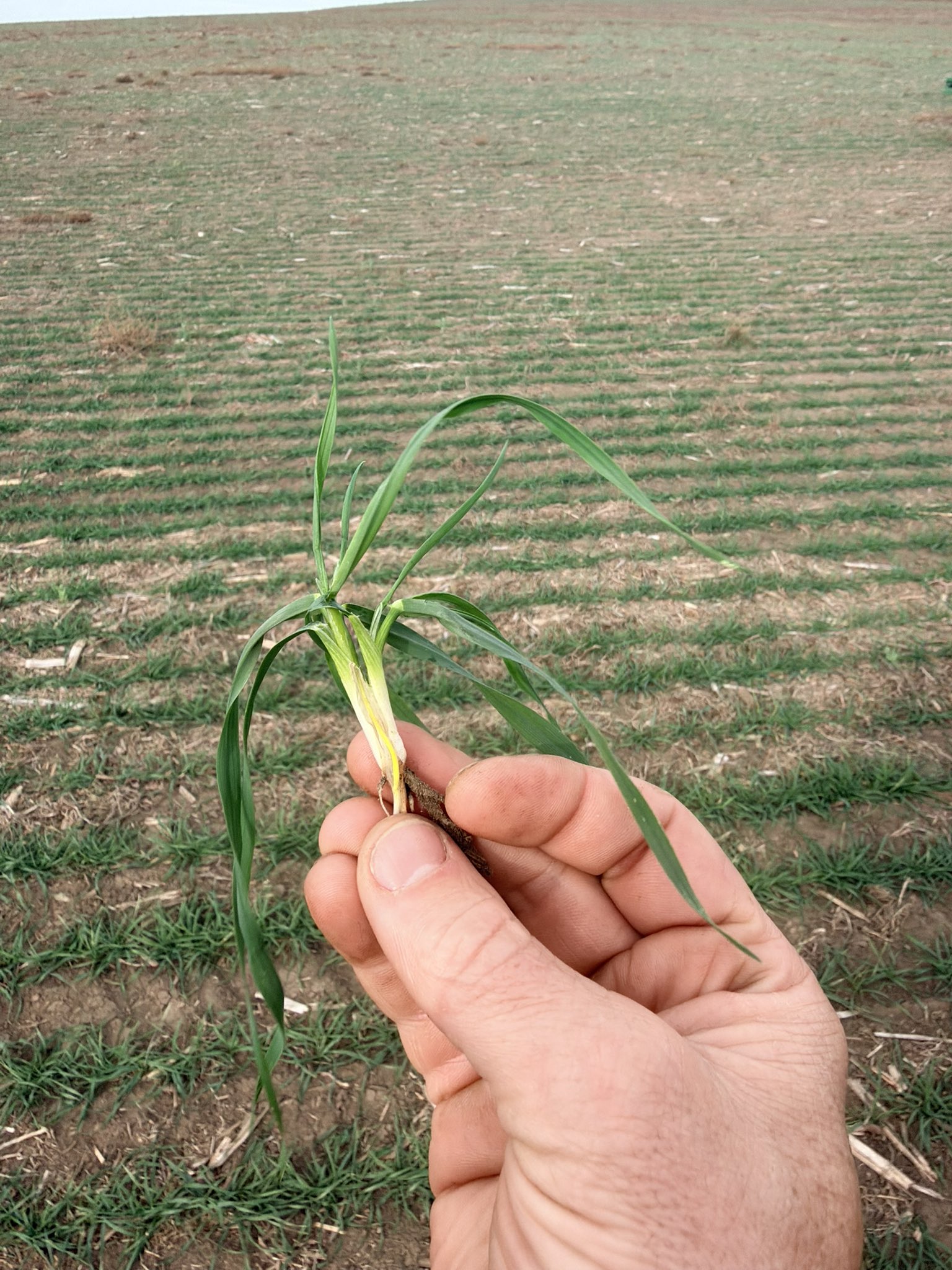
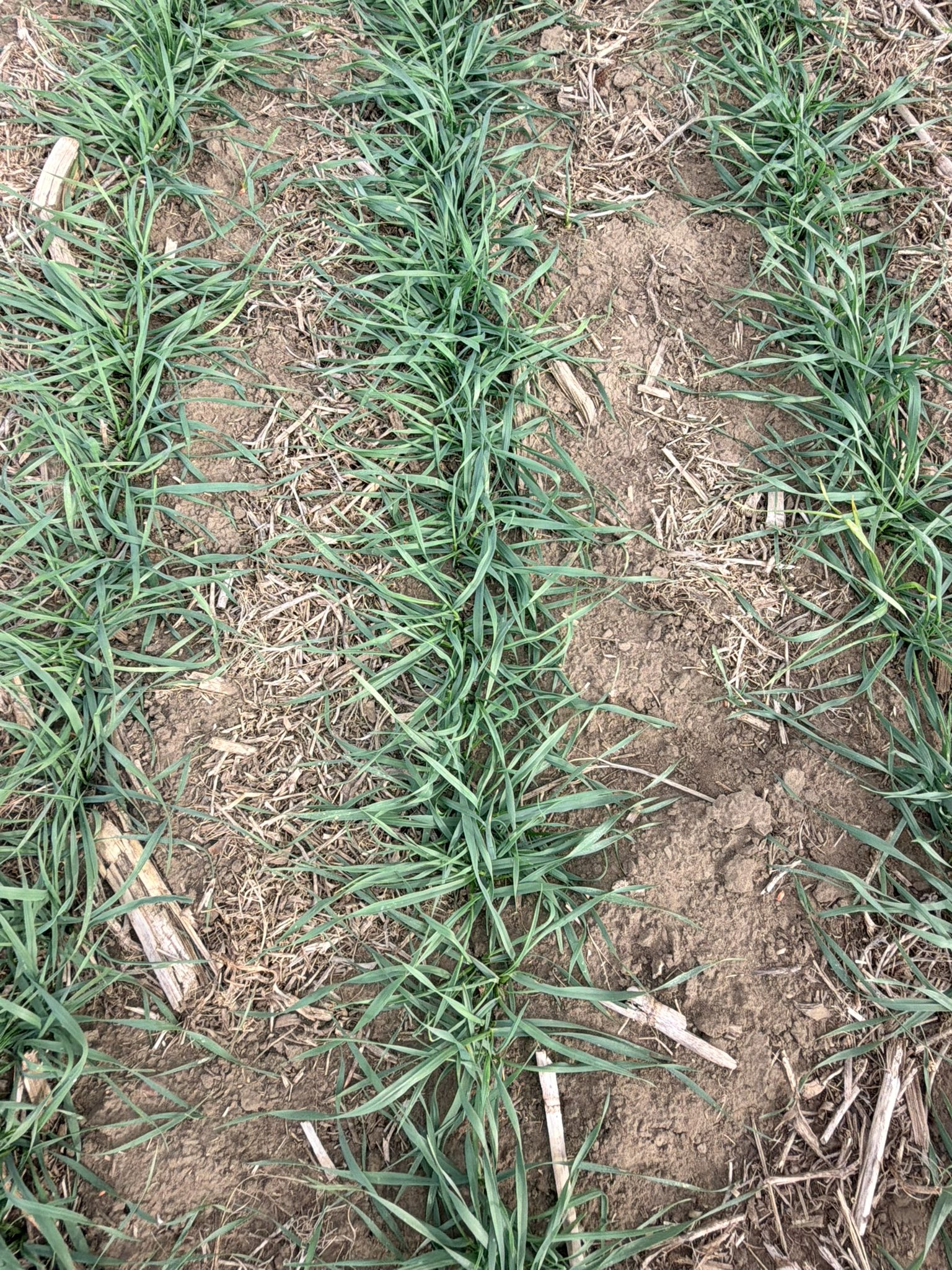
Out driving some root exudation creating with @bw_fusion #FullSun right before dormancy on this winter #wheat . Lots of tillers and stand looks great!
I’d like to know why @GovArmstrong and the ND game and fish have done nothing to spread the word or even ask for report of carcasses of EHD deaths. We’ve been reporting to Wardens for 2 months and not a peep. It’s 90+% herd loss and season is still on. @MeatEaterTV @USFWS


Josh Messer retweeted

Next Level and Agronomy 365 is always looking to get better, we are releasing our grain analysis test with seed count to better understand what your farm and management is doing for you.
1) Grain Analysis + Seed Weight sets the base of understanding your removal rates
2) Indicator Complete/Max determines the estimated release rates and what the soil can provide for free
3) Baseline recommendations are created by filling the gap (what is needed for yield goal - what the soil can release
All in house data driven to create efficiency on your farm.
We built the grain analysis the same way we build all of our reports. To give you insights not just information you need someone else to explain. Close the whole loop baseline Rx>in-season sampling>grain. Use the data you have to refine and improve every yr.

The standards most use for the base of a nutrient plan is just a guess based off of averages.
Your grain is the only real receipt.
This is one field. One grower, one 2026 corn crop, six zones. Not a regional average — just what this field actually did.
Nitrogen ran 26% under the book. Phosphate 18% under. Potash 7% over. Sulfur 6% over. Same hybrid family, same field, and phosphate removal still swung from 53 to 80 pounds per acre.
So the question isn’t whether the book is wrong. It’s whether you’ve ever checked yours.
1) Removal is only one piece of the puzzle.
2) The next step is the soil test — what percent of that need your soil already covers naturally.
3) The prescription file makes up the difference.
That gap is all you should be spending on a crop.
Grain analysis tells you what it takes to create the bushel. Soil tells you what’s already there. The prescription closes the gap.
This is one field. Let’s find out what yours says.
Send grain. We’ll show you what actually left.


Josh Messer retweeted
The standards most use for the base of a nutrient plan is just a guess based off of averages.
Your grain is the only real receipt.
This is one field. One grower, one 2026 corn crop, six zones. Not a regional average — just what this field actually did.
Nitrogen ran 26% under the book. Phosphate 18% under. Potash 7% over. Sulfur 6% over. Same hybrid family, same field, and phosphate removal still swung from 53 to 80 pounds per acre.
So the question isn’t whether the book is wrong. It’s whether you’ve ever checked yours.
1) Removal is only one piece of the puzzle.
2) The next step is the soil test — what percent of that need your soil already covers naturally.
3) The prescription file makes up the difference.
That gap is all you should be spending on a crop.
Grain analysis tells you what it takes to create the bushel. Soil tells you what’s already there. The prescription closes the gap.
This is one field. Let’s find out what yours says.
Send grain. We’ll show you what actually left.
Complete lies.

Josh Messer retweeted

Record high diesel prices are squeezing our ag producers. Today we took a meaningful, timely step to provide temporary relief and help our farmers & ranchers through the harvest season by temporarily allowing on-highway use of red-dyed diesel.
More here: governor.nd.gov/news/armstro…

We’ve already had the trees bowl which makes little sense in Nodak. Totally missed on calling this the No Trees bowl. Trophy is a just a flat sandstone rock with kochia plant growing out the crack.


Josh Messer retweeted

Did my last n rate test on my river farm. 2 tons of litter every year since 2019.
35 gal 193
25 gal 201
Not advocating everyone automatically cut rates, but seems like it merits more study. I think @JasonSchley has studied this.
#mismanagedcrops – at Shelbyville, TN

Why in @JohnDeere operations center do we not get correction mode, boundary name or quality to come over when sharing boundaries between organizations? @kyleplattner
Josh Messer retweeted

Same field. Five different soils. Why would one average tell you the truth about any of them?
Stop averaging your soil. That's guesswork.
#Agronomy #BaselineRx #SoilHealth #BWFusion
Josh Messer retweeted

Just Get pH Right?
Does getting soil pH “right” lead to more nutrient availability?
Yes, but also no. Life in the soil is not one dimensional.
When considering pH, we should also be considering Eh (soil redox potential).
There are management decisions that can influence both pH and Eh, and these two metrics should be thought of together.
Redox Potential (Reduction and Oxidation)
Reduction= gain of electrons (H+)
Oxidation= loss of electrons or gain of Oxygen
To make it easier to understand, I think about a plant oxidizing the atmosphere (adding oxygen) and the roots reducing (adding H+) to the soil.
Reference the Pourbaix diagram I’ve attached to see how pH and Eh relate. There are more of these charts you can find to see where different nutrients may become available to the crop. You can find this by looking for Olivier Husson’s work.
It makes sense why pH is considered and Eh is not. pH can actually be measured on a soil test. But even pH is not static even though we treat it like it is. Either way, there are management choices that will impact both.
Here are some examples of an overly oxidized, reduced, and a more balanced system.
Overly Oxidized:
-frequent tillage
-dry soil conditions, low residue cover
-low OM/low WEOC
-nitrate based fertility
-low biological activity
All results in high Eh and slightly alkaline conditions plus nutrient tie-ups
Overly Reduced:
-heavy clay w/ poor drainage
-high OM and/ or manure inputs
-compacted, anaerobic subsoil
-waterlogged for extended periods of time
All results in low Eh and more acidic conditions plus anaerobic microbial activity. Blueish gray looking soil that might smell rotten.
A more balanced system:
-living roots as much as possible
-minimal tillage
-mixed nitrogen sources
-good biological activity
-ground cover
-aggregated soil
All results in moderate Eh and slightly acidic to neutral pH. Leads to nutrient cycling and resilience.


Most overlooked aspect of soil tests in NE IA.... IMHO it is soil pH.
I see way too many acres that have grid sampling done & no action taken on correcting soil pH.
Technical definition: -log (H+). Which means the more hydrogen ions you have the lower your pH goes. Generally for soils in NE IA if more than 10% of your CEC is occupied by H+ you likely need to take corrective measures to adjust pH.
pH drives soil biological activity and thus nutrient availability. When I see pH levels in the mid 5's and even in the 4's we know there is significant yield loss.
Our studies show soil pH should be 6.3 to 6.7 in row crops to optimize yield.
Two columns on most soil test results. Soil pH and buffer pH. Soil pH tells you yes or no you need to correct. Buffer pH indicates amount of product like lime you need.
Once corrected & soil is in balance you can often times go a lengthy period without additional applications.
Be sure to be checking out your soil tests during this rain delay!! Contact your local Pioneer sales rep with questions.


Josh Messer retweeted
Agronomy never stops - our learning curve can’t stop either, and for to long we just didn’t challenge the status quo’s

Pretty sure that’s a Deere cab on that thing

1200hp four-wheel-drive articulated Zoomlion tractor hybrid diesel-electric powertrain fuel reduction up to 40% Cummins 6-cylinder 15.9-litre common rail turbo diesel + generator and battery. eCVT-transmission, 21 tons, 1.508 liter, Tier 3 no AdBlue farmmachinerysales.com.au/ed…


Josh Messer retweeted

1200hp four-wheel-drive articulated Zoomlion tractor hybrid diesel-electric powertrain fuel reduction up to 40% Cummins 6-cylinder 15.9-litre common rail turbo diesel + generator and battery. eCVT-transmission, 21 tons, 1.508 liter, Tier 3 no AdBlue farmmachinerysales.com.au/ed…