
Those who took Black land under the Native Land Act did so legally; those who lost their homes and livelihoods suffered legally. Don't confuse law with morality
Vryheid
Joined April 2018
- Tweets7.6K
- Following56
- Followers73
- Likes591






Jobe retweeted

Did you share the same sentiment about the MKP, when they were the biggest party in KZN in the last elections?


Jobe retweeted

The British starved Ireland and then cited Irish poverty as evidence of Irish inferiority.
The Belgians extracted the Congo’s resources for a century and then cited Congolese underdevelopment as evidence that Africans needed to be governed.
The Americans sanctioned Cuba for 66 years and then cited Cuban economic difficulties as evidence that socialism doesn’t work.
The structure is the same.
It has always been the same.
You remove the conditions necessary for success.
You wait.
You point.
You conclude.
The only thing that changes across centuries and continents is who’s being pointed at.
Jobe retweeted
Great Zimbabwe was built between the 11th and 15th centuries.
Massive stone enclosures. Walls 11 meters high. 250 meters in circumference. Built without mortar, with such precision that the walls have stood for centuries.
A thriving city that at its height housed 18,000 people. A trading hub connected to Swahili Coast networks that moved gold, ivory, and goods as far as China.
When European explorers encountered it in the 19th century, they did not ask: who built this?
They asked: who built this that wasn’t African?
The theories came quickly. Phoenicians. Arabs. A lost white civilization. King Solomon. The Queen of Sheba.
Literally anyone except the people who had been living in and around it for centuries and whose oral histories described exactly who built it and when and why.
It took until the 20th century, and a British archaeologist named David Randall-MacIver working against enormous institutional resistance, to formally establish what the people who lived there had never forgotten:
Africans built it.
Africans built it.
The refusal to accept that was not ignorance.
It was integral to the colonial narrative that justified ruling and dispossessing Africans while declaring them incapable of the very achievements their ancestors had left standing in stone.
The ruins were African. The myth that denied their origins was colonial.
Jobe retweeted

#dandarostreets Zimbabwean MP Clifford Hlatshwayo has called for Shona to be removed as a school subject in Chipinge, arguing that Ndau is the dominant local language and that imposing Shona amounts to “colonisation.”
Hlatshwayo is also calling for Ndau-speaking teachers to be deployed in the area and has criticised the compulsory teaching of the Mbende Jerusarema dance, with local chiefs reportedly backing his position.
Follow our WhatsApp Channel:
whatsapp.com/channel/0029Vaa…


Jobe retweeted

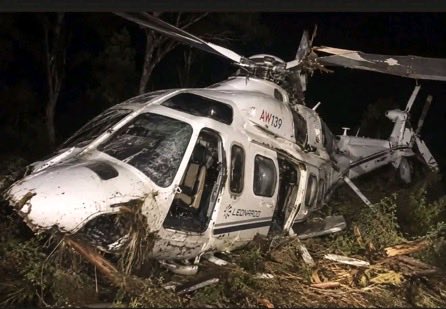
Flamboyant billionaire who was known for embezzling Zimbabwean state funds Sir Wicknell Chivhayo and his wife Lulu were killed today in a helicopter crash near Marondera, east of Harare. Nick Mangwana, the Chief Government spokesman of Zimbabwe confirmed that nobody survived the crash.


Jobe retweeted

Gautrain got stuck to and from work. Got home and lights have been gone since midday. Just opened TikTok and the first video is Thakgi

Jobe retweeted

Thank you, @Sentletse, for bringing up this crucial piece of history that so many choose to ignore.
Your post about the 1930s Afrikaner poverty and the Carnegie Commission is a necessary reminder that the economic playing field in South Africa was never level, it was deliberately engineered. And it is a history that directly exposes the hypocrisy in today's debates around Black Economic Empowerment.
Here is the genuine history that every poor South African should understand:
The "Poor White Problem" Was Real and Severe. In the early 20th century, tens of thousands of Afrikaners were living in conditions of extreme destitution. The Second Anglo Boer War (1899–1902) had devastated their farms, and the subsequent droughts and the Great Depression pushed many into urban slums. By the early 1930s, an estimated 300,000 whites, roughly one fifth of the white population, were classified as "very poor."
The Carnegie Commission of Investigation on the Poor White Problem in South Africa (1927–1932) was established specifically to study this crisis. Its findings were damning. Poor whites were malnourished, undereducated, and trapped in a cycle of poverty. The photo Sentletse shared of a family in a matjieshuis (in Namaqualand is not an anomaly, it was the lived reality for a huge segment of the Afrikaner population.
How the System Was Used to Their Advantage ?
Here is the part that is rarely taught in schools. The Afrikaner poor did not simply pull themselves up by their bootstraps. They were lifted by deliberate, state sponsored economic empowerment, the very thing that Julius Malema and others call for today, and the very thing that many Afrikaners now condemn as "reverse racism."
1. Job Reservation Laws
The 1924 Industrial Conciliation Act and the Mines and Works Amendment Act of 1926 created a system of "job reservation" that legally barred Black workers from skilled and semi skilled positions. These laws reserved the best paying jobs on the railways, in the mines, in factories, exclusively for white workers. Between 1924 and 1933, the number of Black workers on South African Railways dropped by 41.4%, while white employment surged by 271.5%. This was not the free market. This was affirmative action for whites, enforced by the state.
2. Free and Subsidized Education
The government poured resources into white education. Poor white children received free schooling, free books, free meals, and even free transport to attend school. This was a direct investment in human capital that was systematically denied to Black children, who were subjected to inferior "Bantu Education" designed to produce a permanent underclass of laborers.
3. The Creation of an Afrikaner Financial Empire
In 1938, the Ekonomiese Volkskongres (Economic People's Congress) launched the Reddingsdaadbond (Rescue Fund) to mobilize Afrikaner savings and direct them into Afrikaner enterprises. This led to the creation of institutions like Federale Volksbeleggings (FVB) and the expansion of Sanlam and Volkskas. These were not organic market developments, they were ethnic empowerment vehicles designed to transfer economic power into Afrikaner hands. By the 1960s, Afrikaner capital had bought into the gold mining industry through Fedmyn's purchase of General Mining. This was Black Economic Empowerment, but for whites only.
4. State-Funded Welfare and Housing
The government built thousands of low cost houses for poor whites and provided old age pensions, disability grants, and unemployment benefits, all while Black South Africans were excluded from these same safety nets. The state literally created a welfare system for one race while denying it to another.
The Cruel Irony of Today's Debates
The very people whose grandparents and great grandparents were lifted out of poverty by state mandated racial preference now lecture Black South Africans about the "dangers" of BBBEE. They call it "reverse racism." They say it's "unfair." They claim they "worked hard" —


Jobe retweeted

We have been telling Nigerians to stop this business of posting every successful ViSA application, every successful citizenship application, every mortgage, every car they get on financing.
They think we are jealous. Social media is not your church where you need to TESTIFY, you are unnecessarily putting your family in danger.
Read the room please!
Jobe retweeted

Ndebele is not a tribe but a conglomerate of tribes, a nation. Mzilikazi arrived in what is now Zimbabwe with only 300 of the original gang of people he tagged along from what is now South Africa. By the time he died, most of these had died, and the majority of the Ndebele nation was made up of natives of what is now Zimbabwe including the Karanga.
Very few Ndebeles of Nguni origin remain today, families with Zulu surnames like Mndawini, Xaba, Khoza, Magagula, Khumalo, Tshabangu, Tshabalala, etc are vastly outnumbered by the Ndebeles of Karanga origin like Moyo, Dube- Mthembo, Nyathi, Tshuma, Nyoni, Sibanda etc.
It is therefore ironic that most Shona hating Ndebeles are actually of Shona heritage themselves.


Jobe retweeted
They 🇿🇼🇳🇬🇬🇭claim to be business owners in SA but 🤔but Missing the simple basics 🤔🤔
No #CIPC registration - No company papers ,not legally registered.
NO #SARS documents - No tax number. No VAT. No UIF.
NO #BusinessTradingLicence - Not allowed to trade legally.
NO #CertificateofAcceptability - Required for any food business. They don’t have it.
NO #FoodSafetyTrainingCertificate - No training on hygiene or handling food JUST mess
No #ZoningCertificate - Business is running in a place not zoned for it
No #FireSafetyCertificate - No fire equipment or safety inspection they know nothing
Other things they ignore 👇👇👇
#Labour laws- No contracts. No payslips. Workers not registered.
#Municipal compliance - No rates, no bills, operating illegally.
#imagine port/export papers - Bringing in goods with no SARS clearance.
If you don’t have these, you’re not a real business owner in South Africa. You’re operating illegally.
We can’t let people break the law and call it “business”. #ProtectSA businesses that follow the rules.
This government is making us a laughing stock!
#SouthAfrica #CIPC #SARS #BusinessCompliance #Mzansi
Jobe retweeted

South Africa:
"Is the term xenophobic or Afriphobia reserved for South Africa alone?" "It can't be our responsibility alone to provide solutions to all the hardships confronting the continent".
#migration #SouthAfrika #Africa

Jobe retweeted

We defeated the attempt to single out & isolate 🇿🇦. The AU has agreed with us. The AU will discuss the migration issue broadly & look at the "Pull & Push" factors. Countries will have to introspect & look at what drives people away. Sending, Transit & Receiving countries must collaborate to find solutions. dailymaverick.co.za/article/…

Jobe retweeted

Minister Lamola outlined three specific areas of concern that have heightened recent tensions between the two countries:
The purported installation of an unrecognised traditional ruler, titled an “Igbo King”, in the Eastern Cape Province in March 2026 caused widespread public concern across South Africa. Minister Lamola emphasised that this occurred while South Africa is actively consolidating the constitutional role of traditional leadership in a post-apartheid society.
Concerns were raised regarding the involvement of certain foreign nationals, including Nigerian citizens, in organised crime, illicit drug trafficking, and financial fraud. The Special Envoy noted that as of 7 July 2026, more than 500 Nigerian nationals had been processed through the South African criminal justice system for various offenses, highlighting the need for enhanced cross-border security cooperation.
Minister Lamola addressed instances where law enforcement officers faced violent resistance or obstruction during criminal investigations. Specific concern was raised regarding hijacked residential and commercial properties in urban centres such as Hillbrow (Johannesburg) and Sunnyside (Pretoria), where unlawful enclaves have compromised public safety for local residents and foreign nationals alike.
“Regrettably, these incidents have fueled negative perceptions surrounding Nigerian nationals living in South Africa over the years. Addressing these challenges firmly, fairly, and within the bounds of the law is vital for the well-being of both our nations.”
Minister Ronald Lamola, MP
dirco.gov.za/south-africa-co…