

Prof. @canalUGR / Psicología / Adicciones / Ciencias del Deporte / Baloncesto / "Ni frágiles ni idiotas" (Shackleton Books) y "Trampas" (NextDoor y Yonki Books)
Granada, Spain
Joined March 2013
- Tweets37.6K
- Following1.8K
- Followers11.3K
- Likes28.9K





Pinned Tweet
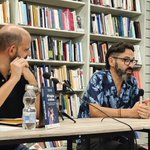
Hoy Ideal recoge la entrevista sobre “Ni frágiles ni idiotas” que me hizo @JeCabrero. Fue una charla de lo más entretenida y gratificante, y creo que se nota. 😁
ideal.es/granada/jose-perale…

Sé que no es ni de lejos lo más importante, pero que La Bola Negra haya llevado al mundo ciertos acentos, rincones y referencias, que para mí pertenecen a una intimidad cercana y local, me hace sentir orgulloso. Es una especie de vacuna frente a la ostentación de las banderas.
👇🏽👇🏽👇🏽👇🏽

PDF of a book chapter with the legendary Jury Hanin.
Hanin, J., & Ekkekakis, P. (2014). Emotions in sport and exercise settings. In A. G. Papaioannou & D. Hackfort (Eds.), Routledge companion to sport and exercise psychology: Global perspectives and fundamental concepts (pp. 83–104). Routledge.
s3-euw1-ap-pe-df-pch-content…

En la práctica, Podemos ha firmado su irrelevancia, si no su desaparición. Lo que nació como una posibilidad ilusionante de izquierda ha acabado convertido en una caricatura personalista. Cuesta creer que sigan diciendo que representan a "la gente".
“Rather than attempting to block young people from online services that allow them to access information and engage in age-essential communication, policies should focus on the incentives that drive companies to engage in behavior that creates risks.”
technologyreview.com/2026/10…


Lo voy a terminar porque lo voy a terminar, pero estoy leyendo una novela de Chirbes que me parece lo más insufrible que he leído en años.
José C. Perales 🏳️🌈🏳️⚧️🏀🏃 retweeted

José C. Perales, psicólogo granadino: «Siempre medimos a los adolescentes con una vara injusta»
ideal.es/granada/jose-perale…
✍ Informa @JeCabrero
La Bola Negra se merece todas las alabanzas que ha recibido. Pura educación histórica y sentimental.
Estupenda descripción de cómo las etiquetas patológicas se inventan, adquieren una pátina superficial de cientificidad y acaban adquiriendo vida propia en grupos que se identifican con esas etiquetas.

Sometime before 2016, a psychiatrist started asking their late-diagnosed adult patients with ADHD whether they thought they were more sensitive to rejection and failure than other people.
They said that they were. He didn’t (as far as I can tell) do any comparison with people with mental health problems, or with those with social anxiety. He didn’t look at children or those diagnosed in childhood. He just asked his patients to self-compare with others.
There were no attempts to test out whether this was specific to ADHD, nor universal in those with ADHD.
In 2016, the psychiatrist, William Dodson, gave this a name - rejection sensitivity dysphoria - and started writing about it. It resonated with influencers who created content talking about their RSD. It quickly multiplied. Articles were written about it on official sounding websites. Qualitative research was done, asking people who had heard about RSD whether they experienced it and what it was like.
By 2024, Dodson was saying that RSD was neurological and genetic, not related to trauma and wouldn’t respond to psychotherapy.
By 2026, bestselling author Alex Partridge wrote a whole book about his RSD, pinning it squarely to ADHD and saying that RSD ‘explained my entire life’. He gave a convincing sounding brain-based explanation about ‘glitches’ in how the ADHD brain processes dopamine and nor-epinephrine, and how these lead to rejection feeling far more brutal than for people without ADHD. There is no evidence of this that I have found.
And in this way a psychological and emotional reaction was framed as a neurobiological symptom. Millions started to think that perhaps they had ADHD, because they were sensitive to rejection and failure. RSD spread, and soon people started saying it was part of autism too.
Why does that matter? Because when people think something is due to how their brains work, they think that it is set in stone and won’t change. They think that medication is their only option, and that psychotherapy has nothing to offer. Emotional sensitivity is a really common psychological symptom, and it hasn’t been shown that it’s uniquely part of ADHD. RSD is an example of how neurodivergence is expanding to incorporate emotional reactions, and in the process turning psychology into neurology.
With RSD, the most basic scientific questions haven’t been answered, but you’d never know that from what you see online. There, it all seems so certain and clear.
It’s not.


Hace unos días hablaba en su podcast con @foxquisito de muchas cosas relacionadas con la adolescencia, y por supuesto, de "Ni frágiles ni idiotas." Mil gracias por el tiempo y por la plataforma.
youtube.com/watch?v=AJZCBouy…
Qué gran verdad. Envejecer con dignidad es aceptar que estás de paso, que tu ignorancia es mayor que tu conocimiento, que el mundo no te pertenece, que los afectos son más importantes que los logros y que tienes que dejar a los que vienen algo mejor que lo que te encontraste.

Rosa Montero: "Conozco muchos viejos imbéciles que no han aprendido nada. No quiere decir que la vejez sea sinónimo de sabiduría". Puedes ver aquí, en el segundo episodio de ‘Tercer Acto', la entrevista completa con la escritora social.elpais.com/mzso8
🚨 ¿En qué medida el uso de redes sociales predice los síntomas posteriores de depresión y ansiedad entre los 10 y los 24 años?
Este meta-análisis de estudios longitudinales y experimentales al respecto bien merece un hilo... 🧵
bpspsychub.onlinelibrary.wil…

Las redes sociales y quienes las manejan no son intachables y a veces nos muestran lo peor de la sociedad, pero atribuirles una responsabilidad en el malestar de los jóvenes que no tienen nos aleja de medidas menos populares y que requieren mucha más valentía política.
De esto y mucho más hablamos en "Ni frágiles ni idiotas" el libro que hemos coescrito @mininacheshire y un servidor, publicado en @ShackletonBooks.
