

the great salvation, the righteous, the just, the autocrat, the god
Joined December 2020
- Tweets3.4K
- Following333
- Followers8.5K
- Likes17.2K


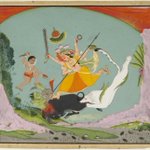





Do read and share this fantastic piece of work on the history of Bayana, where the good folks of @TheLongMemory trace the city’s heritage, which hosted the Yaudheyas and the Guptas, Yadu Rājpūts and the Delhi Sultānate.

The largest hoard of Gupta gold coins ever found. A fort of victory. A city that inspired Mughal architecture.
From the Gupta Empire to the earthquake that reshaped Bayana’s fortunes, its history spans sixteen centuries of kings, kingdoms, and shifting power. Yet a city once coveted by empires has faded into obscurity.
Read Sunny Pandey's Tale as he travels through seventeen centuries of ruins, legends and inscriptions to ask how a city so important came to be forgotten.


~ retweeted

New essay. The Ṛgveda's hymn to Rudra calls him "the best of all physicians", with a "softly stroking hand which cures and relieves". It also says he "attacks like a terrible wild beast", and asks him to unstring his bow.
Same god, same hymn, and the singer says he will pay him off with praise. Part 1 of We Are the Maruts.
Read and Subscribe for free. Link in comments.

Ironically, before Rāv Jaimal Rathore, the man who led and fell in the defence of Cītoṛ during the siege of 1533-35 was Rāvat Pañcāiṇ Parmar, the maternal grandfather of Rājā Mān Singh. The Parmars of Pañcāiṇ and Rathores of Jaimal were embroiled in a longstanding feud.


~ retweeted

A stone slab in a temple behind the Baghel museum in Rewa. It records the Krishna Mahamantra. Dated Vikramah Samvat 2021 during the reign of Martand Singh Baghel, the last king of the Rewa State. He was a very interesting figure, an avid hunter who caught a male white tiger cub named Mohan in the jungles of Bandhavgarh. All modern white tigers in the world are the direct descendants of Mohan.


~ retweeted
The God of Israel had avatars. My latest essay.
A Jewish Bible scholar read Genesis 18 and reached for a Sanskrit word: avatar. Kṛṣṇa had 16,000 houses. Yhwh had at least 2. Vaiṣṇavas have 5 words for how a god does that.
Link in comments 👇.
Free to read, and subscribe if you like it.

~ retweeted

The cult of Ghazi Salar Masud, Mahmud's alleged nephew, grew in Bahraich for centuries through cultural assimilation, backed by political hegemony.
With the crumbling of that political structure and the ascent of Hindu political assertion, North India's historical memory is undergoing a massive transformation.
Read this piece to understand how the hegemony that once turned conquest into devotion is now working to erode it.

Please do consider contributing if you’ve an idea that you always wanted to share with an wider audience. The Long Memory is managed and run by absolutely great people who are doing excellent work so here’s the chance
The Long Memory is now inviting submissions for its first print issue from students and scholars of history.
Been gatekeeping an interesting historical tale? Take it out of academic jargon and share it with a wider audience.
Pitch it to us at submissions@thelongmemory.in
For more details: thelongmemory.in


