

Institute for Monitoring Peace and Cultural Tolerance in School Education. Promoting @UNESCO-derived #peace standards in #education around the world since 1998.
Joined October 2011
- Tweets1.9K
- Following547
- Followers1.5K
- Likes243




IMPACT-se has just published the first in-depth analysis of Syria’s school curriculum since the al-Sharaa administration came to power. The landmark report examines 130 textbooks for Grades 1–12, revealing how the new Syria is reshaping education for the next generation.
The findings show an ideological transformation from pan-Arab nationalism toward a pan-Islamist worldview: Jihad, martyrdom, and violence are glorified in materials for children as young as fourth grade. Meanwhile, Syria’s minorities are increasingly marginalized, scientific content covering evolution and the Big Bang Theory has been removed, and women are framed mainly as wives, mothers and depicted increasingly in Islamic dress.
As Syria’s new leadership signals continued openness to the international community, this analysis provides an important insight into the country’s political and social trajectory, and how the government of President Ahmed al-Sharaa may shape Syria.
Read the full report here:
impact-se.org/wp-content/upl…

In an article for Taiwan insight, Tuyuq Rabay examines efforts to give Indigenous heritage a greater place in Taiwan’s schools. At one elementary school, students learn about ancestral history, language, and cultural traditions through forest walks, storytelling, and activities with community elders.
The article highlights the challenges of preserving students’ cultural heritage while meeting expectations for their academic progress. This raises a wider question, asking how can we best ensure that minority and Indigenous histories are passed on while equipping students with the knowledge and skills they need to succeed in today’s world?
Read the full article here: taiwaninsight.org/2026/05/13…
#IndigenousEducation #CulturalHeritage #InclusiveEducation #EducationPolicy #Taiwan #CulturalDiversity #MinorityRights #EducationForAll

As Houthi violence continues to make headlines, its roots can be seen by analyzing Houthi educational materials from a decade ago.
In mathematics materials from 2015–2019 documented by IMPACT-se, children learn numbers by counting images bearing the Houthi slogan, which includes calls for death and curses directed at other nations and communities. In another exercise, they are asked to calculate how many rifles the Prophet Muhammad purchased.
These and other examples illustrate how even STEM subjects are deliberately inculcated with violence and aggression, contrary to @UNESCO guidelines promoting education that builds bridges between communities and advances peace and mutual understanding.
Today’s headlines highlight the need to closely examine how education can normalize hostility and violence over time.
Read IMPACT-se’s latest analysis of Houthi educational materials here: impact-se.org/wp-content/upl…
#Houthis #Yemen #MiddleEast #CounterExtremism #EducationForPeace #UNESCO #UNESCOGuidelines #HouthiAttacks #RegionalSecurity #MaritimeSecurity #Peacebuilding #EducationPolicy #STEMEducation

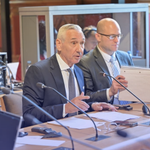
Last week, IMPACT-se CEO Marcus Sheff addressed parliamentarians and policymakers at the House of Lords in London and the French Senate in Paris as part of a delegation of experts on countering extremism, facilitated by @TrendsRA_
Marcus highlighted the essential role of education in preventing radicalization. He explained how extremism begins long before an act of violence, when hatred, violence and intolerance is taught, absorbed, and normalized in the classroom.
Marcus also noted the increasing importance of AI in deradicalization, particularly in creating curricula that meet standards of peace and tolerance.

In a recent article for @NRO, Perpperdine Univeristy (@pepperdine) President Jim Gash and Jeremy Tate, founder of the @CLT_Exam challenge the idea that schools should teach students how to think, rather than what to think.
They argue that education is never entirely neutral: even principles such as respect for others, the pursuit of truth and freedom of speech require schools to communicate certain values.
This raises an important question about relativism in education. If schools inevitably transmit values, can all values be treated as equally valid, or does education require some judgment about which principles are fundamental and should therefore be promoted?
Read the full article here: nationalreview.com/2026/06/y…

We are pleased to share that IMPACT-se participated in the 5th Paris Conference on Education (PCE2026), hosted by the The International Academic Forum (@iafor) at Sorbonne University.
Bringing together scholars, educators and policymakers from around the world, the conference provided a platform for IMPACT-se to present new research examining how textbooks in Tunisia, Pakistan and Iran address sensitive and controversial issues, from colonialism and gender to religion and violence.
The paper explores how contextualisation can shape students’ understanding of these issues and whether curricula encourage critical thinking, multiple perspectives and UNESCO values of peace and tolerance.
Read the paper here: lnkd.in/eYurqBiz

In a recent interview with @dailystarnews, Shireen Huq, a prominent women’s rights activist in Bangladesh, raises important questions about gender and inclusion in education—from the stereotypes embedded in what girls and boys are taught, to body shaming in textbooks and the role of independent expertise in curriculum development.
Her reflections are also an important reminder of the influence textbooks can have beyond the information they contain. When ideas about gender, appearance, identity, or social roles are repeatedly presented through educational materials, they can shape how young people understand themselves and others, while contributing to the normalization of stereotypes that already exist in society.
Read the full interview here: thedailystar.net/opinion/int…

As Syria's new leadership seeks closer engagement with Western governments, its education reforms offer an early indication of the country's future direction. This analysis examines what recent curriculum changes reveal about the regime's ideological priorities—from attitudes toward the West and religious minorities to the role of women and Syria's evolving relationship with Turkey.
These findings come ahead of the first comprehensive review of the Syrian curriculum under the auspices of the new regime, which IMPACT-se will soon publish.
Read the full analysis here: impact-se.org/wp-content/upl…

A recent analysis from @PeaceNewsNet examines school textbooks in Iraqi Kurdistan and argues that they could do more to reflect the histories and experiences of the region's diverse ethnic and religious communities, including Arabs, Turkmen, Assyrians, Armenians, Yazidis, and others.
The discussion speaks to a much broader challenge: when curricula move beyond a single unitary national narrative and introduce students to multiple histories and perspectives, they can help foster tolerance, mutual respect, and peaceful coexistence from an early age.
Read the full analysis here: peacenews.com/three-ways-sch…

Every IMPACT-se researcher brings a unique lens to the study of education and society.
Asher Spekterman is a professional Arabic translator and researcher, specializing in Middle Eastern conflicts. He has extensive experience teaching Arabic translation and researching Arabic-language sources.
“I’m particularly interested in historiography—the ways societies assign meaning to historical events. My background in translation has shown me that language is never entirely neutral; the words used to describe the past can shape how it is remembered and understood. When those interpretations are incorporated into educational materials, they influence how students understand their own society and the world around them.”
— Asher Spekterman

Where should education about gender identity and sexual orientation take place - in textbooks or through dedicated classroom programmes?
IMPACT-se's analysis of LGBT issues in Israel's education system examines how these topics are addressed across both textbooks and Ministry of Education-approved educational materials. It finds that while LGBT-related content is largely absent from textbooks, it forms part of the mandatory Life Skills programme, which promotes acceptance, tolerance, empathy, and responsibility toward others.
More broadly, the findings raise questions about what content should be considered essential within national curricula, and the extent to which educational materials should reflect the diversity of the societies they serve.
Read the full analysis here: impact-se.org/wp-content/upl…

A recent analysis in @the_hindu examines the gradual disappearance of political cartoons from Indian textbooks, prompting discussion about what is gained, and what may be lost, when visual satire is removed from the classroom.
Beyond cartoons themselves, the debate highlights the role of images in education. From photographs and illustrations to maps and political cartoons, imagery is a key tool through which students inte rpret events, political actors, and historical developments.
The discussion also raises important considerations about how schools introduce students to political discourse and public debate through educational content.
Read the full analysis here: thehindu.com/education/why-p…

Last week a Memorandum of Understanding was signed between our partners at Monitor Impact and the @EmiratesScholar for Research & Studies in the UAE.
The agreement establishes a framework for collaboration in research, knowledge exchange, and joint initiatives, strengthening ties between two organizations committed to supporting evidence-based dialogue and thought leadership in the region.
We look forward to seeing this partnership develop and the opportunities it will create across the UAE and beyond.

The Daily Sun @dailysunbd recently reported on Bangladesh’s National Curriculum and Textbook Board (NCTB) decision to revise school textbooks to better reflect what it calls the country’s “true history.” The changes may include new material on the 2024 student-led uprising and revised interpretations of major historical events.
The analysis raises broader questions about how curriculum reforms can change students' perceptions of identity, historical memory, coexistence, and international relations. Questions surrounding the representation of history will always be contested, yet they remain undeniably important in shaping how future generations understand the world around them.
Read the full analysis here: daily-sun.com/bangladesh/874…

IMPACT-SE’s new report on Jordan’s textbooks finds that while the curriculum includes themes of peace, tolerance, and coexistence, these values are not consistently reflected throughout the material.
The study highlights positive examples, which encourage religious moderation and present Christians as an integral part of Jordanian society. At the same time though, some texts condemn “infidels”, describing their punishment in hell.
The report also finds that antisemitic tropes remain highly prominent, while homophobic content portrays homosexuality as a threat to the continuation of mankind. Concerningly, violent interpretations of jihad and martyrdom are praised and glorified, including in newly introduced material for the current school year.
Overall, although Jordan’s curriculum includes content which encourages moderation and coexistence, these messages are inconsistent and at times material appears to foster intolerance and violence, falling short of UNESCO standards for peace and tolerance.
Read the full report: impact-se.org/wp-content/upl…

A recent analysis by @UNICEF reveals that more than one million Afghan girls have been denied the right to secondary education since 2021.
The findings highlight grave consequences that extend far beyond schools; restricting girls’ access to education affects a country’s health system, economy, and long-term development.
The analysis is an important reminder that gender equality in both school attendance and educational content is not a marginal social issue, but a central factor in the future and stability of societies as a whole.
Read the full UNICEF analysis here: unicef.org/press-releases/re…

IMPACT-se’s latest research on the Iranian school curriculum was featured in the @nypost, highlighting textbook content that includes classroom exercises calculating missile strike times, the vilification of the West, and imagery depicting violent attacks on civilians.
These findings are particularly relevant amid ongoing regional conflict and global tensions. The research provides insight into how attitudes are shaped in Iranian schools, pointing to a concerning pattern in which educational materials normalize and promote war, violent jihad, and nuclear domination.
Read the full article here:
nypost.com/2026/04/25/world-…

EU Reporter has published an op-ed by IMPACT-se CEO Marcus Sheff highlighting a troubling reality: textbooks in some European countries fail to adequately address, and in some cases still perpetuate, antisemitic blood libels in their educational content.
Despite European commitments to combat antisemitism, this article underscores the importance of education free from hateful tropes and the need to critically examine national curricula.
Read the full article here: lnkd.in/eFABgHtx
