








Michael retweeted

Mark my words

With mainstream articles on education and Sold a Story 2 coming out, we are about to experience a period of intense gaslighting.
It’s already started.
We will be told, repeatedly, that nobody is—or has ever been—against explicit teaching. Which is easily falsified, but these falsifications will be dismissed.
We will be told, repeatedly, that all teachers use explicit teaching. Which is true to some extent because the alternatives are so ineffective. But they’re using it without knowing the research and often under pressure to do something else.
Why do people try to deny the debate in this way? Why don’t they just come out and make an honest argument?
I can’t wait for “facilitators’ of learning” responses to this. Hopefully it will be the final nail in the coffin for free inquiry, minimal guidance and the consultants who have made thousands persuading teachers that teaching is bad.

The new season of Sold a Story is coming tomorrow. I've seen speculation about it. I think there will be some surprises. I'm interested to know what you think.
First two episodes tomorrow. Then one a week on Thursdays until Nov 19. features.apmreports.org/sold…

Michael retweeted

💡A survey of Australian teachers found 88% believe in the learning styles myth, 38% believe students learn better through discovery than explicit instruction, 41% believe testing tends to detract from learning.
If you're taught neuromyths about learning from someone who is supposed to be an expert, you'll likely believe them.
The report rightly recommends strengthening initial teacher education, among other things.
cis.org.au/publication/knowl…

Michael retweeted

The fact the field is divided on this is why there’s all this silly and wasted effort around garnering “buy in” among the adults. What about the kids? How about the field moves on, and starts demanding better materials rather than debating “whether.”

What are the most effective methods of improving student achievement? An NYT investigation.
For me, the data point in the bottom left quadrant is absolutely critical to understanding why student achievement goes wrong so often: teachers making up their own curriculum.
nytimes.com/2026/09/28/upsho…

Michael retweeted
I think this is especially problematic in math. A lot of elementary teachers are uncomfortable with math and can be unaware of how early math connects to later math, which topics are more critical and need more time, etc. The resources need to be very clear and well sequenced.
I was shocked when someone first told me that elementary teachers in some jurisdictions are encouraged not to use texts. That's a recipe for disaster. On the other hand, given the poor quality of some of the math texts/programs in the US and Canada right now, it's hard to say what's worse.
What are the most effective methods of improving student achievement? An NYT investigation.
For me, the data point in the bottom left quadrant is absolutely critical to understanding why student achievement goes wrong so often: teachers making up their own curriculum.
nytimes.com/2026/09/28/upsho…
Michael retweeted

The evidence for teacher-created curriculum is weak, and the evidence for the systemic use of quality curriculum is strong.
A national conversation about this would be welcome.
What are the most effective methods of improving student achievement? An NYT investigation.
For me, the data point in the bottom left quadrant is absolutely critical to understanding why student achievement goes wrong so often: teachers making up their own curriculum.
nytimes.com/2026/09/28/upsho…
Michael retweeted

Planning an intro to how learning happens with your Ss at the start of term, but not sure how?
I've uploaded all my KS3/KS4/KS5 or MS/HS resources (ppt/notes) to my website - help yourself!
It's SO helpful for them to have the language of learning!
itsalearningcurve.education/…

Michael retweeted

In 𝘏𝘰𝘸 𝘞𝘦 𝘓𝘦𝘢𝘳𝘯, Stanislas Dehaene—one of the world’s leading cognitive neuroscientists and winner of the Nobel-equivalent Brain Prize—identifies the 4 Biological Pillars of Learning. Without all 4 of these pillars in place, learning is fragile and will not last: 🧵
Michael retweeted

Just days after the release of our new book (@nsachdeva2019), we - with master LDer Matthew Richter - will be giving a full-day in-person workshop on "Deliberate Practice in Action: Designing Learning That Actually Develops Skill and Builds Expertise"
ldaccelerator.com/sessions#c…

Michael retweeted
Why Writing by Hand Beats Typing (in 6 Charts)
Amazing! @edutopia got it just about right!
edutopia.org/visual-essay/wh…

Michael retweeted

I teach SS and inquiry in 6th is absurd. These kids don’t know their continents, have no concept of timelines and no understanding of major world events. They have no basis upon which to inquire. Most high school students lack this basis too. They need content.

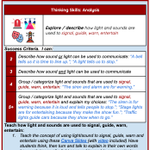
John Hattie says learning intentions without success criteria are"hopeless".
Learning needs to be scaffolded with clear goals and criteria. The #SOLOTaxonomy paired with split-screen ATL learning outcomes can help add clarity/guidance to inquiry in the #ibpyp @ibpyp @globalsolo


How to scaffold #inquiry in the #IBPYP
Use the SOLO Taxonomy to create tiered success criteria for teacher question and ATLs.
Then design guided inquiries, worked examples aligned to curriculum standards.
Students see how thinking develops surface→deep.
@ibpyp @globalsolo


Michael retweeted
NEW FREE POST My challenge to Guy Claxton
Let’s debate the science of learning
[Link in thread]

Michael retweeted
Once again, matching teaching to learning styles has near-zero impact on student achievement. I've noticed a resurgence of the learning styles myth recently so this new study is timely. 🧵 ⬇️

Michael retweeted
Student outcomes began dropping around 2012, and I’ve seen many blame the Common Core.
My retort has been consistent: More likely, it was the Ed Tech.
I’m pleased to see @JonHaidt echoing the theory in his latest. (Link below)
More on my thesis:
The CCSS arrived in K-12 at the same time as tablet technology began fueling a drive toward 1:1 student-device ratios.
I think we all know which shift captured more energy and educator time and imagination.
As one indicator: the @ISTEofficial conference has been the largest US educator conference, by far, over the last decade. I could go on about the number of organizations that sprung up in praise of tech-enabled learning, including the federal Office of Ed Tech.
It’s fair to ask: What did we get for all that investment? And is Ed Tech one of the distractors from the goals of the newer, higher, not-perfect-but-broadly-better standards?

