

Assistant Principal - Assessment, Data & Timetabling | Microbiologist turned Science Teacher 🔬| Lover of old cars 🚗
West Yorkshire
Joined January 2020
- Tweets2.9K
- Following1.5K
- Followers1.5K
- Likes11.6K



Pinned Tweet
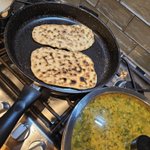
Live model marking in action. I supplied a weak answer which we analysed as a class using the visualiser whilst verbalising my thought process. Pupils then produced their own improved answers & peer marked their work. Excellent work was celebrated under the visualiser #edutwitter


Dr. Anthony Hoyle retweeted

This super myth buster from Steplab about evidence-informed approaches to SEN/ additional needs provision. Summary: lots of things we sometimes think are useful, have no evidence to back them up, or weak evidence. In some cases they may even harm. Fidget spinners, Zones of Regulation, Mindfulness…just because we want something to work doesn’t mean that it does.

This week it was my pleasure to return to @TrinityAcademyL & meet the @TALMFL team. The same calm, focused, yet warm atmosphere exists across the school. Catherine & @Hancol190216 were gracious & knowledgeable hosts, which allowed us to walk away with a plethora of ideas. 🙏
A huge thank you to Cory and his amazing MFL team @CathedralMfl. Our visit was eye-opening and inspirational in equal measure. The outcomes you generate for the children in your care are nothing short of remarkable! We've walked away with so many ideas 💡 🙌 @TrinityAcademyC
Dr. Anthony Hoyle retweeted

Lots of behaviour advice is bad.
FLMOP isn't. It's a concrete and tangible strategy that any teacher can use to improve behaviour in their classrooms.
Read and share 🙏🙏🙏
carouselteachlearnlead.subst…

Dr. Anthony Hoyle retweeted

A few thoughts on Lucy Powell's article in Times about vocational education.
Is the UK's NEET problem a direct "consequence and legacy" of Gove's education reforms, as she says?
Unlikely. Wales did the total opposite of Gove's reforms and has more NEETs (& a faster increase).
Dr. Anthony Hoyle retweeted

This represents such a fundamental misunderstanding about learning, assessment and thinking. These sentences further betray @LucyMPowell’s underestimation of the importance of teaching & testing knowledge well. This is extremely worrying for the future of schools in England.

Dr. Anthony Hoyle retweeted
Neurodiversity is a common term in education- and society. But it lacks precision both in definition and usage. And that really matters in the real world.
For a start 'neurodiverse' is not a clinically recognised or used term, eg in the DSM-5. It was coined by the sociologist Judy Singer in 1998, as an advocacy term for people with ASD and very closely related conditions.
'Neurodivergent' describes an individual whose brain functions differently from the majority. Clinically recognized examples include autism spectrum disorder, ADHD, dyslexia, dyspraxia, Tourette syndrome, and others. These are formal neurodevelopmental diagnoses.
Crucially this means people who have been born with a life-long condition. It does *not* include people with anxiety disorders, or dementia, or PTSD, or depression etc. It doesn't mean 'everything'.
There is no diagnosis 'neurodiverse'. It is a purely vernacular term, with multiple meanings depending on who is using it and who you talk to. Clinicians diagnose specific conditions, like ASD.
And of course even clinically diagnosable conditions like ASD, ADHD are subject to intense debates about how the category is defined, is it too broad or narrow etc.
Diagnostic criteria can vary from country to country, LA to LA, school to school. And so can the response strategies. What a lot of people outside of either the education or clinical sectors don't realise is that this is an area that is crying out for high quality research, clarity, transparency, and honesty about what works, and when, and when it doesn't work. We are often talking about very different things when we use the same words carelessly.
The common use of 'neurodiverse' matters; it is often heard in advocacy discourse, the media, etc. but frequently misunderstood.
It doesn't mean 'a little bit different'. We are all different from one another. People who claim to be 'a little bit autistic' may very well simply misunderstand that some of the characteristics they identify in that category are also perfectly normal-spectrum qualities that many people have. Liking your house to be tidy doesn't mean that you are neurodivergent. Being a stickler for details doesn't mean you have OCD. If the term means 'everything' then it means 'nothing.'
It has become fashionable for people to self diagnose and self-refer as neurodivergent, even in the face of little evidence. Because it confers, for some, a sense of being special, different, or interesting. And of course in a sector where we rightly seek to support people/ students who need reasonable accommodations in order to promote inclusivity, the *incorrect* assignation of an unmet need leads to unfair advantages over those who do not receive those accommodations.
A small but growing group of activists now campaign on the platform that almost any mental health difference indicates neurodivergence, but this is a huge definitional drift, without any clinical basis. You see a lot of this activism in education, often perfectly well-meant. Singer herself would have disagreed strongly with this.
The reason this matters is that if we treat all mental health problems, all behavioural disorders, all learning problems, as having lifelong neurological foundations - which they absolutely do not- then we create a narrative that indicates all individuals face insurmountable obstacles in modifying the behaviours associated with the condition. Some children identified as dyslexic, for example, are simply deficient in high quality reading instruction.
But if you treat every child that behaves unsuccessfully in the classroom as being neurodivergent, then you create a circumstance where we treat them as the victims of irresistible compulsions, rather than human beings with the ability to learn to take responsibility, to grow, to change their habits and attitudes. It is also a substantial abandonment of our commitment to only use evidence info strategies with children- especially the most vulnerable.
In other words, not all forms of SEND are indications of neurodivergent conditions. And most certainly aren't.
Sadly, as in so many fields, many of the strategies recommended for children with any form of SEND, including forms of neurodivergence, lack substantial or credible evidence bases. There is a lot of well-meant money being spent on approaches that simply have no basis in research, impact or other outcomes.
This is an area that cries out for high quality evidence bases, and evidence informed approaches to support students with genuine need, not activism that leads to treating all children as incapable. But the energy of that activism, married to evidence, could produce something spectacular for those who need help the most, and I hope we see this happen in the future.
Dr. Anthony Hoyle retweeted

It's really telling that, having inspected around 250 secondary schools, that @Ofstednews have yet to identify a single school with low or very low levels of prior attainment that have achievement that is worthy of others coming to see how they manage it.

Dr. Anthony Hoyle retweeted

A Norwegian neuroscientist spent 20 years proving that the act of writing by hand changes the human brain in ways typing physically cannot, and almost nobody outside her field has read the paper.
Her name is Audrey van der Meer.
She runs a brain research lab in Trondheim, and the paper that closed the argument was published in 2024 in a journal called Frontiers in Psychology. The finding is brutal enough that it should have changed every classroom on Earth.
The experiment was simple. She recruited 36 university students and put each one in a cap with 256 sensors pressed against their scalp to record brain activity. Words flashed on a screen one at a time.
Sometimes the students wrote the word by hand on a touchscreen using a digital pen, and sometimes they typed the same word on a keyboard. Every neural response was recorded for the full five seconds the word stayed on screen.
Then her team looked at the part of the data most researchers had ignored for years, which is how different parts of the brain were communicating with each other during the task.
When the students wrote by hand, the brain lit up everywhere at once.
The regions responsible for memory, sensory integration, and the encoding of new information were all firing together in a coordinated pattern that spread across the entire cortex. The whole network was awake and connected.
When the same students typed the same word, that pattern collapsed almost completely.
Most of the brain went quiet, and the connections between regions that had been alive seconds earlier were nowhere to be found on the EEG.
Same word, same brain, same person, and two completely different neurological events.
The reason turned out to be something nobody had really paid attention to before her work. Writing by hand is not one motion but a sequence of thousands of tiny micro-movements coordinated with your eyes in real time, where each letter is a different shape that requires the brain to solve a slightly different spatial problem.
Your fingers, wrist, vision, and the parts of your brain that track position in space are all working together to produce one letter, then the next, then the next.
Typing throws all of that away. Every key on a keyboard requires the exact same finger motion regardless of which letter you are pressing, which means the brain has almost nothing to integrate and almost no problem to solve.
Van der Meer said it plainly in her interviews.
Pressing the same key with the same finger over and over does not stimulate the brain in any meaningful way, and she pointed out something that should scare every parent who handed their kid an iPad.
Children who learn to read and write on tablets often cannot tell letters like b and d apart, because they have never physically felt with their bodies what it takes to actually produce those letters on a page.
A decade before her, two researchers at Princeton ran the same fight using a completely different method and ended up at the same answer. Pam Mueller and Daniel Oppenheimer tested 327 students across three experiments, where half took notes on laptops with the internet disabled and half took notes by hand, before testing everyone on what they actually understood from the lectures they had watched.
The handwriting group won by a wide margin on every question that required real understanding rather than surface recall.
The reason was hiding in the transcripts of what the two groups had actually written down.
The laptop students typed almost word for word, capturing more total content but processing almost none of it as they went, while the handwriting students physically could not write fast enough to transcribe a lecture in real time, which forced them to listen carefully, decide what actually mattered, and put it in their own words on the page.
That single act of choosing what to keep was the learning itself, and the keyboard had quietly skipped the choosing and skipped the learning along with it.
Two studies. Two countries. Same answer.
Handwriting makes the brain work. Typing lets it coast.
Every note you have ever typed instead of written went into your brain through a thinner pipe. Every meeting, every book highlight, every idea you captured on your phone instead of on paper was processed at half depth.
You did not forget those things because your memory is bad. You forgot them because typing never woke the part of the brain that would have made them stick.
The fix is the thing your grandmother already knew.
Pick up a pen. Write the thing down. The slower road is the faster one.

Dr. Anthony Hoyle retweeted

Double= done! ✅
A second piece of silverware in less than a week for @HTAFCWomen, with tonight’s result confirming their status as @SHCFA CHAMPIONS! 🤩
UTT💙
#htafc | #htafcw


Dr. Anthony Hoyle retweeted

An exciting opportunity for anyone interested in RS leadership. An outstanding school, with a large RS team, working collectively with the wider Humanities team - every child sits the AQA RS GCSE. Feel free to drop me a message.
trinitymat.org/all-vacancies…
Dr. Anthony Hoyle retweeted
Completely agree. Developing minds need interaction, challenge, and play, not monotonous distraction.

Children under the age of five should be limited to one hour of screen time a day, while under-twos should not be watching screens alone.
Education Secretary Bridget Phillipson spoke to #BBCBreakfast about new government guidance
bbc.co.uk/news/articles/c1d9…
Dr. Anthony Hoyle retweeted

I think I've figured out what's going wrong in schools. One of the biggest challenges facing us (& parents) is the reward environment our children are growing up in. Endless scrolling from as soon as they can control a device. On-demand TV in glorious 4K. Instant feedback & constant stimulation from getting up to going to bed. They're growing up in a different world. Neuroscience tells us that brains adapt to frequent, fast rewards. Children are now hard-wired differently, from birth. School requires patience, effort & delayed gratification. At home, they're don't know how to be bored, they don't need to be any more. They don't communicate in the same way. They don't get excited like they used to. They don't have to work hard for fun in the real world because they can find it so easily online. They've become dopamine junkies & we're on a hiding to nothing - we're not competing with bad behaviour, we're competing with biology (and it's truly terrifying.)
Dr. Anthony Hoyle retweeted
Wots going on. This type of labelling seems designed to confuse. Apparently a serving size is 5/6th of a bag. Who eats 5/6ths. Just state the facts about the bag. Pointless, misleading, nonsense.

Dr. Anthony Hoyle retweeted

Inclusion does not mean lower expectations & standards.
It means supporting kids to reach the expectations & standards you have.
Dr. Anthony Hoyle retweeted

We’re proud to celebrate the publication of @TrinityTSFA recent #Ofsted inspection report – a significant milestone for the sixth form and for the wider FE sector.
As the first FE provider to volunteer for inspection under the new framework, the team at TSFA has shown real confidence, ambition and leadership.
Ofsted praised Trinity Sixth Form Academy as a place where students ‘thrive’, ‘flourish’ and ‘where everybody can be their authentic self’, within a sixth form where learners are highly motivated, supported to succeed, and empowered to achieve their best.
A powerful endorsement of the work of staff, leaders and students, and of our shared commitment across Trinity MAT to making a positive difference to the lives of as many young people as possible.
Read the full report here: files.ofsted.gov.uk/v1/file/…

Dr. Anthony Hoyle retweeted
I find it difficult to put my thoughts about research, theory, and concrete application into words.
Of course research is important. Of course theory is important. But it so often doesn't make an actual difference in the classroom. Someone learns about retrieval practice, cognitive load theory, adaptive teaching, even Rosenshine...and then nothing changes in their lessons the next day.
Without the concrete, nitty gritty hows, whens and bys, all the whys in the world are meaningless.
Dr. Anthony Hoyle retweeted
Trinity Sparke Sounds returns with a brand-new episode!
This week's episode is slightly different as our very own Mike Fitzsimons swaps his interviewers chair for the hot seat.
Mike tells us about his leadership journey that has led him to being the founding Principal of Trinity Academy Sixth Form.His story is sure to resonate with leaders from all sectors and levels as he talks about the importance of integrity and humility to support leading successful organisations.
Trinity Sparke Sounds is available across all major streaming platforms:
Spotify: bit.ly/4iSnmEY
Apple: apple.co/3MnV35a
Amazon: amzn.to/48WMGWK

