

Author, “It’s Earnings That Count." Next book: "Expected Value: How Superinvestors Decide." Hint: ((BPT - SP) x COS) / ((SP - bPT) x COF) ≥ 3x. 🌲
United States
Joined May 2018
- Tweets2.2K
- Following815
- Followers1.1K
- Likes6.8K






If Greg Abel, Howie Buffett, and Susan Decker want to make $BRK.A $BRK.B great again (like the kinds of co's Warren and Charlie sought), they should pay @porterstansb @Porter_and_Co some A shares to explain at the next directors' meeting when and how the sprawling Omaha conglomerate diworsified. If you own Berkshire, reading "Warren's Mistakes" is a must. @herbgreenberg @DougKass

Since 2011, $BRK's return on capital has averaged a ho-hum ~10%/year, roic.ai/quote/BRK-B/ratios. Now that Abel is in charge, he should distribute 1) 80% of the $380 billion in cash and equivalents, 2) $300 billion of marketable securities, and 3) insurance and its $177 billion float. Then laser focus on the railroad, energy, and Precision Castparts. A smaller, leaner, more nimble BRK is a better BRK.

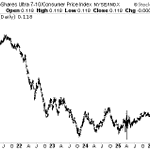
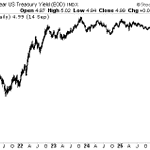
Only a little more than six years ago the fixed income market was willing to pay 200 times earnings (annualized interest) for the 10-year UST. Now, the P/E is 20 times the coupon (1 / 0.05), which works out to a rerating of minus 90 percent. Brutal.


Hewitt Heiserman retweeted

"Break up Berkshire Hathaway?" That was the headline on something I wrote in 2014 about what may have been the late Ted O’Glove’s most controversial, boldest call. It may be more relevant than ever today. I explain.. cc @HewittHeiserman herbgreenberg.com/p/break-up…

U.S. Treasury secretary Scott Bessent has a tough job: selling our debt. reuters.com/business/norways…. Adjusted for inflation, our purported risk-free paper since2020 is down 40 percent.

Hewitt Heiserman retweeted

Here's how you can read $CCXI's 300+ page S-4, filed 09/04/2026 in minutes, not hours (for completely free).
1) Sign up to my SEC reading tool (it's free): secsift.com
2) Search "CCXI" or just click here to access the filing: secsift.com/?t=CCXI&a=000121…
3) You'll get 100 free credits on sign up, so you can run the "SIFT" AI analysis (button on the top right).
4) Navigate to "Routine" on the SIFT tab. Select "Fade" or "Hide" to ignore all legal-speak and generic risk factors.
5) Navigate to the "Filter." Uncheck "Skip" sections the AI labels as not important. You can also collapse skipped sections from the filing.
6) Wait ~1 minute for SIFT AI to grade each section. It'll take you ~15 minutes to read everything important there instead of several hours.
Screenshot shows just a handful of the risks.

Hewitt Heiserman retweeted

For six thousand years, every government that gained control of money supply eventually debased it. Every single one. The Romans clipped coins. Henry VIII sweated the silver. The Federal Reserve has destroyed roughly 97% of the dollar's purchasing power since 1913. The state and money have been inseparable partners in a very one-sided relationship, and you have always been the one paying the bill.
Bitcoin changes this at the protocol level.
When Satoshi Nakamoto launched the network on January 3, 2009, he embedded a message in the genesis block referencing a bank bailout. The 21 million coin limit is enforced by mathematics and consensus, not by the goodwill of appointed technocrats sitting on the Federal Open Market Committee. No treasury secretary calls Satoshi. No emergency session votes to expand the supply. The issuance schedule simply runs.
Free market thinkers from Mises to Hayek spent careers arguing that sound money requires separation from political control. Bitcoin executes that separation instead of petitioning for it. You hold your keys, and no Jerome Powell successor can inflate your savings to fund a war you never voted for.
Church and state were once inseparable too. The separation felt radical, then obvious. Monetary policy is too consequential to leave to governments. Bitcoin delivers the institutional answer we never had. You don't need permission, and nobody is coming to fix it. It already works.

Material for the sequel of your important book "Hidden Monopoly" @HiddenMonopoly hbr.org/2026/09/dont-underes…


Thank you Mr. Brockman @gdb latimes.com/environment/stor…. Now, hopefully Jackie is able to return to her nest.


Hewitt Heiserman retweeted
The Wright brothers invented powered flight at Kitty Hawk in December 1903, and then they spent the next decade making sure nobody else in America could improve on it.
After building the first airplane, they built an army of lawyers, not better airplanes. Orville and Wilbur secured U.S. Patent 821,393 in 1906, a patent so broad it claimed the very concept of lateral control, and they used it as a club. When Glenn Curtiss developed ailerons (a genuinely superior system to the Wrights' wing-warping), they sued him into oblivion. The litigation dragged from 1909 through 1917. Curtiss burned his energy on courtrooms in Buffalo instead of wind tunnels.
Let's measure the result. By August 1914 France fielded roughly 1,400 military aircraft. Germany had around 1,000. The United States, birthplace of the airplane, mustered fewer than 30 serviceable machines, and most of them were obsolete.
Patents are state grants of monopoly, and monopoly does what monopoly always does: it freezes the incumbent in place and taxes everyone who wants to build on his work. In France, Louis Blériot, Gabriel Voisin, and the Farman brothers competed openly, copying and refining each other's designs. Competition compounds knowledge. Legal privilege hoards it.
Washington eventually noticed that its "arsenal of democracy" couldn't produce a decent warplane. So in 1917 the government forced a patent pool, the Manufacturers Aircraft Association, to break the logjam it had created in the first place. The government fixed the wreckage of its own privilege. You will see that pattern again.
The lesson holds. Patents stifle innovation. It always has and always will. Innovation is not a thing you protect. It is a thing you permit. As always, government intervention makes things worse, not better.

Thanks for sharing. xitter.cf/rektfencer/status/1983… Now, draw those same price lines using log scaling and we're already at the approximate low. Log scale can show market psychology of fear and greed better than arithmetic because we're more sensitive to percentage changes than absolute amounts.


Every time Bitcoin rejects this line, it dumps 70%
What if that’s happening again now?
Hope you are ready for $BTC at $40,000


