

Mathematician, scientist, teacher, piano player, angel investor, 2022 Hessian master 4x100m relay
Stavanger, Norway
Joined April 2022
- Tweets676
- Following408
- Followers142
- Likes28.2K





Helge Ruddat retweeted

Euler’s Disk, a heavy metal spinning toy developed by Joseph Bendik in the late 1980s and named after legendary mathematician Leonhard Euler, produces a fascinating effect. As it spins across a mirrored surface, its wobbling becomes increasingly rapid and its whirring grows louder, until the motion abruptly stops.
In 2000, Cambridge physicist Keith Moffatt published a paper in Nature proposing that air trapped beneath the disk plays a crucial role in its unusual behavior. His theory suggested that the disk’s wobbling frequency approaches a mathematical singularity as it loses energy.
More than two decades later, the phenomenon continues to attract scientific interest. High-speed measurements by Harvard researchers in March 2026 reportedly provided further support for the role of air resistance during the disk’s final moments, adding another chapter to the physics behind this deceptively simple toy.
Helge Ruddat retweeted

When an object spins in zero gravity about its middle axis, the rotation is inherently unstable, and the object periodically flips 180 degrees mid-flight, a phenomenon known as the Dzhanibekov effect.
Helge Ruddat retweeted
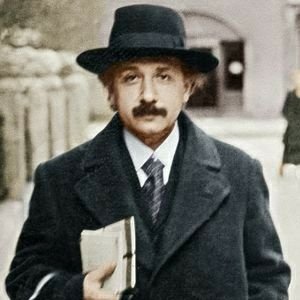
The Feynman point is the name given to the position in the decimal expansion of π where a sequence of six consecutive nines first appears. It is named after the physicist Richard Feynman, who allegedly joked that he would like to memorize the digits of pi up to that point and then say “and so on” as if π. were rational. The Feynman point occurs at the 762ⁿᵈ digit after the decimal point, which is much earlier than expected by chance.

Helge Ruddat retweeted

TERENCE TAO SAYS AI WILL DO TO OUR BRAINS WHAT CHEAP FOOD DID TO OUR BODIES
for most of history life was the workout. then food got cheap and people had to start watching their diet on purpose
tao says thinking is next:
"you have to watch your mental diet, and you do have to maintain mental exercise"
MIT had students write essays with ChatGPT. minutes later 83% couldn't quote a single sentence they'd "written"
the ones who wrote on their own first and got ChatGPT later used it better, and their brain activity went up
the struggle before the answer is the part your brain keeps
an answer you didn't work for is easy to get and even easier to forget
would you let your kid use AI for homework from day one, or make them struggle first?
Helge Ruddat retweeted

Look at this graph. It’s a disaster.
A new working paper tracked 26,811 students in China.
Homework scores rose by 18%.
Meanwhile, closed-book exam scores fell by 20%.
This divergence between home performance and class performance seems driven by AI usage:
Among students who never used AI, higher homework scores are associated with higher exam scores.
Among AI users, the relationship switches completely: exceptionally high homework scores are associated with substantially worse exam performance.
*
Paper in the first reply




Helge Ruddat retweeted

This week, professors Alex Nielsen and Enrico Riccardi, together with students from UiS Aerospace, attended the Spaceport Norway 2026 meeting in Oslo to discuss the future of the space industry in Norway and the role that UiS will play in it.


Helge Ruddat retweeted

Snímek složený z 578 jednotlivých 8sekundových expozic pořídil 📷Brendan Larsen 9. září 2026 mezi 20:18 a 22:13 místního času nedaleko novozélandské sopky Mt. Taranaki. Na snímku je 14450 stop po přibližně 1400 jednotlivých družicích.

Helge Ruddat retweeted

J'ai vu une Tesla décoller. Et j'ai entendu beaucoup de bêtises.
« Ça ne sert à rien. » « Gadget de milliardaire. » « Qui a besoin d'une voiture qui vole ? »
Personne. Et c'est exactement pour ça que c'est important.
En 1978, Brabham a aligné en Formule 1 une voiture équipée d'un ventilateur géant à l'arrière. Il aspirait l'air sous le châssis et plaquait la voiture au sol. Elle a gagné sa première course avec une avance insolente. Elle a été interdite immédiatement.
Quarante-huit ans plus tard, on y revient. Un système de succion qui colle la voiture à la route et lui permet de passer sous la seconde au 0 à 100.
Personne n'a « besoin » de faire le 0 à 100 en moins d'une seconde. Comme personne n'a besoin d'une Formule 1. Et pourtant : les freins carbone de votre berline, l'hybridation de votre moteur, l'aérodynamique de votre SUV, les palettes au volant — tout ça vient de voitures de course que personne n'utilisera jamais pour aller au travail.
La Formule 1 ne sert à rien. Pourtant elle sert à tout.
En 1973, quand la France a lancé Ariane, l'Europe sortait de onze échecs consécutifs du programme Europa. La presse parlait d'argent jeté dans l'espace. Vingt ans plus tard, Ariane détenait la moitié du marché mondial des lancements commerciaux, et chaque satellite de télévision, de météo ou de GPS que vous utilisez a bénéficié de cette obstination.
Le progrès a toujours la même tête au début : un truc inutile, cher, ridicule, construit par des gens qu'on prend pour des fous.
Ce que j'ai vu à Dallas, ce n'est pas une voiture volante. C'est un châssis, une gestion de l'énergie et une maîtrise des flux d'air que l'industrie automobile mettra dix ans à digérer.
Les applications viendront : sécurité, freinage, stabilité, consommation. Elles finiront dans des voitures ordinaires conduites par des gens qui expliqueront, en 2036, que tout ça était évident.
La question n'est jamais « à quoi ça sert ».
La question est : qui ose encore construire des choses qui ne servent à rien ?
Il y a cinquante ans, c'était nous. La fusée, le TGV, le Concorde, le Minitel.
L'Europe construisait des choses absurdes et magnifiques.
Aujourd'hui, on commente depuis le siège arrière car nous sommes hors course.
Merci @elonmusk de nous faire rêver

Helge Ruddat retweeted

Each coordinate of a closed outline has its own real Fourier series: x(t) = ∑ (aₖ cos kt + bₖ sin kt), and the same for y.
A cosine and sine of frequency k make one arm of length √(aₖ² + bₖ²) turning k times per lap. One chain sets x, one sets y, and the pen sits where their guides cross. With N harmonics per axis the knight is off by 30.2 % of its height at N = 1, 0.70 % at N = 50.
At N = 1 both coordinates are pure sinusoids: an ellipse.
Helge Ruddat retweeted

In 1992 Peter Ratcliffe received this rejection from Nature.
Almost 30 years later he won the Nobel Prize for the same discovery.
Don't lose faith in the things you believe in.

Helge Ruddat retweeted

August Ferdinand Möbius died on 26 September 1868 in Leipzig.
He is best known for the Möbius strip (a one-sided surface he discovered in 1858), the Möbius function in number theory, Möbius transformations in complex analysis, and barycentric coordinates.
His work also advanced projective geometry and topology.

Helge Ruddat retweeted
This Friday we were delighted to welcome Daniel Varming of SpaceLab to tell us about life as an entrepreneur in the space industry and his plans for making rockets in Stavanger. 🚀🇳🇴😎


Helge Ruddat retweeted
On the morning of Monday, 19 September 1994, Andrew Wiles had the insight that completed his proof of Fermat’s Last Theorem.
He had announced a proof in 1993, but a gap was found in a key part that used the Kolyvagin–Flach method. After nearly a year of work with Richard Taylor trying to repair it, Wiles realized that the reason that approach failed was exactly what allowed him to revive and strengthen an earlier approach based on Iwasawa theory.
He later described the moment as “indescribably beautiful; so simple and so elegant” and “the most important moment of my working life.” The corrected proof was published in 1995.
The Wiles story is one of the cleanest examples of a bigger truth in mathematics: the process is not just the road to the answer, it often is the answer, or it produces something even more valuable than the original goal.

Helge Ruddat retweeted
The identity
⎡1 0 0⎤
⎢0 1 0⎥
⎣0 0 1⎦
does nothing, and that is its power. It is the multiplicative unit Cayley introduced when, in 1858, he turned a rectangular array of numbers into an algebra with its own addition and multiplication.
Two millennia earlier the same arrays already solved simultaneous equations by column operations in The Nine Chapters.
Seki Takakazu (1683) and Leibniz (1693) independently extracted from the square case a single number—the determinant—that decides whether a unique solution exists.
Sylvester merely named the array a matrix in 1850;
Cayley supplied the operations that made the name into structure.
The same objects now encode rotations, quantum evolution, and the weights of every neural network.


Helge Ruddat retweeted

A very happy belated 100th birthday to Jean-Pierre Serre!🥳
On his birthday, he received an official letter from the Norwegian Academy of Science and Letters, written in French for the special occasion.
Jean-Pierre Serre received the Abel Prize in 2003.

Helge Ruddat retweeted

Man muss FJ Strauß nur drei Minuten zuhören, und der ganze intellektuelle und sittliche Verfall der Gegenwart liegt offen da. Es geht im Gespräch mit Günter Gaus 1964 um die notwendige Qualifikation eines Politikers.
Strauß redet dabei nicht als Parteimanager. Er redet als jemand, der noch wusste, dass Politik ein Charakterberuf ist. Kein Strategiepapier. Keine Arbeitsgruppe. Kein „neues Narrativ“. Ein Politiker, erst recht ein Kanzler, braucht ein Fundament, das älter ist als die letzte Koalitionsrunde.
Und dann die Unterscheidung, die heute niemand mehr treffen will: Weltanschauung ist nicht Weltbild, Weltbild ist nicht Geschichtsbild. Ohne Geschichtsbild bleibt nur Verwaltung. Strauß verlangt das damals Selbstverständliche: Strömungen erfassen, Folgen ahnen, den schwachen Spuren der Wahrheit auch in düsterer Zeit folgen. Instinkt plus Mut zum Wagnis. Die heutigen Altparteien CDU und SPD haben nichts mehr davon. Sie hatten ihre Zeit und sind nur noch morsch. Jetzt werden sie von Kräften verdrängt, die wieder den Mut haben, den großen Bewegungen der Zeit zu folgen. Im Grunde ein völlig normaler Vorgang.