

Imperfection is addicting because it's real Reality is an irony maximizer. The most ironic, entertaining outcome is the most likely.
Joined July 2013
- Tweets3.7K
- Following7.5K
- Followers457
- Likes25.8K




Kaistellar retweeted

Why are crypto prices down?
No one knows for sure. Correlation does not prove causation. Here are some potential reasons.
Money shifting to the Anthropic IPO: xitter.cf/ColeMacro/status/21212…
ETF outflows: U.S. spot Bitcoin ETFs saw about $1.9 billion in outflows over seven trading sessions through November 13. Ether funds also saw withdrawals. crypto.news/bitcoin-price-fa…
Security fears: the Binance hack, iPhone-linked crypto wallets drained, Chrome exploit, Microsoft down. These security incidents could make some people less willing to keep funds in crypto.
Hot U.S. inflation has raised expectations of another Fed rate hike. Higher yields and a stronger dollar can weigh on "riskier assets" such as crypto.
Political uncertainty: Midterm results have raised concerns about potentially stricter U.S. crypto policy.
No, Binance did not sell crypto.
I bought crypto in the past few days, as I got some stablecoins recently. (maybe this is the cause 🤣)
Mid-long term, crypto will continue to grow.
Views are my own. Not financial advice.
For future reference, price of BTC hit a low of $62,006 today.


Bitcoin fell 19% into the biggest IPO ever. Now it's down 18% heading into the second biggest.
SpaceX raised $75B when it went public on June 12. In the 50 days before it listed, Bitcoin dropped 19%. Anthropic plans to raise up to $64B when it lists next week, and Bitcoin is down 18% over the same stretch. Overlay the two and they look almost the same.
What happened after the SpaceX IPO is the notable part. Bitcoin bottomed 18 days after the listing, then recovered all the way. By Day 100, it was above where it started.
Bitcoin around the SpaceX IPO:
Day -50 to IPO day: -19%
Low (Day +18): -25%
Day +50: still -20%
Around Day +70: a sharp rally
Day +100: +3.7%
From the IPO-day close to Day +100, Bitcoin gained 28%. From the low, it gained 39%.
The takeaway is that the selling came in the run-up to the listing. The bottom had effectively happened by the IPO, and the recovery came relatively shortly after, and it came all at once.
If Anthropic follows the same pattern, most of the drawdown is behind us, and it could reverse quickly over the next couple of months. And Bitcoin is sitting right at its 200-week moving average.
Map the SpaceX path onto today's price and you get roughly $90k by late February. Markets rarely follow a comparison like this exactly. But we remain very constructive on both the technicals and the fundamentals heading into 2027, and it's not hard to imagine what the narrative would be if anything close to this plays out.



Kaistellar retweeted

Have you ever wondered why catching Starship is so much harder than catching Super Heavy, even though they both return to the same launch tower? 🔥
💡 The answer comes down to four major engineering challenges that make Starship’s recovery fundamentally different 👇
⚡ The first problem is shedding an enormous amount of energy
At hot staging, Super Heavy was traveling at roughly 5,800 km/h (3,600 mph). Starship, meanwhile, had to return from orbital speeds of roughly 27,500 km/h (17,100 mph).
That’s nearly five times faster. Because kinetic energy increases with the square of velocity, each kilogram of Starship at orbital speed carries roughly 22 times the kinetic energy of a kilogram of Super Heavy at separation.
That works out to nearly 30 million joules per kilogram.
Almost all of that energy has to be dissipated before Starship can safely reach the tower.
One option would be to use rocket propulsion to cancel out its orbital velocity. However, scrubbing off roughly 7.7 km/s of speed using Raptor engines alone would require a massive amount of propellant.
The rocket equation makes this approach especially punishing. Every extra kilogram of landing propellant has to be hauled into orbit first, dramatically increasing the fuel needed at liftoff.
Instead, SpaceX uses Earth’s atmosphere to bleed off almost all of Starship’s orbital velocity.
That saves an extraordinary amount of propellant, though it introduces another major hurdle.
🔥 Surviving extreme atmospheric heating comes next
As Starship plunges into the atmosphere at hypersonic speeds, powerful shock waves compress and heat the surrounding air to blistering temperatures.
Thousands of ceramic heat-shield tiles protect its stainless-steel structure from the intense heat.
Simply keeping those tiles attached isn’t enough, though. Superheated gas can seep into the gaps between them, risking damage to the underlying structure.
For Flight 15, SpaceX carried forward upgrades from Flight 14, including extra tile-retention hardware in vulnerable areas and redesigned curved tiles that reduce heating between adjacent tiles.
Because Super Heavy never reaches orbital velocity, its return doesn’t expose it to anything close to the same thermal stress.
And there’s another complication.
A heat shield that survives one reentry isn’t necessarily ready to fly again. Starship’s thermal protection system must eventually withstand repeated missions without major repairs or refurbishment.
That’s critical, since rapid reusability is one of the core reasons SpaceX designed Starship to be caught rather than discarded.
Yet surviving reentry still isn’t enough. Starship also has to arrive at the exact right spot.
🎯 Hitting a precise target from orbit raises the stakes even further
About 56 minutes before the catch, a single Raptor engine fired for just 10 seconds to initiate Starship’s return.
That brief deorbit burn wasn’t meant to eliminate orbital velocity. Instead, it nudged the spacecraft’s trajectory so atmospheric drag could take over the much larger job of slowing it down.
Starship then entered the upper atmosphere thousands of kilometers away over the Pacific Ocean.
From there, its four aerodynamic flaps controlled its orientation and fine-tuned the forces acting on the vehicle.
Super Heavy uses grid fins to steer during its return, but Starship’s flaps have to handle a far wider range of flight conditions.
As Starship decelerates from hypersonic through supersonic and down to subsonic speeds, its guidance system continuously adjusts its attitude and flight path.
The challenge is maintaining the right balance of altitude, speed, and trajectory while aerodynamic forces shift dramatically throughout reentry.
For Flight 15, the return corridor crossed sparsely populated parts of northern Mexico and South Texas.
Starship maneuvered around major population centers in the Rio Grande Valley, passed north of South Padre Island, headed offshore over the Gulf of Mexico, and made its final turn toward Pad 2 at Starbase.
Think about the guidance precision required.
A spacecraft returning from orbit must dissipate nearly all of its immense kinetic energy while threading a carefully controlled trajectory straight back to a single launch tower.
It also has to arrive at a low enough speed, in the proper orientation, and with enough propellant remaining to pull off the final maneuver.
That brings us to the most visually spectacular part of the entire recovery.
🚀 Executing the landing flip with pinpoint precision is the final test
Super Heavy approaches the launch tower already vertical, using its grid fins and Raptor engines to guide its final descent.
Starship comes in belly-first.
It has to rapidly swing its massive frame upright, stabilize its attitude, and align itself precisely between the tower’s mechanical arms.
SpaceX’s official Flight 15 timeline allotted just 18 seconds between the start of Starship’s landing burn and the catch.
During those 18 seconds, three sea-level Raptor engines ignite to kick off the maneuver.
The spacecraft rotates upright while its flight computers constantly regulate engine thrust and vehicle attitude.
The engines then step down from three to two, giving the vehicle finer control as it nears the chopsticks.
Finally, it transitions to a single engine for the last moments of descent before shutting down as the tower takes its weight.
Consider the coordination involved.
The guidance system must balance translation, rotation, thrust, and descent rate while positioning a massive spacecraft within a narrow capture envelope.
Unlike a conventional vertical rocket landing, Starship must first transition from an aerodynamically controlled, belly-first glide to an engine-powered vertical approach.
All of this unfolds within seconds, right after the vehicle has completed one of the most punishing atmospheric reentries ever attempted by a reusable spacecraft.
🧠 What makes SpaceX’s approach so ingenious is how seamlessly the entire recovery system works together
Trying to solve every phase of the return with rocket propulsion would carry a crushing propellant penalty.
Instead, SpaceX delegates the toughest parts of the recovery to systems purpose-built to handle them.
The atmosphere dissipates most of the orbital kinetic energy without consuming onboard propellant.
The heat shield protects Starship from the intense thermal loads of that deceleration.
The four aerodynamic flaps provide the control authority needed to manage its attitude, energy, and trajectory throughout atmospheric flight.
And the Raptor engines take over once aerodynamic control alone can no longer deliver the precision needed for the final catch.
That division of labor allows SpaceX to recover an orbital spacecraft without carrying enough fuel for an all-propulsive return.
Yet the engineering trade-off goes deeper than saving propellant.
SpaceX is shifting much of the cost of returning from orbit away from expendable propellant and toward reusable hardware built to endure extreme thermal and mechanical stress.
The potential economic payoff is enormous.
Cutting back on the propellant reserved for recovery frees up more of Starship’s mass capacity for useful payload. However, that advantage only becomes truly meaningful if the heat shield, flaps, engines, and other systems can survive repeated flights without extensive refurbishment.
That’s why catching Ship 42 is such a landmark milestone.
SpaceX has proven that its thermal protection, aerodynamic controls, propulsion, and guidance systems can work in concert to recover an orbital upper stage right at the launch site.
The next engineering hurdle is proving that the same spacecraft can do it repeatedly.
If SpaceX can bring Starship home, inspect it, refuel it, and launch it again without rebuilding major systems, the economics of getting payload to orbit could change dramatically.
That first catch proves the recovery architecture works. Repeated reflights will determine just how much of its economic potential SpaceX can unlock.
Kaistellar retweeted

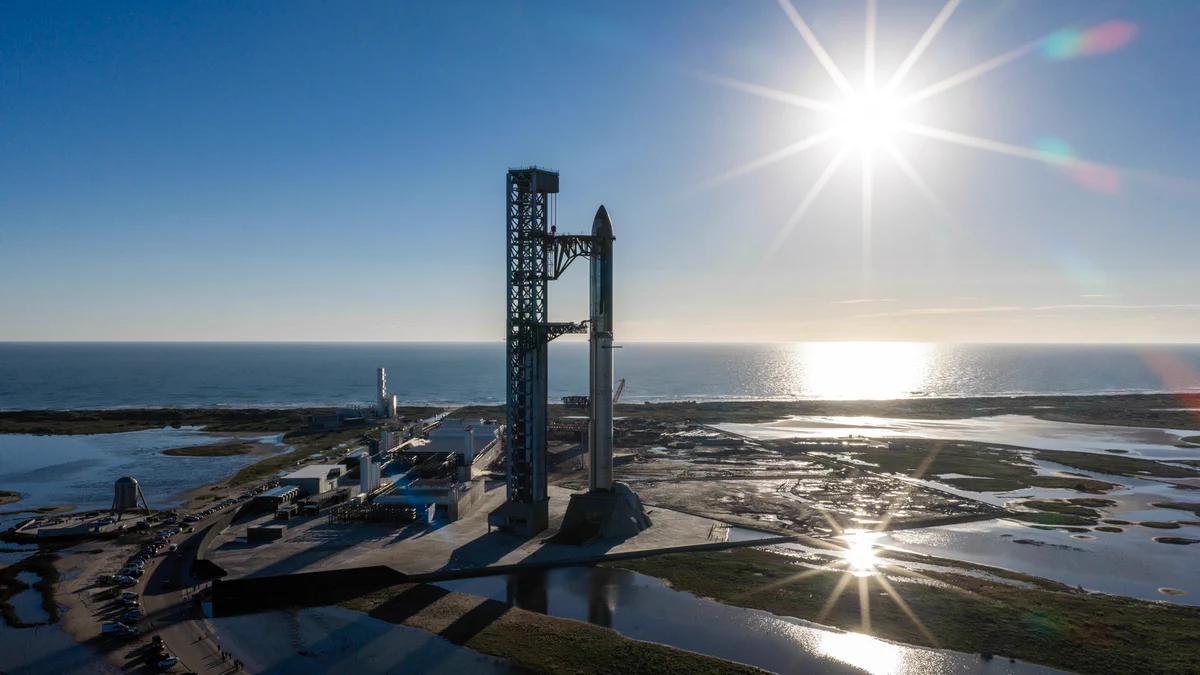
Live webcast of Starship's 15th flight test starts now → xitter.cf/i/broadcasts/2brajgZlO…

Kaistellar retweeted

Looks like a scene from a sci-fi film but it’s just my drive to work this morning
Kaistellar retweeted

My brother’s friend drives a Tesla. This is 3 videos of the same accident. The Tesla, on self drive, sees the approaching car coming from behind at excessive speed and moves out of the way. Driver of speeding car was killed. Amazing technology @elonmusk.

Kaistellar retweeted
Just did a round table review with the Grok @Bot engineering team.
Fixes are being implemented overnight and you should notice a dramatic improvement by tomorrow. If not, reply to this post and we will address any remaining issues right away.
Kaistellar retweeted

DeepMind CEO Demis Hassabis:
"One person who really understands AI will outperform an entire startup team
In 5 years, the people who build with AI will run whole companies with a tenth of the headcount"
Kaistellar retweeted

Elon Musk just hinted at something huge coming from SpaceX next year:
“When we unveil the details of the StarMind computer next year, it will blow people’s minds”
And this is not the first time Elon has talked like this before a major reveal
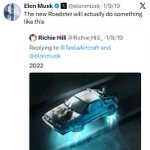
He used similar language around the new Tesla Roadster, and that ended with literally SpaceX rocket engines packed in a car that literally takes off like a rocket, does flips in the air, sticks upside down, and stabilizes itself in the air
So when Elon says StarMind is going to “blow people’s minds,” it’s worth paying attention...excitement is very much guaranteed
The first StarMind systems are going to be deployed next year, with much larger scale targeted after that, which is going to be at an insane scale
Space-based SI compute is about to get very, very huge
Kaistellar retweeted
~100 lasers per satellite, each operating above 10 Tb/s, with over 100k satellites should be able to outcompete undersea cables.
Speed of light in space is ~40% faster than cable and the path is direct, instead of following the outline of land masses.

Elon just teased SpaceX's next-gen V4 @Starlink satellites:
"Starlink version 4 will have 10x the capability of V3 (which itself is 10x better than V2), especially with the long-distance laser links. Our next-gen laser links will be 10-terabits per second. 100x better. And we'll put 10 of them on."

Kaistellar retweeted
More than a dozen flight tests and years of development, with countless hours worked by SpaceX engineers and technicians, all come down to this: the first orbital Starship launch carrying advanced Starlink satellites bound for space.
Watch “Go For Orbit” and experience the moments behind flying the most ambitious Starship mission yet
Kaistellar retweeted

today i learned that Elon is also getting into 3D-printing human organs in space
and the end goal is printing entire replacement hearts and kidneys up there
the reason they do it in space is actually pretty simple:
> an organ only works if it has the exact right shape, down to the tiny blood vessels
> but you can't really print that on Earth
> because freshly printed tissue is as soft as jelly, so gravity makes it sag and the shape collapses
> but obv in space nothing pulls it down, so it holds its shape perfectly
> so they let it grow up there for a couple weeks until the cells knit together and it's firm enough to survive gravity
> then they bring it back home
so far they've only printed small patches of heart, knee cartilage, kidney and liver tissue
but if this works at scale, the 100,000+ Americans waiting on a transplant could get a new organ printed in space instead of waiting for a donor


today i learned that Elon is getting into space drugs
it's called Starfall and it's basically a flying drug lab
> drug companies pack their ingredients into a 10-foot-wide capsule
> a SpaceX Falcon 9 rocket carries it into orbit
> the drugs grow on their own with nobody on board
> then the capsule falls back to Earth and parachutes into the Pacific
the reason they go through all that hassle is that drugs come out way better when they’re made in space
because the tiny crystals they’re made of grow evenly up there instead of lumpy like they do on Earth
take Keytruda, the best-selling drug in the world
scientists grew its crystals on the space station, which helped turn it from a 2-hour IV drip into a 1-minute shot
and the craziest part is that some medicine might only be possible to develop up there
for example: scientists couldn't get clean crystals of a key Duchenne muscular dystrophy protein on Earth
but the ones grown in space finally showed its shape and led to a new drug that went into human trials
so i think space will unlock a whole new class of drugs that are impossible to make on Earth


Kaistellar retweeted

Most people are still using AI the wrong way.
They ask it questions.
Elon Musk just pointed at the right way.
Yesterday, Jason Ginsberg wrote: "Treat Grok Bot like a teammate and give @bot an ambitious task you'd normally give to a new hire."
Elon's answer: "This is the way."
Three words. A whole shift in how we work.
Here's what that looks like in real life.
Scott Billows runs a business with a very traditional sales cycle. Deals that take months to cultivate.
He pointed Grok Bot at his company's tools.
It dug through the past. Surfaced old prospects and customers nobody was calling anymore. Handed them to his sales reps.
Two weeks in, a closed deal.
His words: "Without Grok Bot we most likely would not have reached out to this past customer."
Think about that.
Not a faster search. Not a smarter autocomplete. Not a chatbot.
A teammate that found money hiding in plain sight.
Everyone thought AI would be a better answer machine.
It's actually a new kind of colleague.
Elon put it plainly back in October: "assume you are hiring a super competent employee."
Not a tool you open. Someone you hand the job to.
The team keeps adding powers. Product pages. Order tracking. Payments. Team Bots your whole company can share.
Every week the job description gets longer.
Here's the part almost nobody sees yet.
For all of history, having a team was a privilege. Only the rich, the big companies, the well-connected could delegate.
Everyone else did everything alone.
That wall is falling.
A small shop owner. A single parent. A sailor at sea. Anyone can now say: "Here's the mission. Go."
When everyone gets a team, everyone becomes a builder.
And a civilization of builders doesn't stay small for long.
Stop asking AI questions.
Give it a job.
Kaistellar retweeted
And electrical equipment, cooling, networking and batteries

Elon Musk says the AI boom will hit a WALL by the end of 2026.
He says the whole industry is about to learn a hard lesson in hardware.
Chip output is exploding, but electricity is nearly flat everywhere outside China.
So the two lines cross this year.
He says by the end of the year, we will be making more AI chips than we can actually turn on.
Millions of them pile up with nowhere to plug in.
In his words, the bottleneck for the next year is not chips, it is raw power.
Whoever can turn on the most chips fastest wins the race.
In the end, the AI race comes down to one thing:
Raw electricity.
— Elon Musk (.@elonmusk) on Dwarkesh Patel's (.@dwarkesh_sp) podcast
Kaistellar retweeted

Elon Musk says the AI boom will hit a WALL by the end of 2026.
He says the whole industry is about to learn a hard lesson in hardware.
Chip output is exploding, but electricity is nearly flat everywhere outside China.
So the two lines cross this year.
He says by the end of the year, we will be making more AI chips than we can actually turn on.
Millions of them pile up with nowhere to plug in.
In his words, the bottleneck for the next year is not chips, it is raw power.
Whoever can turn on the most chips fastest wins the race.
In the end, the AI race comes down to one thing:
Raw electricity.
— Elon Musk (.@elonmusk) on Dwarkesh Patel's (.@dwarkesh_sp) podcast
Elon Musk says billion dollar AI companies with money to spend can't build power plants fast enough to meet AI's electricity demand.
Every major power project requires approvals and equipment, including:
• Switchgear
• Gas turbines
• Power plant permits
• Electrical transformers
• Utility interconnection studies
• High-voltage transmission lines
• Specialized turbine blades and vanes
If even one component is delayed, the entire project stalls... leaving AI chips without electricity.
Musk says gas turbines are sold out through 2030, with specialized blades and vanes being the biggest bottleneck.
Building more power plants isn't the quick solution AI companies thought it'd be.
— Elon Musk (.@elonmusk) on Dwarkesh Patel's (.@dwarkesh_sp) podcast
Kaistellar retweeted

Marc Andreessen revealed how Harvard Business School was built on a broken 1941 theory, and how it's now collapsing...
Andreessen co-founded Netscape in 1994 and a16z in 2009.
He has sat on Meta's board since 2008.
He has spent 30 years backing founders and watching managerial CEOs lose to them.
The pattern traces back to one book: James Burnham's The Machiavellians (1941).
Burnham argued every great company had been founder-run.
Henry Ford ran Ford. Bob Noyce ran Intel.
Today, Elon Musk runs Tesla, SpaceX, and Starlink.
Then, he said, something broke.
Between the 1880s and the 1920s, a new philosophy replaced the founder. It was called managerialism.
The professional manager would now hold a portable skill, usable across any business.
The consequences were:
- Harvard Business School
- Stanford Business School
- Management as a universal skill
- The 1970s conglomerate
"That assumes the managers are going to do a good job," Andreessen says.
For 30 years, they haven't.
Managers can run something static, he says. Soup is soup. A bank is a bank. A car is a car.
But when the industry changes, the manager freezes.
Look at SpaceX.
"Imagine being a professionally trained manager, trained at a top management school, working for a rocket launch company, competing with SpaceX."
Then Elon's rockets started landing on their butt.
"Your management skills ... what good are they at that point?"
Andreessen's conclusion:
"You're much more likely to build something important in the 21st century if you start with the founder and train them on management."