

Imperfection is addicting because it's real Reality is an irony maximizer. The most ironic, entertaining outcome is the most likely.
Joined July 2013
- Tweets3.7K
- Following7.5K
- Followers457
- Likes25.8K





My Telegram is 6 years old. Older than 81% of all accounts.
My Age pays $AGE and $GRAM for old accounts. Check yours: myageapp.xyz/r/1192382289-Oi…

5
Watching a ship come down from orbit and drop right into the tower's arms, filmed from the tower itself, is something I never thought I'd see in my lifetime.

3
如果覺得香港越來越難住,可以來越南看看。物價便宜,東西好吃,年輕人多,生活節奏沒那麼緊。

真的很快消失,中小學都已經唔教本土語言,轉入法都唔會再教本土嘅。政治陰謀都好大影響,最聰明醒目既人已經離開香港生活。
跑遍少少,香港個人用戶一直都用唔到最前沿既SI/AI,但唯一可以既就係grok,所以真係好多謝 @elonmusk !
14
"THE LOST KIND" went up on YouTube on Nov 14. Three days later it's sitting at 3.8 million views.
It's a full-length AI dark fantasy movie from VeylornStudios, a channel almost nobody knew last week.
Ryan is a human boy raised by the creatures humans call monsters. The best moments are tiny: a monster haggling at the market ("Four silvers." "Three."), Ryan asking what's in his soup and getting "roots, meat, mushrooms, and I don't know."
Then he goes looking for his father, and it turns into a war between two worlds.
A brand-new channel just out-pulled most studio trailers this week. Would you watch a 2-hour AI movie?
youtu.be/6pbhGtHRTwA

27
Starship 42 spent more than 22 hours in orbit, did 14 laps around Earth, dropped off 26 Starlink satellites, then came home and got casually yoinked out of the sky by the same tower that launched it.


16
The steel ridge on Starship’s body isn’t just a detail. It’s the sole point of support for an entire ship returning from orbit where Mechazilla’s chopsticks only need to close, while the full weight, heat, and fate of the flight rest on those two small ridges.
1
11

Kaistellar retweeted

Why are crypto prices down?
No one knows for sure. Correlation does not prove causation. Here are some potential reasons.
Money shifting to the Anthropic IPO: xitter.cf/ColeMacro/status/21212…
ETF outflows: U.S. spot Bitcoin ETFs saw about $1.9 billion in outflows over seven trading sessions through November 13. Ether funds also saw withdrawals. crypto.news/bitcoin-price-fa…
Security fears: the Binance hack, iPhone-linked crypto wallets drained, Chrome exploit, Microsoft down. These security incidents could make some people less willing to keep funds in crypto.
Hot U.S. inflation has raised expectations of another Fed rate hike. Higher yields and a stronger dollar can weigh on "riskier assets" such as crypto.
Political uncertainty: Midterm results have raised concerns about potentially stricter U.S. crypto policy.
No, Binance did not sell crypto.
I bought crypto in the past few days, as I got some stablecoins recently. (maybe this is the cause 🤣)
Mid-long term, crypto will continue to grow.
Views are my own. Not financial advice.
For future reference, price of BTC hit a low of $62,006 today.


Bitcoin fell 19% into the biggest IPO ever. Now it's down 18% heading into the second biggest.
SpaceX raised $75B when it went public on June 12. In the 50 days before it listed, Bitcoin dropped 19%. Anthropic plans to raise up to $64B when it lists next week, and Bitcoin is down 18% over the same stretch. Overlay the two and they look almost the same.
What happened after the SpaceX IPO is the notable part. Bitcoin bottomed 18 days after the listing, then recovered all the way. By Day 100, it was above where it started.
Bitcoin around the SpaceX IPO:
Day -50 to IPO day: -19%
Low (Day +18): -25%
Day +50: still -20%
Around Day +70: a sharp rally
Day +100: +3.7%
From the IPO-day close to Day +100, Bitcoin gained 28%. From the low, it gained 39%.
The takeaway is that the selling came in the run-up to the listing. The bottom had effectively happened by the IPO, and the recovery came relatively shortly after, and it came all at once.
If Anthropic follows the same pattern, most of the drawdown is behind us, and it could reverse quickly over the next couple of months. And Bitcoin is sitting right at its 200-week moving average.
Map the SpaceX path onto today's price and you get roughly $90k by late February. Markets rarely follow a comparison like this exactly. But we remain very constructive on both the technicals and the fundamentals heading into 2027, and it's not hard to imagine what the narrative would be if anything close to this plays out.



These two ideas from Elon Musk point to one core principle: the deadline you set for yourself largely determines how fast you actually move.
The first is strategic advice. Ask yourself, “How can I accomplish my 10-year plan in 6 months?” This forces your brain to look for completely different approaches - cutting out what isn’t essential, focusing with extreme intensity, and accepting the risk of failure. Even if you fall short, you will still be far ahead of the person who simply accepted that it would take 10 years.
The second is more practical and grounded. People tend to stretch their work to fit the time they are given. When you deliberately compress the deadline to something that feels almost impossible, your focus and productivity rise sharply.
Both reflect the mindset of someone who refuses to accept normal speed. Instead of complaining about time, Elon chooses to compress it, forcing himself and his organizations to operate at a higher level. That is why many people admire him - not only for what he has achieved, but for the way he consistently challenges the limits that most of us have simply accepted.
10
Kaistellar retweeted

Have you ever wondered why catching Starship is so much harder than catching Super Heavy, even though they both return to the same launch tower? 🔥
💡 The answer comes down to four major engineering challenges that make Starship’s recovery fundamentally different 👇
⚡ The first problem is shedding an enormous amount of energy
At hot staging, Super Heavy was traveling at roughly 5,800 km/h (3,600 mph). Starship, meanwhile, had to return from orbital speeds of roughly 27,500 km/h (17,100 mph).
That’s nearly five times faster. Because kinetic energy increases with the square of velocity, each kilogram of Starship at orbital speed carries roughly 22 times the kinetic energy of a kilogram of Super Heavy at separation.
That works out to nearly 30 million joules per kilogram.
Almost all of that energy has to be dissipated before Starship can safely reach the tower.
One option would be to use rocket propulsion to cancel out its orbital velocity. However, scrubbing off roughly 7.7 km/s of speed using Raptor engines alone would require a massive amount of propellant.
The rocket equation makes this approach especially punishing. Every extra kilogram of landing propellant has to be hauled into orbit first, dramatically increasing the fuel needed at liftoff.
Instead, SpaceX uses Earth’s atmosphere to bleed off almost all of Starship’s orbital velocity.
That saves an extraordinary amount of propellant, though it introduces another major hurdle.
🔥 Surviving extreme atmospheric heating comes next
As Starship plunges into the atmosphere at hypersonic speeds, powerful shock waves compress and heat the surrounding air to blistering temperatures.
Thousands of ceramic heat-shield tiles protect its stainless-steel structure from the intense heat.
Simply keeping those tiles attached isn’t enough, though. Superheated gas can seep into the gaps between them, risking damage to the underlying structure.
For Flight 15, SpaceX carried forward upgrades from Flight 14, including extra tile-retention hardware in vulnerable areas and redesigned curved tiles that reduce heating between adjacent tiles.
Because Super Heavy never reaches orbital velocity, its return doesn’t expose it to anything close to the same thermal stress.
And there’s another complication.
A heat shield that survives one reentry isn’t necessarily ready to fly again. Starship’s thermal protection system must eventually withstand repeated missions without major repairs or refurbishment.
That’s critical, since rapid reusability is one of the core reasons SpaceX designed Starship to be caught rather than discarded.
Yet surviving reentry still isn’t enough. Starship also has to arrive at the exact right spot.
🎯 Hitting a precise target from orbit raises the stakes even further
About 56 minutes before the catch, a single Raptor engine fired for just 10 seconds to initiate Starship’s return.
That brief deorbit burn wasn’t meant to eliminate orbital velocity. Instead, it nudged the spacecraft’s trajectory so atmospheric drag could take over the much larger job of slowing it down.
Starship then entered the upper atmosphere thousands of kilometers away over the Pacific Ocean.
From there, its four aerodynamic flaps controlled its orientation and fine-tuned the forces acting on the vehicle.
Super Heavy uses grid fins to steer during its return, but Starship’s flaps have to handle a far wider range of flight conditions.
As Starship decelerates from hypersonic through supersonic and down to subsonic speeds, its guidance system continuously adjusts its attitude and flight path.
The challenge is maintaining the right balance of altitude, speed, and trajectory while aerodynamic forces shift dramatically throughout reentry.
For Flight 15, the return corridor crossed sparsely populated parts of northern Mexico and South Texas.
Starship maneuvered around major population centers in the Rio Grande Valley, passed north of South Padre Island, headed offshore over the Gulf of Mexico, and made its final turn toward Pad 2 at Starbase.
Think about the guidance precision required.
A spacecraft returning from orbit must dissipate nearly all of its immense kinetic energy while threading a carefully controlled trajectory straight back to a single launch tower.
It also has to arrive at a low enough speed, in the proper orientation, and with enough propellant remaining to pull off the final maneuver.
That brings us to the most visually spectacular part of the entire recovery.
🚀 Executing the landing flip with pinpoint precision is the final test
Super Heavy approaches the launch tower already vertical, using its grid fins and Raptor engines to guide its final descent.
Starship comes in belly-first.
It has to rapidly swing its massive frame upright, stabilize its attitude, and align itself precisely between the tower’s mechanical arms.
SpaceX’s official Flight 15 timeline allotted just 18 seconds between the start of Starship’s landing burn and the catch.
During those 18 seconds, three sea-level Raptor engines ignite to kick off the maneuver.
The spacecraft rotates upright while its flight computers constantly regulate engine thrust and vehicle attitude.
The engines then step down from three to two, giving the vehicle finer control as it nears the chopsticks.
Finally, it transitions to a single engine for the last moments of descent before shutting down as the tower takes its weight.
Consider the coordination involved.
The guidance system must balance translation, rotation, thrust, and descent rate while positioning a massive spacecraft within a narrow capture envelope.
Unlike a conventional vertical rocket landing, Starship must first transition from an aerodynamically controlled, belly-first glide to an engine-powered vertical approach.
All of this unfolds within seconds, right after the vehicle has completed one of the most punishing atmospheric reentries ever attempted by a reusable spacecraft.
🧠 What makes SpaceX’s approach so ingenious is how seamlessly the entire recovery system works together
Trying to solve every phase of the return with rocket propulsion would carry a crushing propellant penalty.
Instead, SpaceX delegates the toughest parts of the recovery to systems purpose-built to handle them.
The atmosphere dissipates most of the orbital kinetic energy without consuming onboard propellant.
The heat shield protects Starship from the intense thermal loads of that deceleration.
The four aerodynamic flaps provide the control authority needed to manage its attitude, energy, and trajectory throughout atmospheric flight.
And the Raptor engines take over once aerodynamic control alone can no longer deliver the precision needed for the final catch.
That division of labor allows SpaceX to recover an orbital spacecraft without carrying enough fuel for an all-propulsive return.
Yet the engineering trade-off goes deeper than saving propellant.
SpaceX is shifting much of the cost of returning from orbit away from expendable propellant and toward reusable hardware built to endure extreme thermal and mechanical stress.
The potential economic payoff is enormous.
Cutting back on the propellant reserved for recovery frees up more of Starship’s mass capacity for useful payload. However, that advantage only becomes truly meaningful if the heat shield, flaps, engines, and other systems can survive repeated flights without extensive refurbishment.
That’s why catching Ship 42 is such a landmark milestone.
SpaceX has proven that its thermal protection, aerodynamic controls, propulsion, and guidance systems can work in concert to recover an orbital upper stage right at the launch site.
The next engineering hurdle is proving that the same spacecraft can do it repeatedly.
If SpaceX can bring Starship home, inspect it, refuel it, and launch it again without rebuilding major systems, the economics of getting payload to orbit could change dramatically.
That first catch proves the recovery architecture works. Repeated reflights will determine just how much of its economic potential SpaceX can unlock.
What about sea ships then? Will the maritime shipping industry die off? Or will it continue to exist alongside space transportation? Will smaller countries or countries that are close to each other still prefer sea ships?

11
Elon just cut 60 people from the Grok Imagine team.
This isn’t random cost-cutting.
It’s a clear signal that code-driven video generation is starting to outperform pure diffusion text-to-video models - on both quality and unit economics.
Here’s why the math is shifting:
Diffusion models (Veo, Kling, Seedance, Sora-style) rely on hundreds of iterative denoising steps. Extremely compute-heavy and expensive at scale.
Code-to-video flips the cost structure:
• A coding model writes the actual scene (Manim, Remotion, Blender Python, Three.js…) for a few cents
• The renderer is a traditional, highly optimized engine → near-zero marginal cost
• Need changes? Edit the code and re-render. No full regeneration required
Where it’s already winning:
• Technical and educational explainers → Manim consistently beats diffusion on precision and cost
• Product demos, UI animations, motion graphics → Remotion-style pipelines are often 10-50 cheaper
The copyright angle makes this even more important.
The US and EU make large-scale training on Disney, Hollywood, or Netflix content legally risky.
China is significantly more permissive in practice.
Western diffusion models are increasingly constrained by clean training data.
Code-to-video depends far less on scraped video → a structural advantage for companies operating under stricter copyright regimes.
Elon previously argued that “photons are the highest bandwidth form of communication” and that Imagine was already gross-margin positive.
The layoffs suggest he’s now prioritizing the approach with better long-term scalability and defensibility.
Code is eating video generation.
24
Kaistellar retweeted

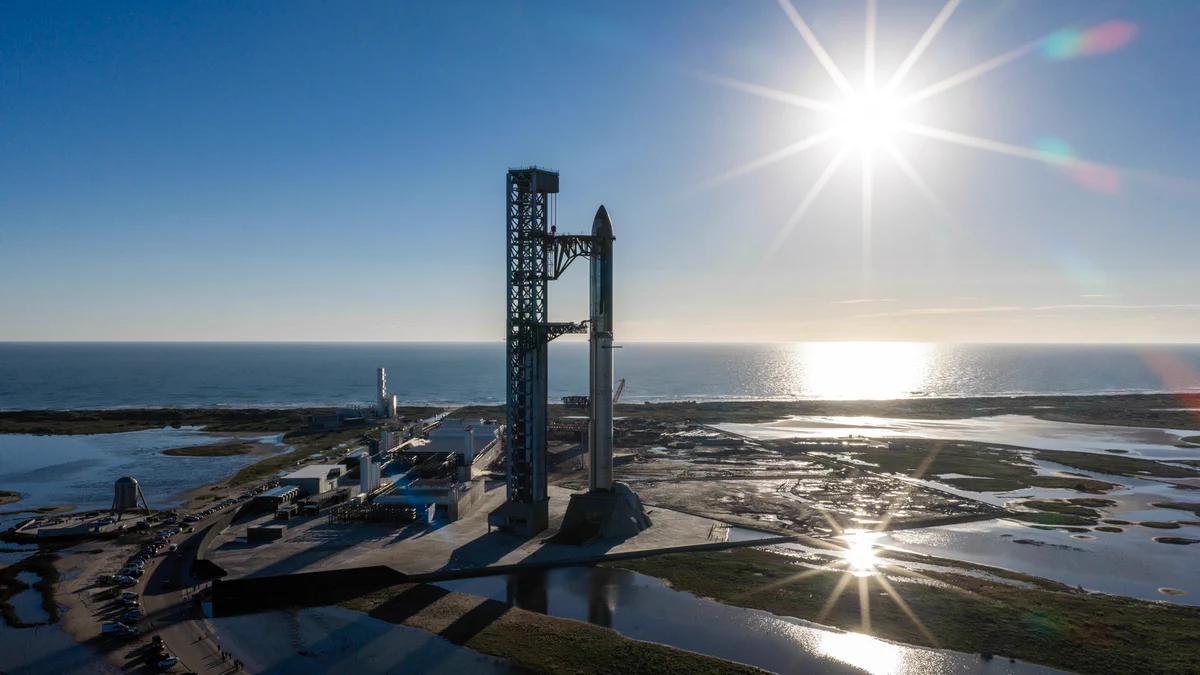
Live webcast of Starship's 15th flight test starts now → xitter.cf/i/broadcasts/2brajgZlO…

Kaistellar retweeted

Looks like a scene from a sci-fi film but it’s just my drive to work this morning
Kaistellar retweeted

My brother’s friend drives a Tesla. This is 3 videos of the same accident. The Tesla, on self drive, sees the approaching car coming from behind at excessive speed and moves out of the way. Driver of speeding car was killed. Amazing technology @elonmusk.
