

Haiku Festival celebrates children thru poetry workshops, readings & events, promotes literacy @haikufest.bsky.social 🦋
Composer, author, poet
Joined October 2013
- Tweets37.9K
- Following365
- Followers921
- Likes73.8K







Regina Baiocchi retweeted

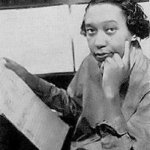
In 1918, as influenza swept through the United States, a young Black woman in rural Pitt County, North Carolina, was caring for sick neighbors with knowledge she had learned long before any university took an interest in her. She knew the plants growing along the Tar River and around her home, and she prepared traditional remedies for people who came to her door seeking help.
Her name was Emma Dupree, born in 1897 near Falkland, North Carolina. Her parents had been born into slavery, and she grew up during the Jim Crow era, when segregation and poverty severely limited access to medical care for many Black families, particularly in rural communities. From childhood, Dupree learned to identify plants such as sassafras, mint, mullein, catnip, tansy, rabbit tobacco and maypop, knowledge that was passed down through experience and community tradition.
Neighbors began calling her “Little Medicine Thing,” a name that reflected how closely she became associated with healing. She prepared herbal mixtures in ordinary household containers, including jars that had once held food, and explained to people how she believed the remedies should be used. She did not charge for them, although people sometimes brought gifts such as honey or molasses. Her reputation was built over decades of helping people in her community.
What makes Dupree’s story especially remarkable is what happened late in her life. In 1979, when she was in her early eighties, East Carolina University’s School of Medicine filmed her discussing the plants she knew and the traditional remedies she prepared. The roughly 40-minute film, “Little Medicine Thing: Emma Dupree, Herbalist,” preserved knowledge that had largely existed outside formal medical institutions.
Her story is not a claim that traditional remedies replaced modern medicine. It is a reminder that Black communities developed and preserved their own systems of knowledge, especially when discrimination and limited access made professional healthcare difficult to obtain. Dupree’s expertise came from generations of observation, practice and community trust.
She later received the Brown-Hudson Award from the North Carolina Folklore Society in 1984 and the North Carolina Heritage Award in 1992. Emma Dupree died in 1996, just months short of her 99th birthday. Today, her legacy survives not only in historical recognition, but in the remarkable record of an elderly Black woman whose lifetime of knowledge was finally documented for future generations.


Hard to believe, here i am limping thru my 13th trip around the sun on #Twitter
Happy Balloon Day to moi and everyone who’s still here 🎈🎈🎈
Do you remember when you joined X? I do! #MyXAnniversary

I am over the moon to have my “Muse for #Orchestra” on the @Grammy nominated CD, “Endeavor.” To all voting members: My #Muse and my #Music and I, the #composer, thank You 🗳️🎶✍🏽❤️
Hear here albanyrecords.com/catalog/tr…


Regina Baiocchi retweeted

“As great as is the light above us—greater by far is the light within!”
~ Hopi,

Regina Baiocchi retweeted

This month marks The 500th anniversary of the arrival of the first recorded enslaved Africans to what is now Winyah Bay near what would eventually become the city of Georgetown, SC—where or museum is located.
Less than 35 years after Christopher Columbus’s first voyage, the actions of Spanish colonists incited what was perhaps one of the earliest rebellions of enslaved Africans anywhere in the New World, writes historian Daniel C. Littlefield, PhD, in the forward for “Yes, Lord, I Know the Road: A Documentary History of African Americans in South Carolina, 1526 - 2008.”
Much is made of 1619 as being the arrival of enslaved Africans, but that was to English North America. In September 1526 there was what would became San Miguel de Gualdape—a short-lived colony of about 600 people was in Spanish North America.
The colony included sailors, Spanish colonists (including women and children), several priests, enslaved indigenous people, and some 100 of the first African people documented to be brought to this land—taken either directly from West Africa or through the brutal slave markets of the Caribbean.
The expedition was led by Lucas Vasquez de Ayllon, who had permission from the Spanish crown to establish a colony in North America. But the leading ship smashed into a shoal, an underwater sandbank, becoming grounded on the shifting sands that makes parts of Winyah Bay a nightmare to navigate.
Supplies were now scarce due to the loss of the flagship and its cargo in the shallows of Winyah Bay. The wreck was an omen of the unraveling to come. After abandoning an attempt to create “New Andalusia’s” first settlement, the colonists traveled south along the coast to try again.
Scholars place San Miguel de Gualdape at various sites along the coast of South Carolina and Georgia, but only an archaeological discovery will resolve this debate. (We’re going with the colony moving south along the South Carolina coast to Beaufort and Port Royal Sound area.)
In these harsh conditions, the colonists soon began to sicken and die. De Ayllon was among those who perished. After his death, some of the Spaniards mutinied and imprisoned the town’s authorities. The Africans set fire to the leader’s house, and they killed some colonists.
By mid-November 1526 the colonists had abandoned San Miguel de Gualdape. Of the expedition’s initial 600 participants, only 150 survived.
This doomed expedition predates the arrival of the first recorded enslaved Africans in Point Comfort, Virginia, in English North America by nearly 100 years, and the Pilgrims at Plymouth Rock, Mass., by 94 years.
Modern historians have identified between 250 and 313 total uprisings and planned conspiracies spanning from the colonial era through the Civil War in the continental U.S. And the first—and perhaps only successful one on what is now U.S. soil—was by the African freedom seekers of the San Miguel de Gualdape settlement.
There is no record of what happened to the Africans. We do know that they weren’t included in the ship’s manifest for the return trip back to Spain. They may have lived with the indigenous people or started a maroon community of their own.
Sources:
zinnedproject.org/news/tdih/…
uscpress.com/Yes-Lord-I-Know…
statehousereport.com/2016/03…
postandcourier.com/georgetow…
gilderlehrman.org/ap-african…

ALT Spanish map of Rio Jordan, now know as the Pee Dee River that flows into Winyah Bay and the city of Georgetown, SC.
Regina Baiocchi retweeted

One of the greatest American writers of the twentieth century died in a county welfare home and was buried in an unmarked grave in a segregated cemetery.
Her neighbours took up a collection for the funeral. It was not enough for a headstone. Zora Neale Hurston. 1960.
She had published four novels, two books of folklore, an autobiography and dozens of essays. She had travelled the South and Haiti collecting stories that would otherwise have been lost entirely. She wrote "Their Eyes Were Watching God" in seven weeks.
By the 1950s she was out of print and working as a maid in Florida. A newspaper found her in 1950 cleaning a house, and ran it as a human interest story: a once-famous author, scrubbing somebody's floor.
She had a stroke and went into the St Lucie County welfare home. She died there in January 1960, aged sixty-nine.
She was buried in the Garden of Heavenly Rest, the Black cemetery in Fort Pierce, in a plot nobody marked.
Thirteen years later a young writer named Alice Walker went to Florida to find her. She walked into a waist-high field of weeds and snakes, shouting Zora's name, until her foot sank into a depression in the ground.
She bought a headstone. It reads: "A Genius of the South."
Hurston is now taught in every American literature course in the country. Her books were out of print for a quarter of a century, and she went into the ground with nothing on top of her.


Regina Baiocchi retweeted

As Nolan Wells’ family continues seeking answers about his death, I think of my uncle, Reverend A.D. King, my father’s only brother.
Uncle A.D. was found dead in his swimming pool in July 1969. Fifty-seven years later, my family still carries unanswered questions about the circumstances of his death.
There are details that make Nolan’s family’s questions painfully familiar. Both were strong swimmers. Uncle A.D. had a bruised forehead and no water in his lungs. Nolan also had bruising on his head and no water in his lungs or airways. His cause and manner of death remain undetermined.
I pray Nolan’s family receives a thorough, transparent investigation and the answers they deserve. I pray they do not have to live with decades of unanswered questions as my family has.
Grief is already a heavy burden. Families deserve truth, and their loved ones deserve to be remembered for the fullness of their lives.
#NolanWells #ADKing


Regina Baiocchi retweeted

How Model Quannah Chasinghorse Brought Powerful Style to the United Nations
“I came to the UN because Indigenous voices belong in these spaces—because for too long, we’ve been silenced or pushed aside.”


Regina Baiocchi retweeted

The City Leader Who Revived Central Park Dies at 85
Gordon J. Davis was New York City’s first Black parks commissioner and one of the most effective. He also led Lincoln Center.
nytimes.com/2026/10/05/arts/…

