

A Research Group (Christos Katsanos, PhD, PI) at Arizona State University investigating the biology behind muscle health impairments in humans with obesity.
Phoenix, Arizona
Joined October 2023
- Tweets407
- Following117
- Followers104
- Likes336




Human Obesity Metabolism (HOMe) Lab retweeted

New @ISMCopenhagen publication with Casper @Soendenbroe on human muscle fibre type remodelling with age and exercise🏃💪
Nice to see such simple observations still have value!
#myotwitter
link.springer.com/article/10…

Human Obesity Metabolism (HOMe) Lab retweeted

The Ozempidemic — is social media telling the full story? cavalierdaily.com/article/20…

Human Obesity Metabolism (HOMe) Lab retweeted

Shaping the future of muscle health: A clinical nutrition perspective and research agenda
clinicalnutritionjournal.com…

Human Obesity Metabolism (HOMe) Lab retweeted

New in PNAS: Age-related muscle decline is driven by mitochondrial dysfunction—but exercise can remodel mitochondria, restore muscle function, and reduce frailty, even later in life.
pnas.org/doi/10.1073/pnas.25…

Human Obesity Metabolism (HOMe) Lab retweeted

Back-to-back papers from @AlexKeeble5 and @saragonzalezve . Working with @MVFranchi , we show that limb suspension and post-ACLR muscle exhibit fundamentally different muscle transcriptomic signatures.
journals.physiology.org/doi/…

Human Obesity Metabolism (HOMe) Lab retweeted

Super proud to share the first original research paper from my new lab:
"Weight loss with GLP-1 medicines does not result in a disproportionate loss of muscle mass or function in obese mice and humans"
cell.com/cell-reports-medici…

Human Obesity Metabolism (HOMe) Lab retweeted
Weight loss with GLP-1 medicines does not result in a disproportionate loss of muscle mass or function in obese mice and humans
cell.com/cell-reports-medici…
Human Obesity Metabolism (HOMe) Lab retweeted

We're happy to announce we've achieved our #Subscribe2Open goal in 2026! Ten of our @APSPublications primary research journals will be open to readers worldwide with no article processing charges for authors. Learn more: ow.ly/Ungf50YwORt

ALT Colorful abstract ear shape next to the text 'aps subscribe to open' with an open lock icon integrated into the word 'open'.
Human Obesity Metabolism (HOMe) Lab retweeted

A very important point is the safety point: this paper shows you can significantly decrease myostatin levels throughout a person’s lifetime, and the result is more muscle, less fat, increased strength, and no noticeable side effects

Humans with function-disrupting variants in the myostatin gene (MSTN) have increased skeletal muscle mass and strength, and less adiposity
nature.com/articles/s41467-0…

Human Obesity Metabolism (HOMe) Lab retweeted

Please join this exciting webinar that I will be moderating, featuring distinguished speakers from @NIH @ncats_nih_gov and @emulateinc - about Organ-on-a-Chip, Clinical-Trials-on-a-Chip, Tissue Chips in Space, Biofab 3D Tissues. Register for free & share (01/22 @ 1 pm ET)

Next at APS:
• W/@VO2Master: Dynamic Metabolic Testing in Elite Athletes & Tactical Performance 1/21
• W/@emulateinc: Organ Chips in Translational Physiology Res. 1/22
• W/@faunabio: Physiological Resilience & Insights in Animal Models 2/17
ow.ly/WEWs50WuRYU
📷: @istock

ALT Open planner showing the word 'WEBINAR' written on a page beside a digital pen, a tablet, and a cup of coffee on a wooden table.
Human Obesity Metabolism (HOMe) Lab retweeted
Next at APS:
• W/@VO2Master: Dynamic Metabolic Testing in Elite Athletes & Tactical Performance 1/21
• W/@emulateinc: Organ Chips in Translational Physiology Res. 1/22
• W/@faunabio: Physiological Resilience & Insights in Animal Models 2/17
ow.ly/WEWs50WuRYU
📷: @istock
ALT Open planner showing the word 'WEBINAR' written on a page beside a digital pen, a tablet, and a cup of coffee on a wooden table.
Human Obesity Metabolism (HOMe) Lab retweeted

And now, for the top Muscle Paper of 2025 as voted by all of you. After 70+ votes, the winner is the following: #1. Moreno-Justicia et al., Nat. Comms., Human skeletal muscle fiber heterogeneity beyond myosin heavy chains. tinyurl.com/38v8v2bk

Human Obesity Metabolism (HOMe) Lab retweeted

Sex differences in the metabolism of glucose and fatty acids by adipose tissue and skeletal muscle in humans | Physiological Reviews | American Physiological Society journals.physiology.org/doi/…

Human Obesity Metabolism (HOMe) Lab retweeted

Sarcopenia ≠ low muscle mass
Main differences between causes, dysfunctions, and outcomes associated with sarcopenia and low muscle mass👇
#muscle #sarcopenia #Health
link.springer.com/article/10…

Human Obesity Metabolism (HOMe) Lab retweeted

Mechanisms of Testosterone's Anabolic Effects on Muscle and Function: Controversies and New Insights
Always worth reading Bhasin's thoughts on this topic
doi.org/10.1210/endrev/bnaf0…


Human Obesity Metabolism (HOMe) Lab retweeted

We agree when @marionnestle, @astokespop, and @davidbsarwer say don't neglect #ObesityPrevention. But we are suspecting that market dynamics are doing more to bend the curve than many health advocates. It's time to catch up with reality.
conscienhealth.org/2025/12/w…

Human Obesity Metabolism (HOMe) Lab retweeted

Dietary fat disrupts a commensal-host lipid network that promotes metabolic health @Cell_Metabolism cell.com/cell-metabolism/ful…
Human Obesity Metabolism (HOMe) Lab retweeted

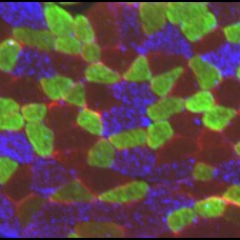
The way your muscles are built determines how your body handles energy; lean muscle uses it, while obese muscle is prone to storing it.
What you’re seeing
This image compares skeletal muscle from lean and obese individuals, revealing how changes in fiber type, mitochondria, and lipid content shift muscle from an energy-burning organ to an energy-storing one.
🟡 Lean muscle has more type I oxidative fibers, which are dense with mitochondria and glucose transporters. These fibers efficiently oxidize fat and glucose, maintaining insulin sensitivity and steady energy output.
🟡 Obese muscle contains fewer oxidative fibers and more type II glycolytic fibers, which tire quickly and accumulate fat droplets within the tissue. Mitochondrial content is lower, GLUT4 expression declines, and overall fuel utilization becomes inefficient.
🟡 This imbalance creates a ripple effect; less glucose uptake, impaired fat oxidation, reduced insulin sensitivity, and higher risk of metabolic and cardiovascular disease.
The bigger picture:
Skeletal muscle is one of the body’s most powerful metabolic regulators. Its cellular composition reflects lifestyle, nutrition, and physical activity. Exercise reverses these changes by increasing oxidative fiber content and mitochondrial density, transforming muscle back into a metabolic engine that supports long-term health.
Citation:
Serrano, N., Hyatt, J. P. K., Houmard, J. A., Murgia, M., & Katsanos, C. S. (2023). Muscle fiber phenotype: a culprit of abnormal metabolism and function in skeletal muscle of humans with obesity. American Journal of Physiology – Endocrinology and Metabolism, 325(6), E545–E556.

Human Obesity Metabolism (HOMe) Lab retweeted
Calling all #physiology researchers! Share your latest discoveries at #APS2026. Submit your abstract by 12/3 and be part of the science shaping the future: ow.ly/zksn50Xjmot #WeArePhysiology #ProfDev

ALT Logo for the American Physiology Summit scheduled April 23-26, 2026, in Minneapolis with colorful gradient text on a dark background.
Human Obesity Metabolism (HOMe) Lab retweeted

FIBRAS MUSCULARES Y METABOLISMO LIPÍDICO MUSCULAR EN LA OBESIDAD
Dos de los mejores trabajos de revisión que podéis leer sobre la cuestión:
journals.physiology.org/doi/…
journals.physiology.org/doi/…
Vínculos activos en mi página de Facebook, Twitter y Threads.

