In this review, we describe the pathophysiology of sarcopenia and cachexia, explore their definitions in the context of geriatric oncology, and examine assessment methods used in clinical practice. Great job Makis. @lsuchse @acsmnews @skppowers
doi.org/10.1007/s40266-025-0…
Brian A. Irving, PhD, FACSM, CCD retweeted
Recent paper from our group on muscle growth and local muscular endurance
link.springer.com/article/10…
Brian A. Irving, PhD, FACSM, CCD retweeted
🚨Faculty Job Postings🚨
The Department of Health and Kinesiology @UUtah is hiring for multiple faculty lines. See thread for link for each search. Review of applicants will begin on November 1, 2026. Please distribute to your networks!
Brian A. Irving, PhD, FACSM, CCD retweeted
A huge thank you to Fred Kolkhort and Dan Cannon for a wonderful collaboration on this review in Expl Physiol. Using the Wagner diagram to generate hypotheses about exercise intolerance in heart transplant recipients. physoc.onlinelibrary.wiley.c…
Captain Bradford Crain, the new commanding officer of the UVA Naval ROTC, brings 35 years of leadership experience spanning Navy aviation, working with NATO, carrier strike group operations and senior strategic planning. uvatoday.me/4xXxnX8

ALT Captain Bradford Crain in military uniform standing outdoors at the University of Virginia. The uniform features various patches and the text "U.S. Navy" and "Crain." An American flag is visible in the background, along with trees and part of a building. The accompanying text reads, "After 35 years of military leadership, Captain Bradford Crain brings lessons learned around the world to UVA’s Navy ROTC program" with a UVA Today logo in the top left.

Brian A. Irving, PhD, FACSM, CCD retweeted
You train to protect your mitochondria from aging. And it works. Exercise preserves mitochondrial energy production into your 90s. But a 2025 study by @GGouspillou and colleagues reveals there's a second mitochondrial function that declines with age no matter how much you exercise.
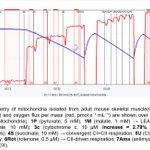
Gouspillou and his colleagues at Université du Québec à Montréal divided 139 men aged 20 to 93 into active and inactive groups. They measured physical performance, muscle composition, and three critical mitochondrial functions: energy production, free radical generation, and calcium handling capacity.
The conventional wisdom says mitochondria wear out with age, becoming a leaky metabolic engine that produces more oxidative stress and becomes less capable of taking nutrients and converting them into ATP.
Direct measurement across 73 years of aging shows that's not necessarily correct.
Mitochondrial energy production stayed completely stable in active participants from their 20s through their 90s.
A 90-year-old who stayed active had mitochondria that produced energy like a 20-year-old. Inactive individuals showed declining energy production, but it tracked with how little they moved, not how many years they'd lived.
When normalized to mitochondrial content, the differences disappeared entirely. The study suggests that aging doesn't break energy production. Physical inactivity reduces how many mitochondria you maintain. Each individual mitochondrion works just as well at 90 as at 20.
Free radical production, blamed for decades as an aging driver, showed no increase with age. Active participants actually produced more free radicals than inactive individuals while displaying superior strength and performance. The free radical theory of muscle aging didn't hold.
The study had some interesting headlines:
• Physical activity protects performance across the lifespan but doesn't completely prevent age-related decline
• Mitochondrial energy production depends on activity level, not chronological age
• Free radical production remains stable with aging and reflects mitochondrial health, not damage
• Mitochondrial calcium handling capacity drops sharply after age 60 in both active and inactive individuals
• Reduced calcium handling correlates with lower muscle mass, strength, and performance
• Deterioration accelerates dramatically after 60 rather than declining gradually
The calcium handling finding represents the first mitochondrial function that deteriorates with aging regardless of exercise. Mitochondria normally act as calcium buffers, absorbing excess calcium to keep cells functioning properly. When this buffering capacity fails, a protective channel called the permeability transition pore opens too easily.
Think of it like a circuit breaker that's supposed to trip only during emergencies but starts tripping at lower and lower thresholds. When the pore opens prematurely, stored calcium floods back into the cell, triggering a cascade of damage.
This calcium release activates pathways that break down muscle protein faster than the body builds it back up. It generates bursts of oxidative stress that damage cellular components. It releases mitochondrial DNA that the immune system mistakes for bacterial invasion, triggering inflammation.
Each pathway drives muscle loss without requiring energy failure. The mitochondria still produce ATP normally. They've just lost the ability to prevent calcium from activating destructive programs that eat away at muscle tissue.
The study measured calcium handling by exposing muscle mitochondria to calcium loads and tracking retention. Both active and inactive participants showed declining capacity, but the pattern matters. Calcium handling remained relatively stable from ages 20 to 60, then dropped sharply after 70.
Calcium retention capacity correlated with thigh muscle mass, knee strength, walking distance, and mobility performance. It also correlated with GDF15, a stress molecule that rises with aging and predicts worse health outcomes. This suggests calcium handling directly influences muscle health and systemic aging markers.
Physical activity protected functional performance. Active participants outperformed inactive individuals on strength and mobility tests across all age groups. But both groups showed age-related declines. Exercise delays deterioration but doesn't eliminate it.
Muscle fiber composition revealed how activity and aging affect muscle differently. Active young adults had more type I endurance fibers that stayed stable across decades. Inactive individuals showed fiber type changes suggesting nerve disconnection from muscle that active individuals avoided.
Intermuscular fat, the marbling that accumulates in muscle tissue, increased with aging in both groups. But physical activity provided protection in later decades. Older active individuals had less fat infiltration than older inactive individuals, though the protective effect only emerged after years of consistent activity.
The implications challenge decades of research direction. Drug development targeting mitochondrial energy production in aging muscle produced zero effective treatments. This study suggests those efforts addressed the wrong problem. Energy production itself doesn't decline with healthy aging.
Calcium handling deterioration appears to be the actual mechanism driving muscle loss.
Restoring calcium buffering capacity or preventing the permeability transition pore from opening prematurely may represent more effective intervention points than trying to boost energy production or mitochondrial numbers.
There are some limitations that stand out when you read the paper:
First, only men participated. So findings may not apply equally to women.
Participants were relatively healthy community-dwelling adults, not people with severe muscle wasting. The design prevents establishing whether calcium handling failure causes muscle loss or just accompanies it.
With that being said, the data fundamentally reframe what aging does to muscle. Energy failure on per mitochondria level isn't the driver in healthy aging. Inactivity reduces mitochondrial numbers while aging leaves energy production intact. The exception, calcium handling deterioration occurring regardless of activity, appears to be where aging actually operates.
Great job by Makis and team.
Associations of CT‐Derived Skeletal Muscle Index and Density With Postoperative Outcomes Following Colorectal Cancer Surgery - Papadopoulos - 2026 - Journal of Cachexia, Sarcopenia and Muscle - Wiley Online Library onlinelibrary.wiley.com/doi/…
Brian A. Irving, PhD, FACSM, CCD retweeted
In the latest episode of the EdLab podcast, @UVAKinesiology professor Jason Allen breaks down how nitric oxide & exercise can support heart health after menopause.
Listen here: education.virginia.edu/news-…
Brian A. Irving, PhD, FACSM, CCD retweeted
Welcome, new faculty! 🔶⚔️🔷
We’re excited to welcome six new faculty members to UVA EHD for the 2026–27 academic year, bringing expertise across education, health, and human development.
Meet our new scholars & read about their research: education.virginia.edu/news-…
Lactate Metabolism: Separating Correlation From Causation - Blaze - 2026 - BioEssays - Wiley Online Library onlinelibrary.wiley.com/doi/…
Brian A. Irving, PhD, FACSM, CCD retweeted
#Research by Alexandre Gonçalves (@FMUPorto) and colleagues observes that a #ketogenic diet and ketone salts differentially improve #cardiometabolic complications in an HFpEF rat model 💊 🍽️
See the findings👇️
buff.ly/r9vmOsi
Brian A. Irving, PhD, FACSM, CCD retweeted
'Species-specific impact of hyperglycaemia-induced cardiac ROS: Not all mammals are created equal'
Adam R. Wende (@UABPathology) presents this #TranslationalPerspective on the recent work of Lu et al. (2026) ✍️ 👇️
buff.ly/diUMKku
Brian A. Irving, PhD, FACSM, CCD retweeted
Delayed molecular aging, preservation of energy metabolism and enhanced exercise response in exercise-trained human muscle nature.com/articles/s43587-0…
Brian A. Irving, PhD, FACSM, CCD retweeted
Craig Ventner has died at 79 nature.com/articles/s41587-0…
Come join this fantastic course on the use of isotope tracers in metabolic research. #isotopes #mitochondria #metabolism #protein
Brian A. Irving, PhD, FACSM, CCD retweeted
Getting over ANOVA: estimation graphics for multi-group comparisons
nature.com/articles/s41592-0…
Impact of Prior Bariatric Surgery Versus Immediate Total Knee Arthropl... sciencedirect.com/science/ar…
Brian A. Irving, PhD, FACSM, CCD retweeted
🚨 🔬RIGHT OUT OF THE OVEN!. Our last study published today!.
Even in apparently healthy people, sedentarism was associated with a major impairment in mitochondrial function.
We used skeletal muscle biopsies, high-resolution mitochondrial respirometry, metabolomics, proteomics, targeted mitochondrial lipidomics including cardiolipin analysis, ROS assessment and ¹³C tracer-based oxidation flux analyses to examine how sedentarism affects mitochondrial function, substrate oxidation and cellular fuel metabolism.
1) One of the key findings was an almost 50% reduction in MPC1 (the mitochondrial pyruvate carrier) that allows pyruvate to enter the mitochondria and be oxidized.
Our data suggests that glucose dysregulation could happen at the mitochondrial level, years before insulin resistance happens at the surface level, leading to type 2 diabetes. I call this an "inside-out" theory of glucose dysregulation.
2) The second important finding is that we can also correlate the mitochondrial dysfunction, metabolic flexibility and decrease in MPC1 with cardiopulmonary exercise testing (CPET) plus lactate testing, which I call "CPELT" -cardiopulmonary exercise lactate testing. With this test we could indirectly assess in a non-invasive way, mitochondrial dysfunction in healthy people years before metabolic disease shows up and intervene with specific exercise prescription and nutrition.
Link to the study here!👇
mdpi.com/3042-5158/2/3/10
#Mitochondria #MetabolicHealth #PhysicalActivity #Sedentarism #MPC1 #Metabolism #Healthspan #Longevity #DiabetesPrevention #HealthyAging
Brian A. Irving, PhD, FACSM, CCD retweeted
To solve aging, we first need to measure it. Excited to share our study in @NatureMedicine! Different cell types age at different rates within our body. From a tube of blood, we track aging across 40+ cell types, from immune cells to neurons, revealing signatures that forecast disease risk and resilience. @wysscoray 🧵1/9
Brian A. Irving, PhD, FACSM, CCD retweeted
IBEC2028 announced. Australia welcomes you! Geelong is the destination. Lock in the dates and keep your eyes open for more.
#IBEC2028
Brian A. Irving, PhD, FACSM, CCD retweeted
Proud of this collaborative work coming from the TRAJECTOAGE Project 😎😍😁
Take a little time to check out this #ShortReport #ArticleinPress from @uw_medicine, The other half of the sprinting coin: The neuromuscular profile of a 91-year-old female #world-record sprinter (Marta Colosio et al.):
ow.ly/YIlU50Z4qcF