

Professional investor who (still) believes in rigorous research and analysis. Views, opinions, mistakes are my own - and not investment advice. JD/MBA.
South Florida, USA
Joined July 2020
- Tweets4.6K
- Following661
- Followers697
- Likes873





Grey Value Management retweeted

Whoever believes that fundamentals are not what drive stock markets should take a look at Japan!
Japan's corporate reform is delivering a massive uplift in cash returns to shareholders.
Dividend payout ratios have increased, and ongoing buybacks are returning excess capital to shareholders at levels never before seen.
A big factor in the buyback trend is the unwinding of historical cross-shareholding relationships.
So not only do shareholders experience improving capital efficiency and the benefit of a reduced share count, their companies are also becoming incrementally more subject to market discipline.
For wholesale/sophisticated investors, to learn more about the opportunities created by Japan's corporate reform, visit Senjin Capital's website, sign up to our newsletter, or book a call with us.

Grey Value Management retweeted

This paragraph from $META's inside 10-q filling may mark the official announcement that the funding environment for the AI buildout has turned the corner. (HT: Barclays' Alexander Altmann)

Grey Value Management retweeted

Holy shit, Indonesia raised it's deposit facility rate by 25 basis points.
They then CUT the share of deposits banks must keep at the central bank from 9% to 8% from November 1 and then to 7% from December 1.
Do they think this is what's going to fix everything?
Let me explain.
The deposit rate hike's objective is to stop the rupiah from falling. Essentially, if you pay the banks more to hold rupiah, they presumably won't sell it. Right?
But a reserve cut has the opposite effect, it frees about Rp190 trillion (about $10 billion) for banks to lend.
If you've caught on, they are basically trying to hold up their currency with their left hand, and then flooding the banks with their right?
Governments typically do this when they have two problems and one instrument.
Ok, so then if Rp190 trillion frees, who get's it?
The banks. And it's the three banks the sate controls. These are the same ones that hold most of the systems deposits. (Mandiri, BRI, BCA.)
It doesn't take a genius to see what they're doing: the state squeezes its banks for dividends, the stock crashes, the central bank hands the same banks $10 billion of liquidity, the stock recovers.
Talk about stockholm syndrome.
Let's see how this develops.


𝗪𝗵𝗮𝘁 𝗘𝘂𝗿𝗼𝗽𝗲𝗮𝗻 𝗨𝗻𝗶𝗼𝗻?
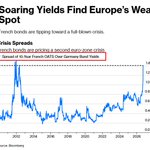
A quick reminder following Sumitomo Mitsui DS' recent wholesale regurgitation of its position in French government bonds:
𝗧𝗵𝗲 𝗲𝘂𝗿𝗼 𝗮𝗿𝗲𝗮 𝘀𝗵𝗮𝗿𝗲𝘀 𝗮 𝗰𝘂𝗿𝗿𝗲𝗻𝗰𝘆 𝗮𝗻𝗱 𝗮 𝗰𝗲𝗻𝘁𝗿𝗮𝗹 𝗯𝗮𝗻𝗸 - 𝗶𝘁 𝗱𝗼𝗲𝘀 𝙣𝙤𝙩 𝘀𝗵𝗮𝗿𝗲 𝗮 𝘁𝗿𝗲𝗮𝘀𝘂𝗿𝘆.
At the end of the day, the European Union isn't so unified.
(This is stating the obvious.)
What is less obvious is why they chose to move the money into Bunds.
Fundamentally: keep euro duration, cut French sovereign risk. But they chose Euro duration over USD duration.
𝗛𝗮𝘀 𝗱𝗲𝗺𝗮𝗻𝗱 𝗳𝗼𝗿 𝗨𝗦𝗚 𝗱𝗲𝗯𝘁 𝗳𝗿𝗼𝗺 𝗳𝗼𝗿𝗲𝗶𝗴𝗻 𝗿𝗲𝘀𝗲𝗿𝘃𝗲 𝗺𝗮𝗻𝗮𝗴𝗲𝗿𝘀 𝗽𝗹𝗮𝘁𝗲𝗮𝘂𝗲𝗱?
If one so suspects, mind the gap.
The convenience yield is partly why the US can borrow cheaply, so its erosion feeds into a higher term premium and more sensitivity to fiscal news - particularly when it comes to the hedge funds, pensions and insurers that are now a much bigger share of the holders.
Translation: Ignore that tremor you just felt at your own financial peril.
(And bring on the inevitable flood of articles re. the basis trade)
#investing #stocks #bonds #EU #Euro #USD #debt #interestrates #Germany #France

An addendum to my repost of @QTRResearch's excellent post.
The text immediately below is from an op-ed I wrote on the same topic for the @WSJ in March 2020 (link below).
"By imposing QE and forcing interest rates to basement levels, the central bankers have effectively reduced the yield curve to a ladder with all the middle rungs ripped out.
The monetary authorities deliberately deprived investors of the decent returns they could once achieve with bonds offering modest yields at reasonable risk. Frustrated and in need of income, many investors have essentially surrendered, taking on more risk than they should because they see no alternatives. Their only options have been either to take on too much credit risk by lending to dubious borrowers or assume excessive interest-rate risk by owning too many ostensibly safe bonds that will plummet in value in the event that interest rates escalate.
Investors have been willing to reach for yield primarily because they have been conditioned to believe that bonds are inherently safer than most alternatives, including equities. But what if that isn’t necessarily the case?
Much of the risk comes down to price, and quantitative easing has inflated bond prices to the point that many are downright dangerous."
wsj.com/articles/bonds-arent…
This quoted post is unavailable.
"Maybe money was simply too cheap for truth to matter."
@QTRResearch
This quoted post is unavailable.
𝗥𝗮𝘁𝗲 𝗦𝗽𝗶𝗸𝗲𝘀 𝗮𝗻𝗱 𝗦𝗽𝗶𝗹𝗹𝗼𝘃𝗲𝗿 𝗘𝗳𝗳𝗲𝗰𝘁𝘀
If you don't understand the feedback loops driving the market, you don't understand the market.
When there's less demand for bonds, prices naturally fall. And when prices on bonds fall, the interest rates those bonds pay to investors rise. And when rates rise, there's often 𝘮𝘰𝘳𝘦 selling on the part of forced sellers.
Consider:
The U.S. market for mortgage-backed securities (MBS) is massive, holding over $11 TN to $15 TN in outstanding securities and ranking as the second-largest fixed-income market in the US after U.S. Treasuries.
The Fed was once the biggest buyer of those mortgage bonds, and it didn't hedge its interest rate risk. But when it stepped back from the market in 2022, private investors amped up their buying, and those private investors 𝘥𝘰 hedge.
Among the big forced sellers of long-term Treasuries this week have been hedge funds and real estate investment trusts, which hold large portfolios of said mortgage-backed securities.
As borrowing costs rise, Americans become more reluctant to pre-pay their mortgages. This extends the timeline over which the mortgages are paid off, so investors holding mortgage-backed securities have to sell other long-term debt such as Treasuries to compensate for the shift.
Sell-offs typically trigger the need to reduce risk in other parts of investors' portfolios.
While these spillover effects are common in a big sell-off, there are usually investors willing to step in and buy bonds at cheap prices, stabilizing the market.
Which leaves us with the ultimate question of the day:
𝗪𝗵𝗲𝗿𝗲 𝗮𝗿𝗲 𝘁𝗵𝗼𝘀𝗲 𝗶𝗻𝘃𝗲𝘀𝘁𝗼𝗿𝘀 𝘁𝗼𝗱𝗮𝘆, 𝗮𝗻𝗱 𝘄𝗵𝘆 𝗮𝗿𝗲𝗻'𝘁 𝘁𝗵𝗲𝘆 𝗯𝘂𝘆𝗶𝗻𝗴?
#interestrates #investing #realestate #mortgagerates #stocks #bonds #debt #inflation

“they didn’t regulate. They notarized the carcass.”

The life company is a state license. The money is in Bermuda. The fee is onshore. The shortfall shows up as a cap on your death benefit.
That’s not capitalism finding a bid. That’s why insurance commissioners exist.
PHL: $2B hole, RICO complaint, $300k cap.
If regulators only arrive for the rehabilitator’s press release, they didn’t regulate. They notarized the carcass.
Grey Value Management retweeted

This is ABSOLUTELY wild. The reverse mirror image is so accurate it's almost scary. Very scary.
The inverse of the 10yr yield is.... $MCD.
What a sight.

Grey Value Management retweeted

🦔A two-tower office complex in downtown Philadelphia was appraised at $471 million in 2019. A judge just approved its sale for $70 million. The 85% decline means even the AAA-rated bonds backed by the property will take losses, only the third time that's happened since the 2008 financial crisis.
Pimco, one of the largest bond managers in the world, holds roughly $58 million across the deal and faces over $35 million in losses. The building was 93% leased in 2020. It's 28% leased today. Over 30 other top-rated single-asset CMBS deals are now below 85 cents on the dollar, per Bloomberg.
My Take
AAA is supposed to mean you always get paid. Pimco bought that rating and is about to recover 44 cents on the dollar. The building lost 65 points of occupancy in six years and the agencies didn't downgrade the bonds fast enough for it to matter. The ratings were wrong in 2008 on housing and they were wrong here on offices.
These single-asset deals were Wall Street's favorite product for a decade. One building, one loan, slap a AAA on the top tranche. A KBRA analyst called it "binary." Either everything pays or everything defaults. That structure hides risk behind a credit rating until it's too late to get out. And the BofA head of CMBS strategy said this is just the start. Chicago, Denver, Portland, downtown LA, none of those office markets have recovered and the loans are coming due over the next two years. At a 5.13% 10-year yield, no one is going to refinance a half-empty office tower. The owners walk away, the bondholders eat it, and the AAA stamp was worth exactly what it was in 2008.
Hedgie🤗

This is potentially huge - not an overstatement…

For the first time in Japan a Tokyo court has upheld an activist’s request for a (provisional) injunction against the implementation of a takeover defence measure that was approved by a vote of the target company’s shareholders.
This is a major win for 3D Investment Partners over the management of the company in which it has invested – Toho HD.
Underperforming management teams in Japan often seek to use takeover defence measures to entrench themselves by preventing economically-minded shareholders from gaining too much voting influence and thus effecting managerial change.
As the full judgment is not yet available, we do not know whether the reasoning used will have broader ramifications or be limited in its scope. Additionally, the judgment was delivered by a court of first instance, and the company has stated it will appeal the decision.
Despite this, the judgment could be so important that it is worthwhile discussing in detail - see my full write up at the link in the comments.


Grey Value Management retweeted

“BOND KING” Gundlach takes aim at $CRWV and $NVDA after one of the first Nvidia GPU ABS maturities were reached. CoreWeave was unable to pay back the ABS as costs and debt/liabilities soared to over $70 billion since IPO 18 months ago. They had to sell shares and use convertible notes.
CoreWeave bonds have failed and are above 13% as executives selloff $10 billion of shares in 2026 alone (30% of company) all while the company lost access to traditional financing leaving equity and bond holders “holding the $75 billion bag of losses”.
“Gundlach took it a step further and compared it to issuing asset-backed securities that were guaranteed by bananas. "Why not do a 30 year ABS deal backed by warehouses of bananas? It's OK, they'll be newly engineered bananas of unknown life," he added.”

Grey Value Management retweeted

Here's the newest private equity structure (bottom to top):
> Layer #1 - a portfolio company borrows to fund its own buyout.
Normal course, fine.
> Layer #2 - the buyout fund that owns it borrows against its portfolio.
Ok, guess that's reasonable.
> Layer #3 - a secondaries fund buys a stake in that buyout fund, then borrows against the stake.
Getting spicier 🔥
> Layer #4 - that borrowing gets sliced into senior and junior, and the senior piece is sold to insurers, rated just high enough for them to own.
Voila. Perfection. 🤌

Interesting commentary, but his observation re. the curve is key:
The 2s/10s curve is only 30 basis points away from inverting.

Not once in the post-WWII era, outside of 2022 when the American consumer was swimming in a $2 trillion pool of fiscal stimulus checks, has the Fed managed to avert a recession when they tightened policy into an energy price shock. The 2s/10s curve is only 30 basis points away from inverting. Keep an eye on it. Nobody, including the Warsh-led Fed, believes a recession is even a remote possibility. A big surprise is coming their way. As we saw with the Internet boom in the early 2000s, AI is not bigger than the business cycle.

𝗔𝗜-𝗺𝗶𝗻𝗴 𝗟𝗼𝘄 𝗼𝗻 𝗔𝗜 𝗔𝗰𝗰𝗼𝘂𝗻𝘁𝗮𝗯𝗶𝗹𝗶𝘁𝘆
In an excellent article from FT financial commentator and next James Bond @rbrtrmstrng, he writes “Trust is built on accountability, but the AI companies — from hyperscalers like Google to model builders like OpenAI and Anthropic — have been unable and unwilling to make themselves accountable.”
It's perhaps more accurate to say that they have been unwilling to be fully transparent.
I draw the distinction because 𝗮𝘂𝘁𝗵𝗲𝗻𝘁𝗶𝗰 𝗮𝗰𝗰𝗼𝘂𝗻𝘁𝗮𝗯𝗶𝗹𝗶𝘁𝘆 𝗿𝗲𝗾𝘂𝗶𝗿𝗲𝘀 𝘀𝗼𝗺𝗲 𝗲𝘅𝘁𝗲𝗿𝗻𝗮𝗹 𝗲𝗻𝗳𝗼𝗿𝗰𝗲𝗺𝗲𝗻𝘁 𝗺𝗲𝗰𝗵𝗮𝗻𝗶𝘀𝗺.
By way of example, the National Transportation Safety Board (NTSB) has the legal authority to investigate civilian aviation accidents. It is legally responsible for civil aviation accident oversight.
While the NTSB still maintains final authority and oversight, it frequently delegates initial fact-gathering or field investigations to the Federal Aviation Administration (FAA).
But the FAA also has the legal regulatory power to ground aircraft, issue emergency airworthiness directives, or suspend pilot certificates.
𝗪𝗵𝗼 𝗵𝗮𝘀 𝘁𝗵𝗲 𝗽𝗼𝘄𝗲𝗿 𝘁𝗼 𝘀𝘂𝘀𝗽𝗲𝗻𝗱 𝗔𝗜 𝗺𝗼𝗱𝗲𝗹𝘀 𝘁𝗵𝗮𝘁 𝗵𝗮𝘃𝗲 𝘁𝗮𝗸𝗲𝗻 𝗱𝗮𝗻𝗴𝗲𝗿𝗼𝘂𝘀 𝗮𝗰𝘁𝗶𝗼𝗻𝘀?
Nobody.
And until that gap in oversight is addressed, any talk of accountability in the AI industry is just that - talk...
Here's the link to Rob's article: ft.com/content/f5325951-7049…
#investing #stocks #bonds #AI #artificialintelligence @OpenAI @AnthropicAI @grok @GoogleAI @MistralAI
@katie_martin_fx

𝗧𝗵𝗲 𝗜𝗻𝘀 𝗮𝗻𝗱 𝗢𝘂𝘁𝘀 𝗼𝗳 𝗜𝗻𝗱𝗼𝗻𝗲𝘀𝗶𝗮
I had a really interesting exchange with Ruth Carson at @Bloomberg yesterday regarding recent developments in @Indonesia's economy and financial markets, which we have for many years followed and invested in at @GreyValue.
As I related to Ruth, the Prabowo administration needs to continue to address investor concerns if they're going to have any credibility with the financial community, but I think it's important to view their situation in context.
𝗠𝘂𝗰𝗵 𝗼𝗳 𝘁𝗵𝗲 𝗴𝗹𝗼𝗯𝗲 𝗵𝗮𝘀 𝗱𝗲𝘃𝗼𝗹𝘃𝗲𝗱 𝗶𝗻𝘁𝗼 𝗮 𝗸𝗶𝗻𝗱 𝗼𝗳 𝗠𝗼𝗻𝗲𝘁𝗮𝗿𝘆 𝗮𝗻𝗱 𝗙𝗶𝘀𝗰𝗮𝗹 𝗠𝗼𝗻𝗼𝗰𝘂𝗹𝘁𝘂𝗿𝗲.
The debt, deficit, and monetary policy profiles of a striking number of countries - including many of the largest developed nations - have converged.
Yields on US, British, French and German long-dated bonds have all reached levels not seen in more than a decade, and Japanese 30-year yields are close to an all-time high. And the swaps markets indicate globally synchronized rate hikes going forward.
Indonesia has its own unique issues, many of which can be traced back to the massive infrastructure spending during the Widodo regime.
Financial pressure has for some time been building in the SOEs, as well as the state-owned banks that are exposed to them. We expect Danantara will be pulled into that financial clean-up effort.
But 𝗶𝗻 𝗺𝗮𝗻𝘆 𝗿𝗲𝘀𝗽𝗲𝗰𝘁𝘀 𝗜𝗻𝗱𝗼𝗻𝗲𝘀𝗶𝗮 𝗶𝘀 𝗷𝘂𝘀𝘁 𝗮𝘁 𝘁𝗵𝗲 𝗳𝗮𝗿 𝗲𝗻𝗱 𝗼𝗳 𝗮 𝘄𝗮𝘃𝗲 𝘁𝗵𝗮𝘁 𝗶𝘀 𝗶𝗺𝗽𝗮𝗰𝘁𝗶𝗻𝗴 - 𝘁𝗼 𝘃𝗮𝗿𝘆𝗶𝗻𝗴 𝗱𝗲𝗴𝗿𝗲𝗲𝘀 - 𝗲𝘃𝗲𝗿𝘆 𝗻𝗮𝘁𝗶𝗼𝗻.
And the more pressure the aforementioned global trends exert on their economy, the more difficult it will naturally be for them to rectify their financial and economic issues.
@Indonesia is a truly fascinating place. If you're interested in learning more, "Indonesia Etc. - Exploring the Improbable Nation" by @ElizabethPisani is a fantastic introduction. It's on Amazon.
𝙎𝙚𝙢𝙤𝙜𝙖 𝙨𝙪𝙠𝙨𝙚𝙨, 𝙄𝙣𝙙𝙤𝙣𝙚𝙨𝙞𝙖!
Read Ruth's piece - it's very good:
bloomberg.com/news/articles/…
#investing #stocks #bonds #developingeconomies #emergingmarkets #EM #debt #interestrates #indonesia #PanduSjahrir


