

Dubai, United Arab Emirates
Joined August 2014
- Tweets6.4K
- Following177
- Followers73
- Likes2.6K









Kevyn retweeted
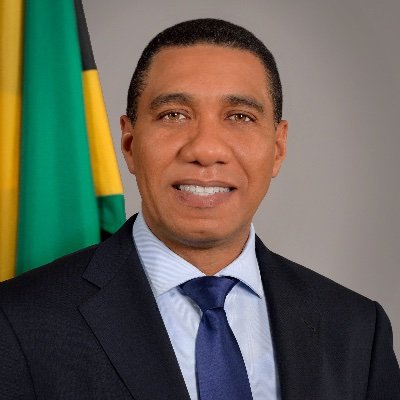
Today, we reopened the Accident and Emergency Department at Cornwall Regional Hospital’s main building, restoring emergency services to the facility for the first time since 2017.
The upgraded department is twice the size of the previous A&E facility and is equipped with two operating theatres, two minor procedure rooms, a 10-bed observation unit, a trauma bay, isolation rooms, a CT scanner and digital X-ray services.
The relocation of emergency services to the main building will also make room for an additional 35 beds, increasing the hospital’s capacity to care for patients.
As one of Jamaica’s three Type A hospitals and the principal referral centre for western Jamaica, Cornwall Regional plays a critical role in our public healthcare system, serving families across St. James, Trelawny, Hanover and Westmoreland.
There is more work ahead to fully restore the hospital, but we remain committed to improving healthcare services and ensuring that Jamaicans receive the quality care they deserve.
Kevyn retweeted

Bukele did not just clean the streets of San Salvador.
Bukele followed the criminals and hunted them down.
He followed them to the United States. He followed them to Europe. He followed them to every corner where they ran to hide. He followed them to every country where they thought they were safe.
MS-13 and Tren de Aragua thought distance would protect them. They thought borders would protect them. They thought American cities and European capitals would hide them. They were wrong.
Bukele understood the root. The root is not just the kid with the knife in San Salvador. The root is the boss in Los Angeles. The root is the boss in Madrid. The root is the network that sends orders, money, and fugitives back into El Salvador to keep the country bleeding.
Those fugitives made El Salvador ungovernable from the outside. They sat in America. They sat in Europe. They ordered murders back home. They ordered extortion back home. They lived free while Salvadorans lived in cages.
Bukele ended that game. Bukele cut the head off the snake.
He proved that sovereignty does not stop at your border. Sovereignty follows your enemy. Justice follows your enemy.
A small country in Central America taught the superpowers how to fight organized crime. The superpowers were harboring the criminals. El Salvador was hunting them.
That is dismantling the problem from the root.
Kevyn retweeted

INSANE: Footage shows aftermath of the Atlantic Asphalt tanker crash into the American Heritage river cruiser on the Mississippi River in New Orleans.
129 passengers were on board at the time of the crash.
This is horrifying. Pray 🙏🏻


Kevyn retweeted
Take a look inside the improved Accident and Emergency Department at Cornwall Regional Hospital!
Departmental Nurse Manager Henry takes us on a tour of the upgraded facility, which features a new registration and waiting area, treatment rooms, two operating theatres, a trauma bay, isolation rooms, a CT scan and X-ray unit, and spaces to support patients and their families.
The improved facility is designed to provide a more comfortable environment, better patient care and improved services for the people of western Jamaica.
Watch as Nurse Henry takes us through the new and improved A&E Department!


Kevyn retweeted

Somesh Sharma has been named the 2027 Jamaica Rhodes Scholar. The announcement was made on Thursday at King’s House in St Andrew by Custos Rotulorum of Kingston, Steadman Fuller.
Read more: jamaica-gleaner.com/article/…

Kevyn retweeted

The U.S. Army sniper credited with 33 confirmed enemy kills survived six years serving in one of America's most elite military units. But after leaving the battlefield, Nicholas Irving faced a personal battle that nearly cost him his life.
His enemies knew him as “The Reaper,” while his fellow Rangers recognized him as one of the most effective snipers in their battalion. Yet the battle that nearly destroyed him began after he returned home.
Irving enlisted in the U.S. Army straight out of high school in 2004, determined to earn a place in the elite 75th Ranger Regiment. The journey was brutal. Years later, in an interview, he recalled that his selection class began with 85 candidates, but only seven graduated. He was one of them. Assigned to the 3rd Ranger Battalion, Irving progressed through demanding combat positions, serving as a machine gunner, assaulter, designated marksman, and sniper team leader. He also became the first African American sniper in his battalion.
During six years of military service, he deployed repeatedly to Iraq and Afghanistan, experiencing the realities of warfare that few civilians could fully understand. His defining deployment came in Afghanistan during the summer of 2009. According to his published military memoir, Irving was credited with 33 confirmed enemy kills during that deployment, a figure his publisher describes as a battalion record. His teammates and commanders gave him the nickname that would follow him throughout his life: “The Reaper.” His memoir also recounts a dangerous confrontation with an enemy sniper known as “The Chechnian,” one of the encounters that helped establish his reputation.
From the outside, Irving's military career appeared extraordinary. He had survived dangerous missions, earned the respect of fellow Rangers, and developed skills that made him one of the most recognizable American snipers of his generation. But surviving combat did not mean returning to civilian life would be easy.
When Irving left the Army, the structure that had defined his existence disappeared. There were no more missions to prepare for, no daily routines built around the men beside him, and no simple way to leave his wartime experiences behind. In a deeply personal interview with PBS, Irving revealed the seriousness of his struggles. He battled alcohol dependence and went through two rehabilitation programs. At one of his lowest moments, he recalled sitting with a bottle of whiskey and a pistol containing a single round. He felt like a burden. The man who had survived years of combat was now struggling to find a reason to keep living.
But that night became part of an unexpected turning point. Irving began writing notes on his computer. Those notes eventually developed into a journal, which became the foundation of his bestselling memoir, “The Reaper.” Writing helped him share experiences that had previously remained largely trapped in his memories.
However, Irving later explained that the greatest transformation in his life came from something entirely different. His son was born on November 28, the same date as Irving's birthday. He described his son's arrival as the moment he discovered a new purpose. After years of measuring success through military missions and objectives, he now had someone whose future depended on him. He wanted to provide his child with the kind of fatherhood he felt had been missing from his own upbringing.
His books went on to become bestsellers, he appeared on television, and he established HardShoot, a business focused on precision-shooting instruction. But perhaps his most meaningful achievement had nothing to do with a rifle.
For years, Nicholas Irving had been known by a nickname associated with taking lives. The turning point he described after leaving the Army came when he found a reason to dedicate himself to protecting, loving, and raising one.
The world knew him as “The Reaper.”
His son gave him another identity.
Dad.

Kevyn retweeted

Over five uninterrupted and unedited minutes of PNP disruptive behavior in Parliament.
Turn up the audio and zoom in if you must.
Kevyn retweeted

A whole community is celebrating the sending home of two alleged criminals! The Kamreds are silent! @JAForJustice
Kevyn retweeted
The PNP does not care about the money spent; it is all a sham! This whole thing is to try and get @MarkJGolding elected...

Kevyn retweeted

Respect moments in football ❤️
The most shocking one? Haaland stepping in to save Enzo Fernández. 🫡
What a moment!


