

Developing scientifically researched game and wildlife management techniques, to improve biodiversity across the countryside.
Joined August 2022
- Tweets1.1K
- Following3.1K
- Followers1.2K
- Likes689





GWCT Science retweeted

‘Field Drainage: The Foundation of Regenerative Agriculture?’
In the final live webinar in the @EnvFarmersGroup Knowledge Hub Project, we will be exploring the vital role of drainage through the launch of our new field drainage trial.
Register here: us06web.zoom.us/meeting/regi…


“Environmental safeguards like so‑called ‘fish discos’ aren’t blockers to growth — they enable it responsibly.” — Tessa Wardley, The Rivers Trust, partner in the Missing Salmon Alliance (alongside GWCT)
🔗 Read the full blog: greenallianceblog.org.uk/202…

🐞Spotted, round and shiny, ladybirds are arguably one of the few beetles everyone can recognise.
Delve a little deeper however, and the harlequin ladybird has got to be one of the most confusing and contested species found in the UK.
Find out more:
gwct.org.uk/blogs/news/2025/…

🔴Do you recognise this Red-listed farmland species?
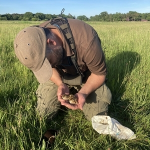
🐦Our researchers are investigating disease in Tree Sparrows potentially contributing to their declines. Each bird is gently cheek-swabbed and then released.
This work is carried out by fully licensed bird ringers.
Amid many reports of species declines, it’s refreshing to share some good news:
The redshank population is continuing to thrive in the Avon Valley thanks to the conservation work of the GWCT and local wildlife managers -> gwct.org.uk/news/news/2025/o…
All birds handled under license.

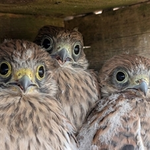
"For me, that hovering silhouette has always been a symbol of the countryside - Familiar yet thrilling... But behind the elegance lies a more fragile story... they are now Amber-listed as a species of conservation concern."
Read about our Kestrels work:
gwct.org.uk/blogs/news/2025/…

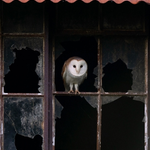
Barn Owls are a magical sight across our countryside and across the GWCT our scientists are working hard to support their populations.
Read our blog on the importance of providing homes for Barn Owls: gwct.org.uk/blogs/news/2025/…
Photo credit: Oly Berriman

Black Grouse breeding on the North York Moors for the first time in 200 years! 🐣
@BBCNews reported on the fantastic reintroduction work our uplands research team has been involved with!
See here, skip to ~13:00-15:30 minutes: bbc.co.uk/iplayer/episode/m0…


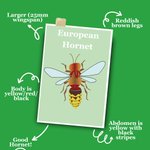
Despite their larger than life and terrifying reputation Asian hornets are actually smaller and less brightly coloured than our docile native hornet species.🐝
Correct identification is crucial! 🔍
For more information read our blog:
gwct.org.uk/blogs/news/2025/…


Did you spot our Fisheries Scientists on @itvnews?
The team spoke about the decline of #wildsalmon and how #farmers are working together to improve #river conditions 🐟
Watch is back here: itv.com/watch/news/scientist…


Don't miss our webinar this Wednesday 24th of September 2025 ‼️
Inside Farmer Clusters: Lessons from Europe and the UK 🌱
The FRAMEwork project piloted Farmer Clusters across 9 countries and now the results ready to share!
Find out more here
gwct.org.uk/blogs/news/2025/…
Our Farmland Ecology research team has shared a new blog, amongst other crucial insights, she offers a first-hand perspective on why hedgerows are so important for wildlife and farming 🌱

Curious how we're working with farmers to boost biodiversity in the countryside? 🌾🐝
I just wrote a blog for @GWCT about my research on pollinators & wild plants in farmland this summer
Read it here 🌱👇
gwct.org.uk/blogs/news/2025/… @GWCTScience

Did you see this paper⁉️DNA sequencing has uncovered specialised gut microbes in red grouse, never before described by science. Findings could help improve grouse health and survival.
gwct.org.uk/game/research/sp…

Lovely footage from recent Grey Partridge Counts in Sussex 😍

Counting #greypartridge at our @Gameandwildlife long-term study site in Sussex, England, is always a highlight of my field season. This is our 58th year, of which I have been part of the last 20. Having a large covey walk past close by gets me excited every time.
🌱New publication from the Framework project: Forming and managing a Farmer Cluster for improved farmland biodiversity in Europe.
The study across nine European countries explores setting up a cluster and strategies for success!
Read:
besjournals.onlinelibrary.wi…
@RachealNichols

#Redgrouse numbers in Scotland down 35% in 2025 due to poor 2024 breeding season📉
GWCT Dr Nick Hesford & Dr Felix Meister spoke to @bbcalba & @BBCRadioScot about the results.
Listen here: bbc.co.uk/sounds/play/m002dm…
More info: gwctadvisoryscotland.co.uk/r…

Incredible footage from our Uplands team!😱
While monitoring #RedGrouse nests the team found a young female #adder inspecting the egg remains...🐍
This is nest from a #radiotagged hen in the red grouse project. Luckily for the grouse the nest had hatched 4 days earlier!🐣
First nest of newly hatched #cornbunting chicks has been found for 2025! 🐣
These are part of a #nest monitoring project in our #farmlandecology department.
The project aims to better understand key parts of their ecology, such as their fledging success and diet. 🪱🐛

Did you spot our #conservationists on ITV news⁉️
Our #BlackGrouse Translocation Project in the Uplands was featured! 💚
Black Grouse lekking behaviour is a special sight and hopefully this project will bring it back to more of the UK.
If you missed it:
itv.com/news/2025-04-25/effo…

GWCT Science retweeted

⏰ Time is ticking for Curlew in Wales
The Curlew Connections Wales Project is fighting to save the Curlew #WorldCurlewDay