

The Global Network on Extremism and Technology (GNET) is an academic research initiative backed by @GIFCT_official, a special project delivered by @CSNS_UK.
Joined November 2019
- Tweets2.1K
- Following144
- Followers13.9K
- Likes761


Today, Sergey Elkind examines the extent to which the Islamic State in Iraq and al-Sham (ISIS) has developed the intent and capability to conduct offensive cyber operations.
gnet-research.org/2026/10/15…

In a new analysis, Aamir Hayat looks into how Islamic State Khorasan Province (ISKP) distributes cryptocurrency donation addresses across text, image and machine-readable layers.
gnet-research.org/2026/10/14…

Today, Valdemar Balle and Dr Tore Hamming examine what the Fagersta school attack reveals about the True Crime Community’s (TCC) evolving reach in Scandinavia.
gnet-research.org/2026/10/12…

🔗As part of GNET’s LatAm series on the crime-terror nexus in Latin America, Dr Adriana Marin explores how technological innovation is reshaping the crime-terror nexus through digital finance, encrypted communications and AI: gnet-research.org/2026/10/01…

🔗 Drawing upon Meta’s Dangerous Organizations and Individuals (DOI) policy, Rebecca Fainberg's Insight in the GNET Crime-Terror Nexus series explores how separating terrorist and criminal enforcement creates gaps that these groups can exploit.
gnet-research.org/2026/09/30…

🔗 In part two of GNET’s Crime-Terror Nexus series, Cecilia Polizzi maps the specific mechanisms through which cartel content evades existing tech platform moderation, exploring what this misalignment means for minors and the implications for platforms.
gnet-research.org/2026/09/29…

🔗 As part of GNET’s series on the Crime-Terror Nexus in Latin America, Matilde Gamba investigates how Mexican cartels adapt drone tactics from the Russo-Ukrainian War.
gnet-research.org/2026/09/28…

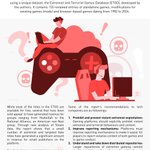
Today, Dr William Allchorn and Dr Elisa Orofino propose a four-part framework for preventing and disrupting extremist influence in gaming spaces.
gnet-research.org/2026/09/21…

In this new Insight, Benjamin Mok and Saddiq Basha examine the Tacloban school shooting, its contested links to 764, and how the attack was absorbed into a transnational online culture of shooter glorification and nihilistic violence. Read it here: gnet-research.org/2026/09/18…

🗓️ Join GNET at our upcoming webinar: ‘At the Nexus of Crime and Terror: Exploring Emerging Challenges for Tech Platforms in Latin America’ on Wednesday, 30 Sept at 16:00 BST/11:00 EDT.
For more details and to register, please follow the link below ⤵️
gnet-research.org/event/gnet…

Today, Ashreet Acharya examines what factors drive the localisation and mainstreaming of jihadist propaganda in Indian digital spaces and analyses its implications for technology platforms and counterterrorism efforts.
gnet-research.org/2026/09/16…

Today, Alessandro Bolpagni and Grazia Ludovica Giardini analyse pro-IS non-branded material produced with CapCut by examining some common features of the detected audiovisual products and how they are shared within the editing platform.
gnet-research.org/2026/09/14…

In a new analysis, Dr Sadia Sulaiman examines how TTP’s growing drone capability is transforming its operational reach and tactics, increasing Pakistan’s counter-terrorism challenges in the borderland regions of Afghanistan-Pakistan.
gnet-research.org/2026/09/10…

Our latest Insight by Paula M. Núñez-Guerra examines how jihadist aetiological material in Roblox games can foster identification with jihadist groups among young players.
gnet-research.org/2026/09/02…

Against the backdrop of the 2026 Iran War, Kye Allen explores accelerationists’ admiration for authoritarian and totalitarian ‘anti-Western’ regimes in the Global South, unpacking its manifestations, core motivational drivers, and points of division.
gnet-research.org/2026/08/31…

In our latest Insight, Nathan Heath examines why terrorist and violent extremist exploitation of frontier AI remains underrepresented in AI risk frameworks, and proposes dedicated red teaming, threat intelligence and governance capacity to close the gap.
gnet-research.org/2026/08/21…

Today, Dr Ghada Soliman examines how Hezbollah sustains its financial resilience through AQAH, Iranian support, hawala networks, cryptocurrencies and online gambling, and argues that these channels expose gaps in current counter-terror finance frameworks. gnet-research.org/2026/08/19…

Today, Carl Peterson and Harold Chambers examine the growing IS-linked drone instruction ecosystem, tracing how technical guidance is evolving, circulating across platforms and intersecting with a rise in drone-related attack plots.
gnet-research.org/2026/08/17…

Daria Alexe examines how AI could lower barriers to CBRN terrorism. Drawing on chatbot testing and documented extremist activity, she explores how AI may reshape early-stage preparation and what this means for platform governance and counterterrorism. gnet-research.org/2026/08/12…

Grazia Ludovica Giardini, Alessandra Pugnana and Eleonora Ristuccia examine how AI-generated ‘slop’ can embody violent content, from fruit-and-vegetable gore to extremist aesthetics, and explore its potential to normalise violence or desensitise audiences: gnet-research.org/2026/08/10…
