

Assoc. Director and Sr. Policy Analyst, Frontier Group, part of @TPINNetwork. Transport, energy and climate policy, mostly.
Boston, MA
Joined August 2013
- Tweets13.3K
- Following1.3K
- Followers2.6K
- Likes10.3K


Pinned Tweet
Our 8th annual State of Renewable Energy dashboard w/@EnvAm is live! Check out how your state ranks in adoption of wind, solar, electric vehicles and more. frontiergroup.org/resources/…

There is a kind of modeling that would be really useful right now: honest, unbiased scenario modeling that enables the public and decision-makers to explore the many “what ifs” of this deal, assess its risks and ID the factors that really matter. You won’t see this.

We’re used to treating models with 1-2 vaguely defined (or intentionally skewed) scenarios as predictive of complex policies in world that no longer operates by some of the old rules. But models can be useful for things other than prediction, if they are used correctly.
Tony Dutzik retweeted

Proponents arguing that Title IV isn't a serious risk are having it both ways. It can't be all powerful against Trump and a wet noodle against presidents that follow. To the contrary, the last word goes to whoever gives permission/authorization first. Trump bats first.
Tony Dutzik retweeted
I rarely take to X anymore, but the clean energy crowd still hangs out here I guess, so here goes... here's why BAJAA Title IV’s project certainty provisions are dangerously sloppy and an insane transfer of power to Trump and corporations.
Would love to see a response to this analysis of “permitting reform’s” potential corrosive effect on *all* federal regulation beyond “no, it won’t.” jeremysymons.substack.com/p/…
A provision of "permitting reform" that transportation folks should be aware of: The bill eliminates environmental review for repair or replacement projects in the "immediate vicinity" of existing infrastructure that do not increase capacity by >20%. epw.senate.gov/public/_cache…

Same thing is true of the I-5 Rose Quarter Improvement project in Portland. hdrinc.com/portfolio/i-5-ros…

Urbanists coming to this issue need to bear in mind that all of these provisions also apply to highway expansions in dense urban neighborhoods and other disruptive projects that are (unfortunately) much more common across the US than congestion pricing.

Remember those giant binders that blocked congestion pricing? BAAJA fixes that
- The bill would force agencies to finalize environmental assessments in one year.
- If the highway department dragged its feet like it did under Trump 1.0 NYC could sue them and get a court to compel action.
- The review would also be shorter: BAAJA gets rid of unnecessary alternatives analysis and the need for litigation proofing.
- If New Jersey (or anybody else) sued the NEPA review they wouldn't be able to delay or block congestion pricing.
- DOT would be barred from revoking any approval for congestion pricing & NYC could take legal action if they tried
xitter.cf/AidanRMackenzie/status…
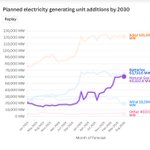
New from us at @FrontierGroupUS : Planned additions of on-grid natural gas power plants have tripled since 2023 and are up >40% in 2026 alone. A main culprit: Skyrocketing electricity demand from data centers.
frontiergroup.org/resources/…

This is a follow-on from our April analysis finding a dramatic slowdown in planned retirements of our nation's dirtiest coal-fired power plants. The end result: a dirtier grid for years to come with more air, water and climate pollution. frontiergroup.org/resources/…

Welp, looks like the nation's paper of record is already taking limited modeling results wildly out of context to exaggerate the emissions benefits of a bill that has not been fully modeled and *cannot* be accurately modeled. nytimes.com/2026/09/30/clima…

The two analyses are (so far as I can tell);
1) a LinkedIn post from RFF that looks only at the grid impacts and doesn’t model the bill language,
2) a Greenline analysis that looks only at some grid impacts, doesn’t model the bill and doesn’t publish its BAU emission results.
Important context that environmentalists have twice in the last dozen years accepted "deals" that supported more fossil fuel production on the basis of climate/energy modeling, only to have both turn (at least partially) sour. nrdc.org/bio/christy-goldfus…

(And no, I don't blame the modelers for getting the IRA wrong w/ the tools they have. It's a recognition that energy policy modeling - esp. single-scenario stuff like much of what came out around the IRA - is little more than a dartboard-toss at what reality will ultimately be,