

Bold science for big challenges.
Washington, DC
Joined July 2015
- Tweets4K
- Following2.2K
- Followers5.2K
- Likes2K





Congratulations to Dr. Kaiyu Guan, a FFAR grantee, on being named a 2026 MacArthur Fellow!
Dr. Guan, a researcher at the University of Illinois Urbana-Champaign, is advancing agricultural innovation through artificial intelligence, satellite technology and advanced computing.
His groundbreaking research is helping scientists and farmers better understand agricultural systems and develop data-driven solutions to some of agriculture's most pressing challenges.
Congratulations Dr. Guan on this prestigious recognition from the MacArthur Foundation!

🔗 Learn more about his FFAR-supported research: foundationfar.org/impact/bre…

Across the United States, industrial hog production relies heavily on a lagoon-and-sprayfield system.
That system has remained largely unchanged for decades.
"Wastewater from barns is flushed into large anaerobic lagoons, where solids settle, and the liquids are eventually sprayed onto nearby cropland as fertilizer. On paper, this is often described as a closed-loop nutrient recycling model, where waste from hogs fertilizes the crops that feed future hogs. However, this system is nothing but open. Nutrients leak, odors persist, and large volumes of nitrogen and phosphorus escape into the surrounding environment."
Read all about @FFARFellows at @AuburnU , Vivian Usha's research into biochar as a missing remedy for closure of this system.
foundationfar.org/impact/ins…


Research funding does more than generate new discoveries. It also prepares the people who will shape the future of animal agriculture.
ICASA projects provide graduate students hands-on experience while working to solve real-world challenges facing producers.
At a time when fewer students are pursuing advanced training in agricultural sciences, these opportunities strengthen the pipeline of future veterinarians, researchers and industry leaders.
In this video, ICASA grantee Dr. Kendall Samuelson, associate professor of animal science at @wtamu , explains why supporting research is essential to developing a strong agricultural workforce.
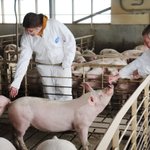
FFAR is investing $750K in the next phase of the PIG LIVABILITY PROJECT, building on research that identified practical ways to reduce pig mortality.
The @PorkCheckoff and industry stakeholders are providing another $893K, bringing total funding to more than $1.64M for 7 new research projects.
The project is led by @IowaStateU in collaboration with @KState Links below.
@ISUVetMed @KSUCVM @AgIsAmerica @APLU_Ag #SwineHealth #PorkIndustry #AgResearch

ALT Two women lean over a pen filled with pigs in a pig barn
Next phase of Pig Livability Project:foundationfar.org/news/ffar-…
Learnings from first phase: foundationfar.org/impact/bre…

Liver abscesses jeopardize cattle health and cost producers approximately $30 million annually.
Liver abscesses affect roughly 20% of United States beef cattle, reaching as high as 70% in some groups.
Antibiotics are commonly used to prevent and control liver abscesses, but the condition is still highly prevalent.
To prevent liver abscesses from forming, current control methods involve treating entire groups of animals with antibiotics at the same time.
As a result, healthy animals are often administered antibiotics, as it is difficult to determine which animals are infected. This method is costly and can increase antibiotic resistance in cattle, making them susceptible to other lethal conditions.
As part of our efforts to curb antibiotic use in animal husbandry through the International Consortium for Antimicrobial Stewardship in Agriculture (ICASA), we awarded Dr. Kendall Samuelson of @wtamu University a research grant to understand more of this prevalent disease.
Hear what she has to say about her research...
More on Dr. Samuelson's research here: foundationfar.org/news/icasa…

While the U.S. cattle herd is at a 75-year low, demand for beef is increasing. Breakthroughs like this one from an ICASA-funded grant offer producers timely new management practices to keep cattle healthy, reduce antibiotic use and produce beef more efficiently.
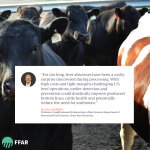
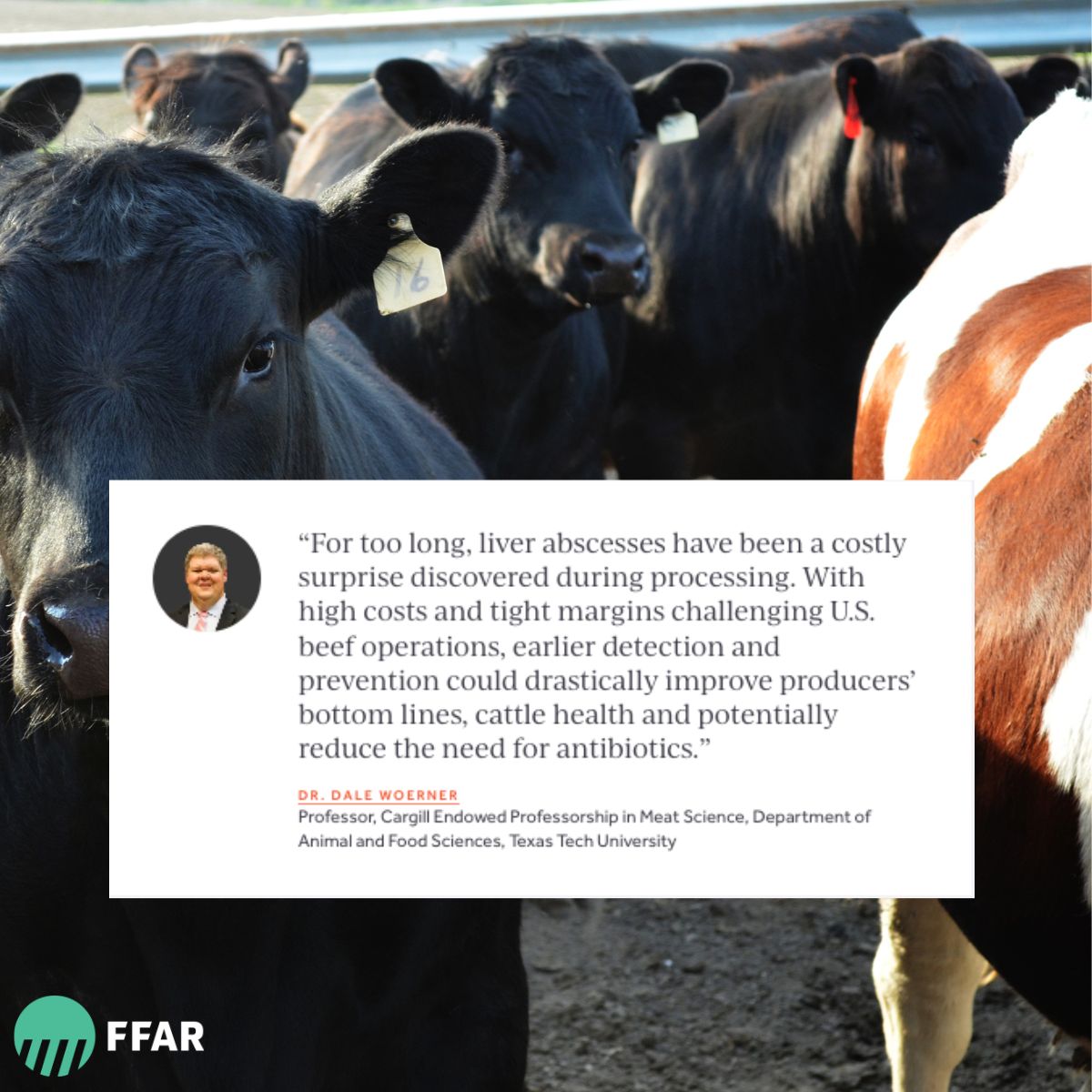
A new study of beef-on-dairy cattle led by Dr. Dale Woerner of @TexasTech linked liver abscesses to changes in the rumen, rather than inherited traits.
The findings suggest that supporting rumen health may be more effective than selective breeding in reducing rumen abscesses.
Researchers also developed blood tests to predict abscesses with 80% accuracy, potentially enabling earlier detection, improving cattle health and lowering costs for producers.
foundationfar.org/impact/bre…
Research funding does more than generate new discoveries. It also prepares the people who will shape the future of animal agriculture.
ICASA projects like the one here, supporting Dr. Kendall Samuelson's research on liver abscesses in cattle, at @wtamu , provide graduate students hands-on experience while working to solve real-world challenges facing producers.
At a time when fewer students are pursuing advanced training in agricultural sciences, these opportunities strengthen the pipeline of future veterinarians, researchers and industry leaders.
Future leaders like Macie Weigand.
More to come!
With the U.S. cattle herd at a 75-year low, demand for beef is increasing...
We have a new breakthrough from our International Consortium for Antimicrobial Stewardship in Agriculture (ICASA) that could offer new management practices to keep cattle healthy, reduce antibiotic use and produce beef more efficiently.
Recent studies estimate that Bovine Respiratory Disease causes more than $1 billion in annual losses for U.S. beef operations alone.
Because treating an entire group is costly not just on their margins, but also with the risk of creating antibiotic-resistant bacteria, producers must weigh the costs of treating entire groups of cattle upon arrival.
Researchers led by Dr. Brad White of @KState developed models that predict which groups of cattle are most likely to benefit from preventive antibiotic treatment.
foundationfar.org/impact/bre…

Catfish, trout and tilapia accounted for most of the nearly $820 million in sales generated by U.S. fish farms in 2023.
Even so, we imported about 7.4 billion pounds of fish that same year, highlighting an opportunity for domestic aquaculture to supply more of the fish we Americans eat.
This research could help fish farmers raise healthier, more productive fish, while protecting wild populations and natural ecosystems by preventing escaped fish from reproducing.
Led by Michael Phelps, an associate professor at @WSUPullman , the research builds on his 2021 FFAR New Innovator Award, which found that rainbow trout could be sterilized by preventing reproductive cells from developing.
With matching funding from @TroutlodgeInc, the team is investigating two promising and scalable approaches that could turn a better profit, while protecting our wild resources.


Farmers are facing increasing pressure to maintain crop yields amid rising fertilizer costs and increasing ecological impacts.
They need science-backed guidance for practical solutions that improve nutrient use efficiency in real-world conditions.
Our Efficient Fertilizer Consortium was formed with various key crop sectors such as @CottonInc , to ensure the research reflects practical production needs and real-world applicability.
Today we're announcing the 2026, $9.3M investment to improve nutrient use efficiency across different agricultural systems.
Listed below are the 2026 Efficient Fertilizer Consortium awardees:

Dr. Craig Drury of Agriculture & Agri-Food Canada is studying the agronomic, environmental and microbial impacts of fertilizers combined with placement methods, conversation tillage and cover crops.
Dr. Benjamin Ellert of Agriculture & Agri-Food Canada is determining how effectively nitrogen moves from applied fertilizers to the crop.
Dr. Sander Bruun of University of Copenhagen is studying how enhanced efficiency fertilizers and cover crops can work together to improve nitrogen use efficiency and enhance crop productivity.
Dr. Ran Erel of the Volcani Institute is assessing innovative fertilizer technologies for diverse crop rotations in irrigated dryland regions.